Spanish Minister of Industry, Jordi Hereu, coined a new concept yesterday from Brussels: "open strategic autonomy". He did so at the Competitiveness Council where he met with his counterparts from the 27. There, he proposed a review of Spain's position on the Made in Europe label to not exclude "reliable partners" and continue to attract foreign investment in key sectors, as long as it generates added value in Europe. A nuance that would open the floodgates of the European market to China.
Hereu did not name names, but the defense of a "pragmatic vision" of European reindustrialization by someone who has repeatedly advocated cooperation with the Asian giant did not go unnoticed. At a time when the Old Continent is seeking ways to curb the loss of competitiveness of its factories, from automotive to steel, in the face of the expansion of Chinese products, our country looks to Beijing.
For many reasons, Spain is the odd one out in European diplomacy, and the relationship with China is no exception. The latest survey by Loom Strategy Centre, the British think tank specializing in strategic sovereignty, places our country as the only one among the analyzed European economies that leans towards a commercial agreement with Beijing rather than with the United States in highly sensitive sectors.
This is the main conclusion of the survey, previewed by EL MUNDO, which covers more than 5,000 surveys in Germany, France, Poland, Hungary, and Spain. Of all, our country is the only one where a new commercial agreement with China in critical areas such as energy, defense, or artificial intelligence received a higher net rating than one with the US. Specifically, 35 points versus nine. In the other four countries, the opposite is true.
This does not make the Asian giant the preferred partner of the Spanish. The countries with the highest acceptance for new trade agreements were Germany, Norway, and Japan. But it does position Spain, by far, as the most favorable market to China compared to the United States, at least to one with Donald Trump in the White House.
"Spain has become a key destination for China's strategic investments in Europe. Added to the doubts about the reliability of the United States as a trading partner, this could explain why the Spanish public opinion is more favorable to trade with Beijing than that of the rest of the surveyed countries," explains Joss Garman, CEO of Loom, to this newspaper.
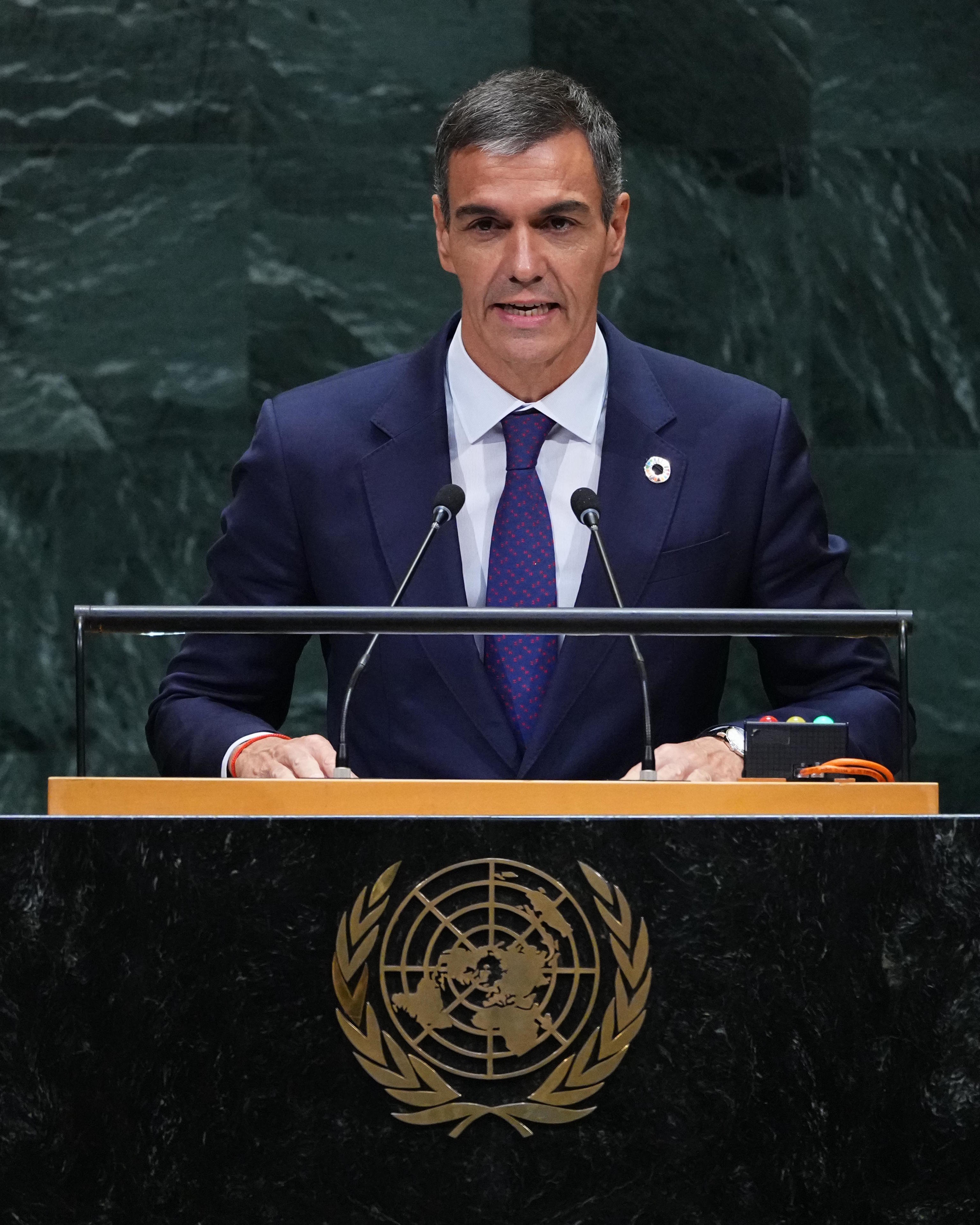
Why does Spain prefer Beijing over Washington? The answer ranges from Spain's historical disadvantage in the technological race to the clash between Pedro Sánchez and Trump and the latter's war on olive oil.
Ángel Saz Carranza, director of EsadeGEO, is surprised by the huge gap in support for China and the US reflected in the survey, but not by the underlying reasons or the fact that our country's position towards Beijing is very different from that of the French or the Germans. "There is a structural factor that makes the perception of the threat from China not the same here as in Germany or France. China wants to be a larger Germany: the great global technological manufacturing platform. While many Spanish companies were already complementing the value chains of France or Germany, and now have started to complement those of China, in Germany, they perceive the threat of being supplanted from Beijing," he explains.
In the same vein, Miguel Otero, principal researcher at the Real Instituto Elcano, points to Spain's historical position in the technological race. "Spain is not a technological leader, it is in the middle range of the ladder, so it sees in China the possibility of receiving investment to promote its transformation and industrial modernization in sectors such as batteries, electric vehicles, and other green technologies," he confirms. In other words, Spain sees in the massive flow of capital from Beijing a lever to gain positions in European and global value chains.
Germany, France, or even Brussels mainly see risks in China's rise as an industrial and technological power. Spain, on the other hand, has detected an opportunity that, according to Saz Carranza, also entails "many dangers." Otero highlights a "pragmatic calculation": the so-called "Chinese shock 2.0" - a phenomenon that describes the increasing pressure of Chinese exports on the European industrial fabric - does not pose the same "quasi-existential threat" to Spain as it does to the German automotive industry or French protectionism.
The main risk lies in China's strategic shift. Both experts indicate that the Asian giant carved out a place in the market by replicating at low cost; today its goal is to conquer the territory previously reserved for high-value European-made industry that is losing ground to increasingly sophisticated and much cheaper Chinese equivalents.
For the director of EsadeGEO, there is another more circumstantial factor: the confrontation between the governments of Pedro Sánchez and Trump. "The repercussion is there," he insists. The expert cites the impact on the Spanish hotel sector of Trump's sanctions on Cuba or his continuous tariff threats against Spanish products like olives. "That is not seen the same way from Germany or France either."
Returning to the survey, Garman highlights that what all surveyed Europeans agree on, regardless of their ideological spectrum, is "strong support for domestic manufacturing." Specifically, 72% of Spaniards support manufacturing technologies for energy transition in Spain even if it is slower. Another 65% prefer it, even if it raises short-term energy costs.