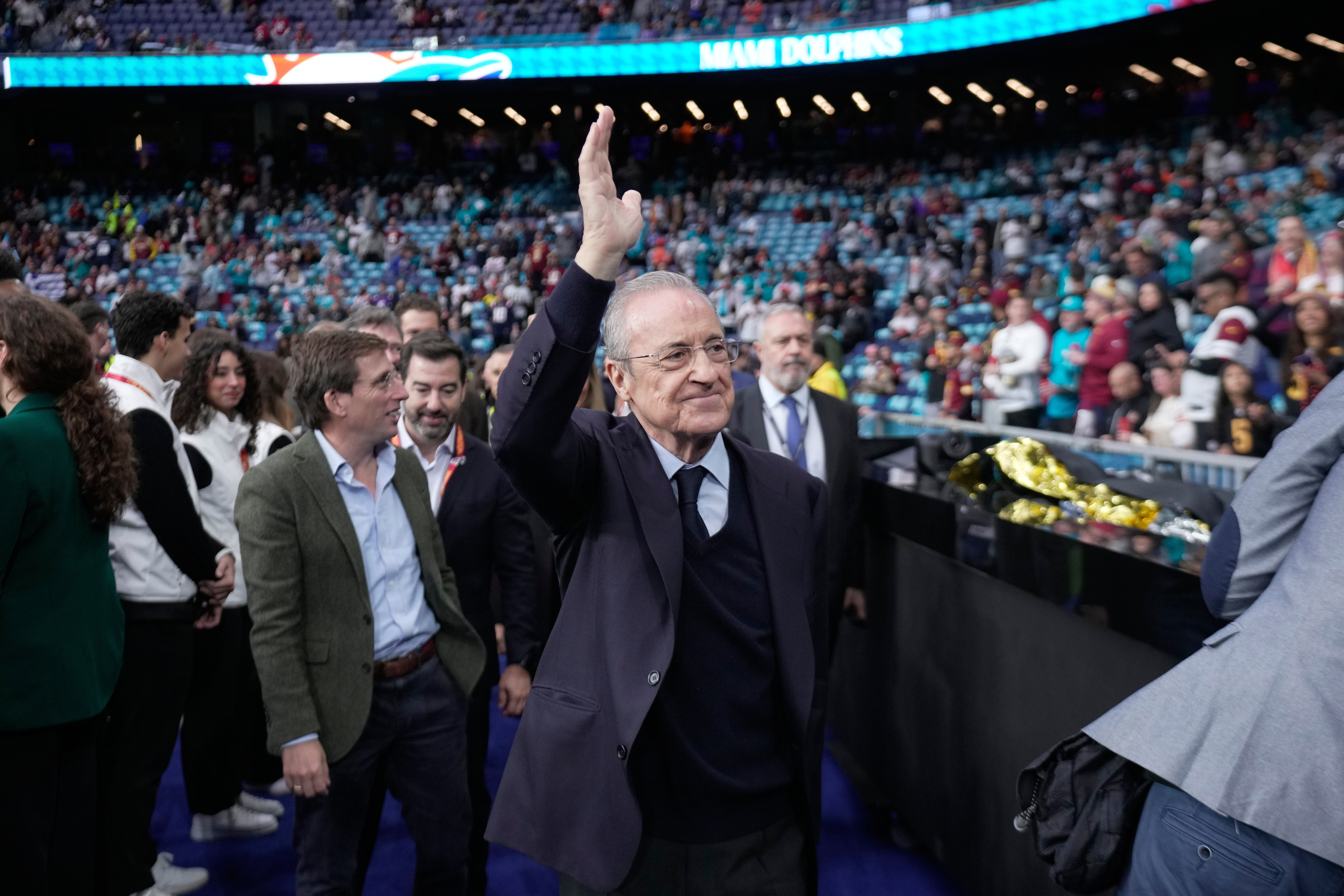
"We have built a team of great players for which I am solely responsible. I have spoiled them and they have become confused. I have acted like a father by giving the best to the kids, which has led to their confusion. I am the only one to blame." In just over a month, it will be 20 years since Florentino Pérez's resignation, a pivotal moment in the modern history of Real Madrid. After defeats against Arsenal in the Champions League round of 16 and Mallorca at Son Moix, the president of the white club decided to end the first Galactico era at the Bernabéu. He did so with a Champions League title in 2002, as the peak of a galaxy that had become the club with the highest revenues in the world. Pérez stepped aside "so that the players see that the only important thing is Real Madrid." These reflections from the president about the dressing room resonate now in the current reality of the club after the recent months and the disaster in Albacete.
Two decades later, the new galaxy of Madrid (replacing Beckham, Zidane, Ronaldo or Robinho with Vinicius, Bellingham, or Mbappé) faces some of the same problems as the first one. Pérez returned in 2009 having learned from his mistakes and started an extraordinary and irreplaceable second era, winning six Champions League titles and numerous other trophies that have placed him above Bernabéu in the history of the institution, once again making the club the football organization with the highest profits, renovating the stadium, and winning Ballon d'Or awards beyond Cristiano Ronaldo. However, the transition from that second galaxy (with Cristiano as its face) to the third has accumulated 18 months with more flaws than virtues. Without Modric, Kroos, Benzema, Marcelo, or Casemiro, players who were part of the golden era and served as a bridge between galaxies (and who, by the way, do not fit the galacticos stereotype off the field), the dressing room seems disarrayed.
The elimination against Albacete, the 17th placed team in the Spanish second division, in the Copa del Rey round of 16 is another example of this situation. A defeat that has put the spotlight, more than ever, on the players. Not on Xabi Alonso, nor on the newly arrived Álvaro Arbeloa, who tried to take the blame for the failure in La Mancha despite being in the position for only 24 hours and wanted to protect the team, perhaps not with the right words. "We must thank Vini for wanting to be here," he said, showing both deference to what should be normal and opening up the possibility of considering the stance of other players towards the Albacete match. Bellingham, Mbappé, Tchouaméni, and Carreras did not travel, without apparent physical issues (they trained normally on Thursday). These players, regardless of the tactics of their coach, have been far from their best technical, physical, and mental levels for a long time.
Vinicius' anger, "a turning point"
According to sources close to the Madrid squad, Vinicius' anger in the Clasico was "a turning point" at Valdebebas. The club's protection of the Brazilian, who did not mention Alonso in his apology statement, triggered a series of attitudes in daily life that strained the relationship with the coach and gave the players a lot of authority. "That's when they realised they had a lot of power," sources close to one of the key figures in the squad admit. "That feeling wasn't there in previous years," they insist, despite the club warning them in December, amidst a crisis of results after defeats against Celta and City, that they would be the next targets if they did not improve their attitude.
For the Madrid hierarchy, players have always been more important than coaches. It is a fact and the way in which successes have been achieved on and off the field in the recent era of the club. A resounding success both in footballing and economic terms. Stars score goals, sell shirts, secure sponsorships, and fill the stadium. They are economic assets that generate trophies and wealth. Meanwhile, coaches are temporary. They come and go, with more or less time in charge, but they are dispensable. Nevertheless, in recent years, Real Madrid has only won in Europe with two: Ancelotti and Zidane.
Coaches who had a good relationship with the stars, allowing them freedom but also being tough when necessary... And they were tough because the club was too. The cases of Cristiano or Ramos, whom Florentino showed the door when they flirted with leaving Madrid, demonstrate the president's toughness at certain times.
Now, Alonso's departure seems somewhat different. The Basque arrived as a medium to long-term bet to lead the transition between galaxies after succeeding in Germany with Leverkusen. He was a club legend, a different case from Benítez or Lopetegui, but he lasted only six months. Part of the squad rebelled against the top brass at the Bernabéu due to his methods, and Florentino chose Arbeloa, who has brought Pintus by his side and in Albacete refused to criticise his new players: "I cannot reproachanything. They wanted to win."
Madrid has gone from having the "healthiest dressing room I have coached," as Ancelotti admitted in 2024, to one that seems corrupted by premature success. "We have hit rock bottom dramatically. We need to self-criticise at an individual and collective level," Carvajal acknowledged in Albacete. The captain is the only survivor from the second galaxy within a young squad that has won one or two Champions League titles alongside players who are legends of the club. "We still have time to react, there are two titles left," sources in the club admit. The shadow of the first galaxy is long.