Last July, Alexander Zverev visited Mallorca. A German in the Balearic Islands, they will say, what a novelty. But the world number three was not on vacation, he didn't want to hit the beach or have a beer in a pub: he was on a spiritual journey. For 10 days, he secluded himself at the Rafa Nadal Academy in Manacor in search of inspiration. At 28, with three losses in his three Grand Slam finals, he needed help, relief, support, and found all that in Rafa Nadal.
"I don't know how many times he told me that I had to be more aggressive and brave. I know I have to do it, but hearing it from him, with whom I have played important matches...", Zverev said. In the following weeks, he seemed like a new player, he looked different, but still lost in the third round of the US Open. Not even Nadal can perform certain miracles. Will this Australian Open be different? Judging by the German's struggle in the first round against Gabriel Diallo, it doesn't seem so.
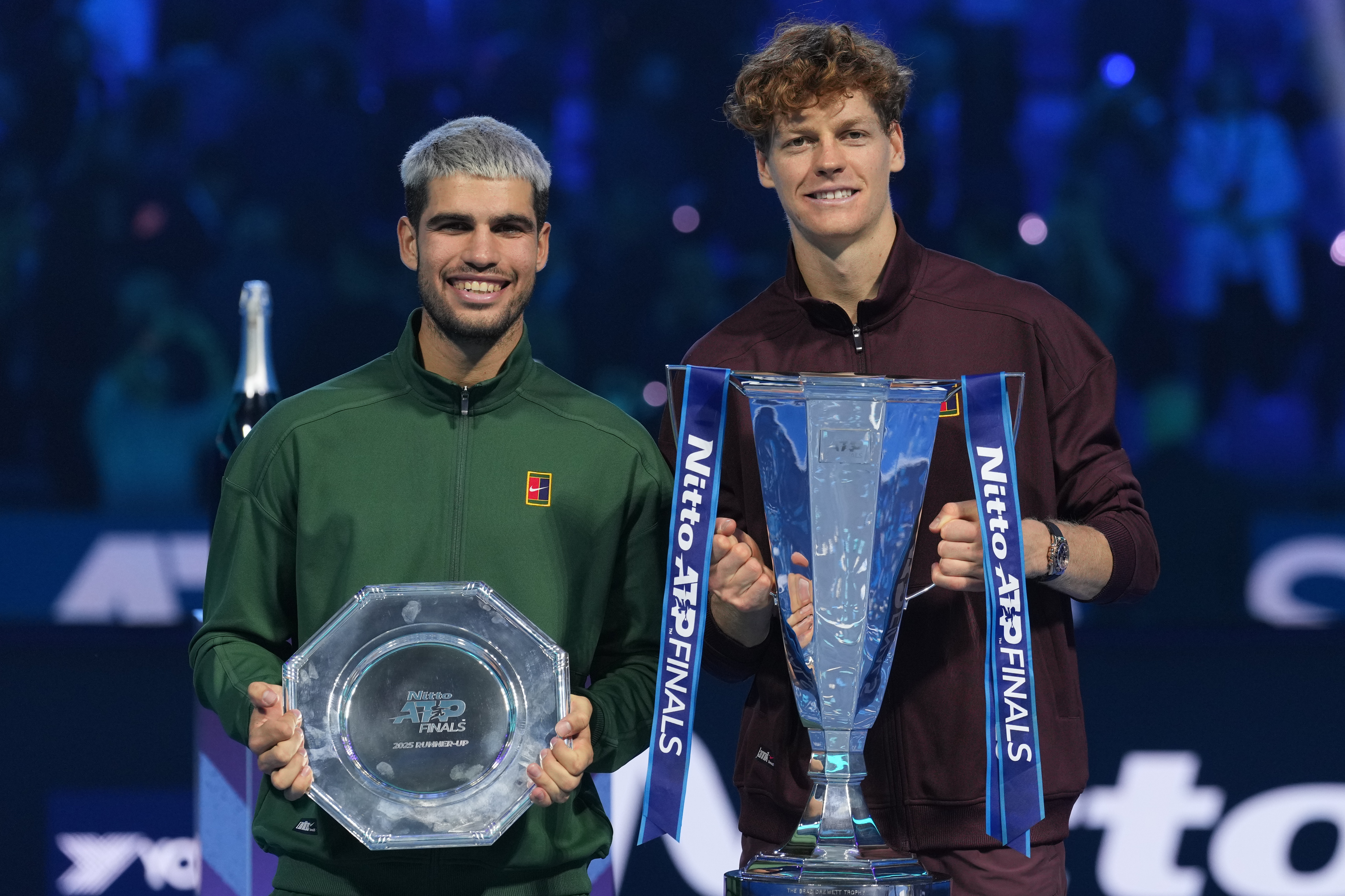
Tennis has settled into a predictable era: Carlos Alcaraz or Jannik Sinner will win this Grand Slam, as they did in the previous ones. It is the most likely scenario. The only alternative is Novak Djokovic, a 38-year-old legend, and beyond that, it's hard to trust anyone else. A Top 10 player has already been eliminated, Felix Auger-Aliassime, and the rest acknowledge that their chances are remote.
American Taylor Fritz, ranked ninth in the world, commented during the summer of 2024 that "if someone has a good week, anything can happen." Last Sunday in Melbourne, they reminded him of that. "Did I say that? When? Three or four years ago? No, no, now everything really depends on the Big Two," he acknowledged, like many others light-years away from the two circuit dominators.
Against other players, the American is powerful, but he has never beaten Alcaraz in their five encounters —he did win in the Laver Cup exhibition— and the only time he defeated Sinner was in 2021 when he was 19. Among the best in the world, equally embarrassing statistics accumulate, although none as striking as the one experienced by local player Alex de Miñaur, ranked sixth in the world: he has played against Alcaraz five times and Sinner 13 times without ever winning. 18 defeats in 18 matches. The local fans adore him, but it's hard to consider him a contender in a five-set Grand Slam.
"Carlos and Jannik play better tennis than us, that's simply it. I'm not ashamed to say that if I play 10 matches against Carlos and 10 against Jannik, I will lose most of the time. But I could win some. The rest of us have to have that mentality. I have played against many great names in tennis history, and they also have bad days," analysed Daniil Medvedev on Monday, a potential opponent for Alcaraz in the semifinals.
The Russian is a rarity among contenders because he knows what it's like to win a 'major' —the 2021 US Open— and he knows what it's like to beat both Alcaraz and Sinner, although some time has passed since then. At 29, he accepts his decline, and perhaps that is the differentiating factor from other eras. Between 2005 and 2007, Rafa Nadal and Roger Federer won 11 consecutive Grand Slam titles, but a young Novak Djokovic was already looming, alongside Andy Murray, Stan Wawrinka, or Juan Martín del Potro. Now, the possible opponents of the Big Two are older than them, and contemporaries —Ben Shelton, Lorenzo Musetti, Jack Draper, or Holger Rune— still have a long way to go.
On the banks of the Yarra River, beyond the Australian players, all the promotional posters of the Australian Open feature the same faces: the usual two, Sinner and Alcaraz. This reveals the problematic aspect of their dominance. The repetition of duels between them is a blessing for tennis lovers —last year there were six memorable finals— but it can also be a problem in the short or medium term. If one of the two gets injured, the tournaments will lose interest.
Furthermore, brands focus on them, and the economic disparities are immense. According to Forbes magazine, in 2025 Alcaraz and Sinner were the highest-earning tennis players in the world. Djokovic was not far behind, but the fourth-placed player, Fritz, earned a third of what they did. Coco Gauff, Aryna Sabalenka, Qinwen Zheng, and Iga Swiatek earned more money than him.
Tennis celebrates the excellence of Alcaraz and Sinner, two players on their way to becoming legends. But it needs a third name, or a fourth, or a fifth, to prevent monotony from breaking the magic.