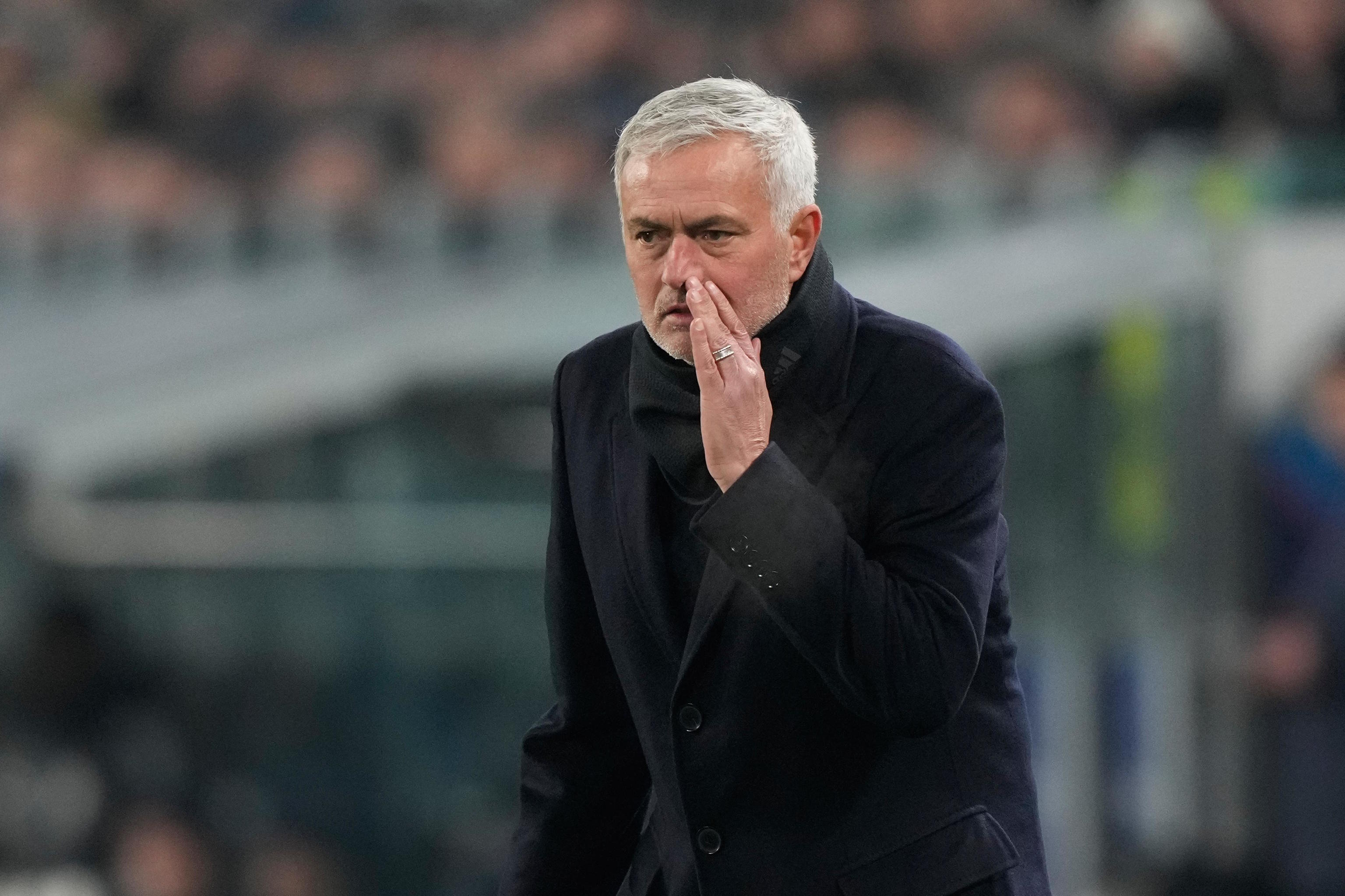
"We never love someone in particular. We only love the idea we have of someone." The Madridismo that loves José Mourinho, starting with their president, does so for what Fernando Pessoa wrote: they love what Mou represented in a critical stage. A time that went from applause at the Bernabéu for Ronaldinho by a mustached gentleman to seeing the stadium itself destroyed by the passage of an Attila in ballet slippers. It was Pep Guardiola. Mourinho also endured this, but ended up imploding his antonym to defeat him, which inflamed the pride of a large part of Madridismo, even if it meant undermining the field with irreverence and anger. The Portuguese left, worn out by his own crusade, but the anger stayed among us. Nostalgia is not always about love.
Saudade, nostalgia, is a very Portuguese feeling. It is present in Pessoa's characters as well as in those of Eça de Queiros and other great Portuguese writers, although Mourinho has little to do with the introspective Bernardo Soares, the protagonist of the Book of Disquiet. Mou is The Special One, the best actor in football, although now just a great coach in his winter years.
Nostalgia for the white past is greater for a legion of loyal Madridistas than for the coach himself, whose nostalgia is only for his glory days. The reality is that he did not experience them at the Bernabéu, not just for the titles but also for the feeling. Mou felt at home in the Premier League because in England, he was a character in a comedy. Here, we turned him into a character in a tragedy, something very Spanish. The mistake was ours.
Barça's moral superiority
Mourinho's era at Madrid was not just about insults or extreme and tough play. It was also about rebellion against a Barcelona that, besides dominating on the field, had positioned itself in a moral superiority stance. It was the marketing of valors. The Negreira case and the audios of Piqué with Rubiales to distribute Saudi gold would show that those who preach from moral high grounds often have their feet in the sewers.
Real Madrid's reunion with Mou on Wednesday in Lisbon evokes that nostalgia in a time that resembles in some aspects the moment when the Portuguese arrived at the Bernabéu's bench. The sporting crisis and Barcelona's dominance during the last season call for a reversal of the trend, even if it means "setting off a bomb." This is what Mou said in private in response to the superiority of the Blaugrana back then. He did it. The results were evident, destroying the rival, although not achieving all the expected goals. The collateral effects, with damage to the club's image and division, were also present.
Madrid has chosen a "mini Mourinho" to get out of their current crisis, after dismissing another coach who, as a player, had a strong connection with the Portuguese. However, as Arbeloa pointed out in one of his most accurate statements, if they tried to imitate Mou, they would fail. In his own way, he is unique, the "f***ing boss."
We will see that Mourinho before, during, and after the Champions League match, as the character now more than ever needs his skills, given the current imbalance between Benfica and Madrid, no matter how inconsistent the white team may be. The first hint was when he expressed surprise at coaches without experience taking charge of big clubs. Arbeloa did not respond. He was right.
"Count me out of soap operas," said the Portuguese when asked if he was a solution for Madrid after Xabi Alonso's dismissal. The reality is that he has not been part of the alternative discussions, although he has always been like a wet dream for Florentino Pérez, especially on stormy nights. The contact between them has remained, sometimes even as a distant advisor.
Florentino found success after Mou. In fact, the greatest success of his era, with the three Champions League titles under Ancelotti, in two spells, and the three under Zidane, two of his choices and two figures close to him. But neither the French nor the Italian followed his narrative in the president and club's wars. Nor in the black-and-white portrayal and division. The divide between Madridistas and "pseudo-Madridistas" was coined by Mou.
Things have not gone well for the Portuguese since leaving Madrid. The peak of his career, the Champions League wins with Porto and Inter, came earlier. He won the Premier League again with Chelsea, a club with passionate fans where his style fit perfectly, but he did not achieve glory at one of his most anticipated destinations, Old Trafford, nor did he find the right moment to coach Portugal. The Euro 2016 victory would have been one of his great hits. Instead, it was won by someone who is nothing like Mou. Fernando Santos seemed to have stepped out of a Pessoa book.
Benfica is his latest destination, for now, but not just any destination, as Mou is a Benfica supporter at heart. It is the club of his origins, where he was trained. The coach, who turns 63 today, was the electoral card for Benfica's current president, former player Rui Costa. A significant figure for the club that generates the most public opinion in the country. The results have not come, far from the leading Porto. Injuries have plagued Benfica, a team where Mou preached caution upon arrival, but no one can go against their nature.
This is what Arbeloa said about his players after the victory at La Cerámica, a quality test that the coach passed. The statement has a part of sensibility and another of surrender for a coach who wants to develop his work. As if Madrid were The Jungle Book, although Vinicius is nothing like Mowgli, and today, a cry like Mou's resonates in that jungle, for better or for worse.