Between the mid-16th and late 17th centuries, alongside many of the changes that would shape modernity, a true transformation of knowledge took place in Europe that would dismantle centuries of religious dogmas, question the Greco-Latin tradition, and lead to unprecedented advances in all fields of human knowledge. The so-called Scientific Revolution would forever change European society and, with it, world history. But how did this transition from the medieval to the modern world occur, and who were its protagonists?
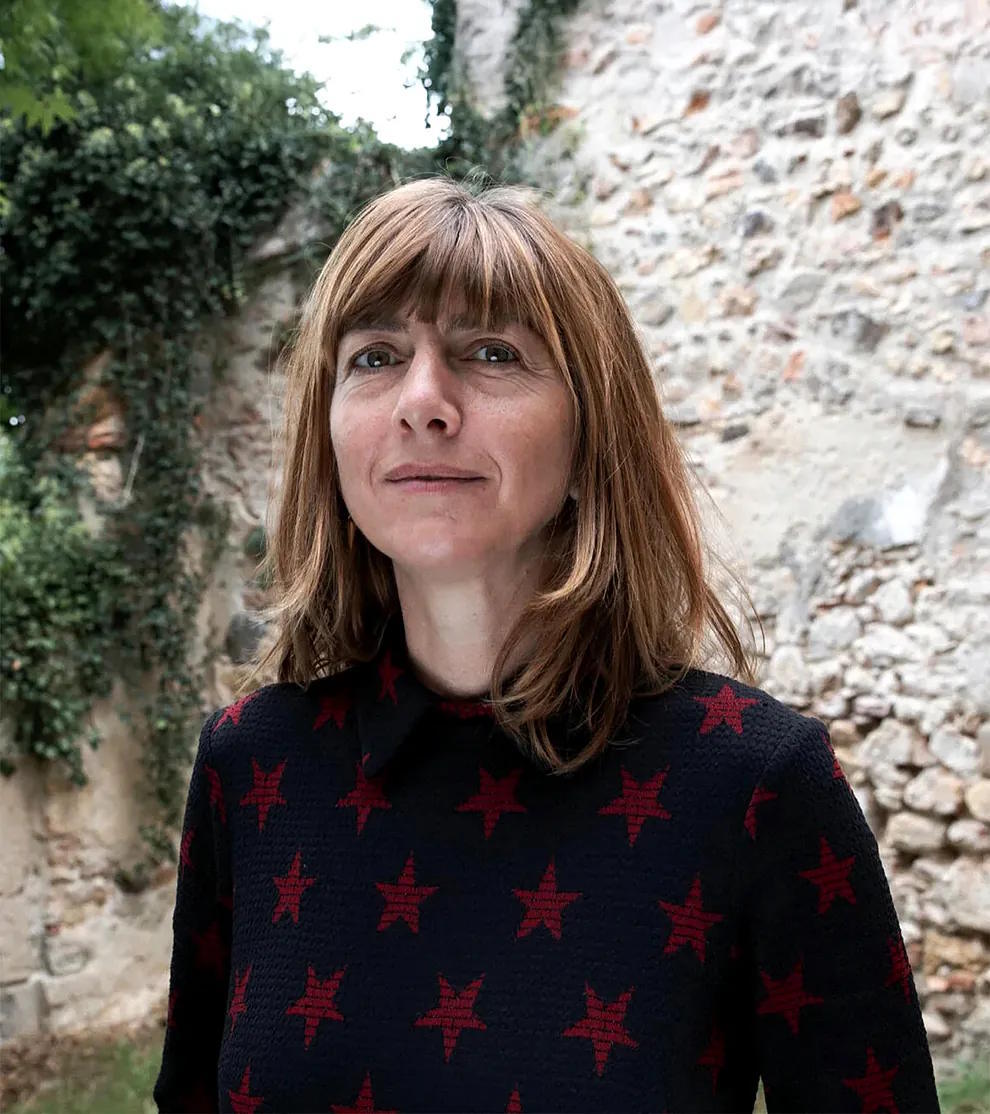
This is what the British historian and writer residing in Oxford, Violet Moller, asked herself, an expert in shedding light on some of the blind spots of history as she did in her essay The Route of Knowledge (2019), where she reconstructed the medieval journey of Greco-Latin knowledge by authors such as Euclid, Ptolemy, and Galen through cities like Alexandria, Baghdad, Cordoba, Toledo, Salerno, Palermo, or Venice. Now, she does the same, taking a leap in time to the late 15th century, in The Palace of the Astronomers (Taurus), an astonishing journey to a world in transition from the medieval to the modern, where magic and science intertwine, revolutionary ideas could cost lives, and where a few pioneers fought to dispel many of the shadows that still clouded human understanding.
"It wasn't planned, really, but perhaps a natural step after my previous book, to take that leap beyond the medieval world," explains Moller with a smile from her office in Oxford. "Besides, I wrote my thesis on the polymath John Dee, crucial in this period in my country, so I was aware of the incredible network of researchers and scholars that was developing around that time throughout Europe, the first so rich and interconnected in history," continues the author who, after dusting off her thesis and rereading it - "which was quite odd," she admits with a laugh - simply followed the thread.
"I really just followed the incredible amount of material on the relationships between these scientists, letters, anecdotes, visits... Tycho Brahe, Dee and Johannes Kepler, for example, met in Prague, Georg Joachim Rheticus visited Copernicus in Poland...", Moller quotes. Just like in her other book, beyond these names, Moller structures the book based on cities, the great centers of knowledge in Northern Europe: Nuremberg, Leuven, Kassel, Prague, the island of Hven, now Swedish, then Danish...
As we were saying, the journey proposed by the historian begins in Nuremberg in a striking year like 1471, a few pivotal years between the fall of the Byzantine Empire and the Discovery of America. And it does so by following a figure that will be unknown to many readers, the German astronomer and mathematician Regiomontanus. "A true child prodigy, I would say that he was truly a pioneer in every sense," defends the author. A traveler for much of his life, during his time in Italy, where he served in Rome under Cardinal Bessarion as a designer of astrolabes and sundials.
"This cardinal was of Greek origin, and in Rome, Regiomontanus had access to many manuscripts from the Greek world that the intellectual refugees from the fall of Constantinople to the Turkish Sultan Mehmed II had brought to Italy and that were unknown in the West during the Middle Ages," explains Moller.
"After the fall of Constantinople, access was gained to many manuscripts from the Greek world that were unknown in the West"
Settled in Nuremberg, the birthplace of the printing press, let's not forget, Regiomontanus established a great center of knowledge based on the printing of his and others' texts - he is considered the first printer of scientific literature - and took advantage of the city's famous metalworking workshops, where he also began to build his own astronomical instruments.
"His premature and obscure death somewhat thwarted everything, but Nuremberg was a mirror of many other subsequent places," admits Moller, who visited the city where the imprint of this cultural effervescence survived and is still visible today in the house of the painter and engraver Albrecht Dürer, who worked in some of those workshops. "That house, bought by a disciple of Regiomontanus, is now a museum about that time when sciences and arts were still very intertwined."
Doubting the Dogmas of the Past
Just as, although known, not enough emphasis is placed on the importance of the end of Byzantium and the emigration of its intellectuals to the Italian Renaissance, there are more figures left out of the traditional list of Galileo, Copernicus, or Newton. For example, when talking about empiricism, the methodology that would radically change the thinking of the time, one thinks of Francis Bacon and René Descartes, but very few remember a precursor without whom we might never have heard of the Englishman's inductive method or the Frenchman's methodical doubt: Theophrastus Bombastus von Hohenheim, better known as Paracelsus.
"Today he is known as an alchemist and physician, but he was a very radical thinker, one of the first to question that knowledge should not be sought in ancient books but in nature," points out Moller. An intuition that began to crystallize throughout Europe after a key event, the Discovery of America. "Of course, the ancient Greeks and Romans knew nothing about this continent, so after Columbus's voyage, people began to think that if they were unaware of half the planet, perhaps they didn't know much about everything else either. That, combined with the errors of thinkers like Aristotle and Ptolemy, which began to be proven, turned everything upside down," she asserts.
"After the Discovery of America, many intellectuals turned away from Greco-Latin knowledge upon realizing its fallibility"
Another element that fostered doubt was, of course, the birth of Protestantism and the questioning of secular religious and ecclesiastical dogmas. "Part of the Protestant project was the revitalization of the educational system because, of course, they had to educate the clergy and also the bureaucrats, so they really transformed education," argues Moller, "especially university education expanded, so that now people could study mathematics instead of the medieval system of the trivium and the quadrivium, which was quite limited in terms of science and heavily based on ancient scholastic ideas."
However, when we talk about science, we should not think of the concept as we understand it today. As Moller explains, the transformation was gradual and in the 16th century, astronomy, still heavily mixed with alchemy and astrology, was the queen of the sciences among these pioneers, above emerging mathematics and a physics that was barely separated from philosophy.
Patron of Knowledge
In those mixed waters sailed another protagonist of this essay, the mathematician, astrologer, occultist, alchemist, and magician John Dee, who led a nomadic life through the main European centers of knowledge mentioned earlier. "Beyond the many controversies, he was very important for the England of his time. After his many travels, he brought to his home in Mortlake a multitude of instruments and also the ideas from the continent, along with a lot of books that had never been seen in England. That house became the first truly important intellectual and scientific center in the country."
Yet, as the author also highlights, Dee died in poverty, and all his achievements vanished. This was not an exception but rather the norm for those pioneers who built ephemeral laboratories in their homes. Therefore, the last key that The Palace of the Astronomers offers addresses an aspect that should never be overlooked when talking about science, the material aspect, because as we sadly know today, research and experimentation are costly activities.
Activities that in the 16th century found patrons in curious and talented men like Landgrave William IV of Hesse-Kassel or Emperor Rudolf II of the Holy Roman Empire, who turned Prague into a center of wisdom and mysticism whose legend endures to this day.
"William, whom almost no one has heard of, was a truly talented astronomer who, in fact, designed and made his own instruments. Despite not having much political power, as he was the regent of one of the hundreds of small German principalities of the time, he was one of the first to attract scholars from all over the continent, offer them good contracts, and pay them properly," explains Moller. "The case of Prague was very different, as Rudolf, who had a tragic end and was eventually deposed and died imprisoned, was one of the most powerful men of his time and gathered the great scientists of that era at his court, such as Brahe, who died there, or Kepler."
The Importance of Science
In their own way, both leaders were also pioneers in the professionalization of science and in the possibility of preserving knowledge from generation to generation. A legacy that, according to Moller, still remains relevant. "People like Rudolf II and William IV were important because they realized that to advance in science, funding must be provided, people need to be paid. They cannot live on air and they need money to buy instruments and equipment," insists the author. "And, of course, the standardization of this idea was crucial when the next century arrived in establishing the first official centers of scientific research such as the English Royal Society or the French Académie des sciences."
"Gradually, rulers began to realize that science was very valuable and could generate wealth"
This professionalization, which began in the 17th century and flourished in the 18th during the Enlightenment, was, for the author, the foundation of the dominance that our continent would exert for several centuries. "Gradually, rulers began to realize that science was very valuable and, in fact, could generate wealth and great power for the country, something that governments like the Chinese or the American understand much better than us perhaps," laments Moller.
"This story I tell should serve as a reminder that the countries of Northern Europe managed to dominate the world for centuries thanks to science. And, therefore, we must preserve the legacy of these pioneers and not fall behind," she concludes.