In the 90s, it was 'Londonistan', referring to the number of Muslim extremists from the Middle East and North Africa - some with terrorist links - welcomed in the British capital due to the very generous - and very mistaken - British asylum policy. Then came 'Londongrad', to refer to the influx of Russian millionaires, which in turn triggered a wave of legal proceedings and some assassinations of dissidents orchestrated by the Government of Vladimir Putin.
Now, the British capital is embroiled in a new controversy. This time, however, it is not about the influx of newcomers, but with something more classic, especially in a city like London: espionage. Just at a time when the UK is trying to navigate its international policy with the United States, the European Union, China, and other emerging powers - such as India or Arab countries - a series of news and controversies have raised fears that London has become one of the major centers of Chinese espionage in the world.
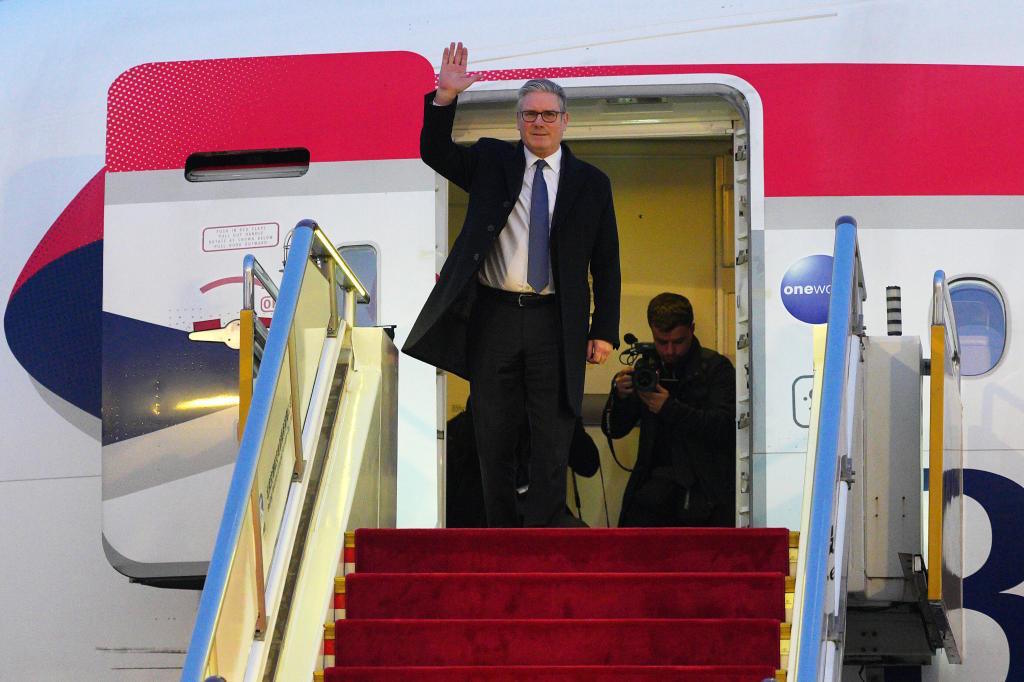
The latest signal came this Monday. Just on the eve of British Prime Minister Keir Starmer's trip to China, the conservative newspaper The Daily Telegraph reported that the Chinese intelligence services had direct access to the phones of the advisors of Starmer's three predecessors, all from the Conservative Party: Rishi Sunak, Liz Truss, and Boris Johnson.
According to the newspaper's information, it is possible that China may have even spied on the Prime Ministers' mobile phones. This would mean five years (from 2019 to 2024) of virtually unlimited access to the highest echelons of British power.
The news has sparked controversy with the also conservative newspaper The Times debunking it and reminding that Downing Street staff have strict orders not to use phones for confidential communications, due to the ease with which these devices can be penetrated by espionage systems.
The fact that the Telegraph, which leans towards the right-wing of conservatism, bordering on the ultras of Reform-UK, published the news just as Starmer is about to make the first visit by a Prime Minister to China since Theresa May in February 2018, has given a touch of opportunism to the information.
Nevertheless, it never rains but it pours. The new controversy comes exactly a week after Starmer's government approved the construction of what some describe as the "mega-embassy" or the "super-embassy" of China in the UK. The building has stirred up a tremendous political storm and has sparked a diplomatic battle between London and Beijing. In a show of power, the Xi Jinping government even leaked to Reuters that if it did not receive the green light for the building as designed, Starmer might not be able to visit their country.
Starmer's perceived weakness against Beijing is further exacerbated by the strange case of the alleged Chinese spies Christopher Cash and Christopher Berry, whose charges were dropped by the Prosecution just before trial, and their boss, Cai Qi, the Chinese Communist leader who had a direct and personal relationship with ex-Prince Andrew.
The key to China's strength, also known as Chinatown and Beijing on the Thames, lies in its secret design in the heart of London, on a concentration of fiber optic cables connecting the two major hubs of Europe's main financial square: the City of London and the Canary Wharf complex.
From a technical standpoint, the embassy could access communications flowing through the network without the need to 'tap' the cables. Suspicions were reinforced when the British press revealed documents about the existence of the so-called 'spy basement', consisting of 208 rooms in the complex's basement, whose existence had not been made public. These rooms have ventilation systems that, according to experts cited by the Daily Telegraph, suggest the installation of cooling systems for high-powered computers.
The British government has denied these claims. Security Minister Dan Jarvis stated that the government is confident that "any risk related to those secret rooms will be managed appropriately" and Downing Street spokespersons assured that "we know what the rooms will be used for".
For some, all the embassy controversy has simply been an exercise in hysteria by London. According to this view, China makes it easier to monitor its activities by consolidating them, which are currently scattered across seven buildings. Additionally, some have pointed out that the largest fortress-like embassy in the capital is that of the US, inaugurated seven years ago in the Nine Elms area, next to the iconic former Battersea Power Station, featured on the cover of Pink Floyd's album Animals.
Beijing has played hardball to defend the design of the diplomatic headquarters. First, it refused to hand over the building plans to the British government without areas redacted. Then, it tied the approval of the building to the improvement of relations between the two countries.
Starmer, therefore, finds himself in an almost impossible position: between a natural ally, the increasingly unreliable US under Donald Trump, a EU that London is trying to get closer to - without making it too obvious, lest the scars of Brexit reopen - and a China that is a strategic rival but also a commercial partner that cannot be ignored at a time when, outside the EU, British economic growth is struggling to pick up.