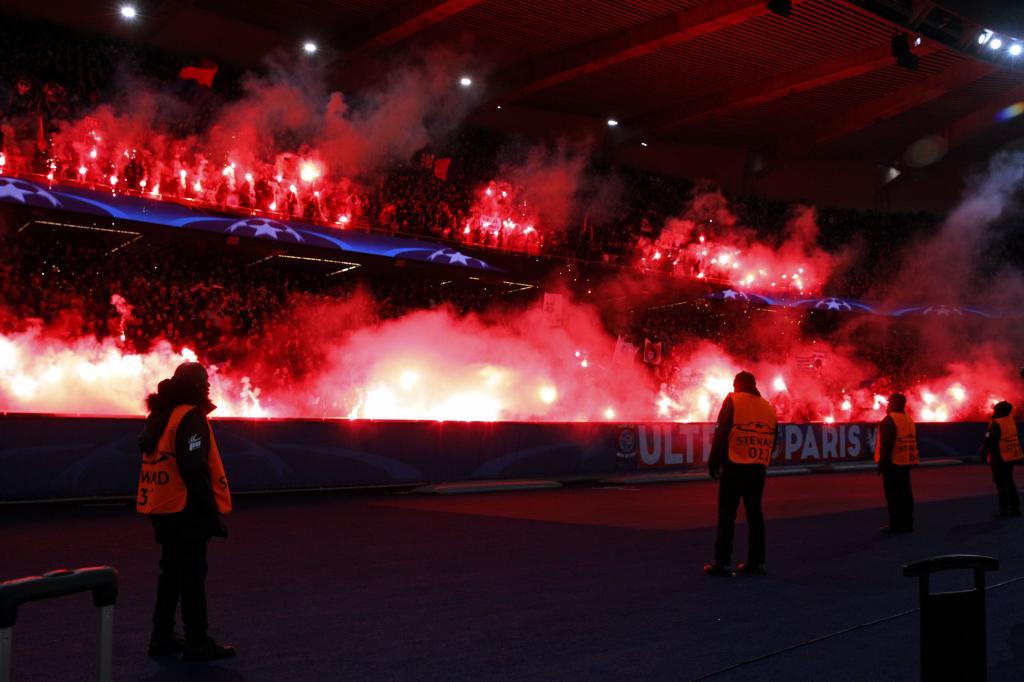
"It has been terrible. You feel perplexed and angry." This is how Izaro, a young woman from Durango who reported to the Ertzaintza that a guy had raped her on a street in Bilbao in 2024, summarizes the wave of sexual assaults uncovered by the video in which she reported her case... And the subsequent silence that the victims have been enveloped in, motivated in her opinion and that of many feminists, by the nature of the accused: members or former members of Herri Norte Taldea, the radical group of Athletic Club and, to a lesser extent, by members of other ultras groups like Bultzada (Real Sociedad) and Iraultza (Alavés), all of them with a abertzale ideology.
"I understand that they are afraid because in the end they are ultras groups. We live in a society that has become accustomed to covering up what it does not like. You see how a lot of women have dared to confront these scum, and suddenly, after appearing in the media, everything stopped and was silenced in that way. It may have given some people peace of mind, but for others it has caused a lot of anger," explains Izaro.
It was she who, in September 2025, posted a video with her face uncovered denouncing her situation. "My hell began in the early hours of September 8, 2024. I was raped but, besides being the victim, I am the condemned one, the only one who will pay the price. The judge refused to confiscate the passport of my attacker and he has just fled the country. He is in Mali," she recounted.
After posting her message, Izaro received messages of love and support, but also criticism, insults, and threats. One of them stood out above the rest.
What she did not notice was that the attacker was a Real Sociedad fan and a member of Bultzada. From there, the focus shifted to the abertzale hooligans. Other women reported having been victims of this man, who was eventually expelled from the fans' group. "I have not received any more threats from him, but I have from other people. It's a constant. Now I am facing a social media lynching," says the young woman from Biscay, a Psychology student.
But the flame ignited by Izaro did not die out. In the following weeks, around thirty women reported shouts, blows, humiliations, abuses, and sexual assaults by members of the Herri Norte Taldea radicals. A Me Too movement collected in the form of anonymous messages by the Instagram account 'Denuncias_euskalherria' and reproduced by media outlets like El Correo.
In them, a young woman claims that she woke up with three Athletic ultras in an apartment in the Casco Viejo of Bilbao after having sex "without being in a position to decide whether I wanted to or not." "I also suffered psychological abuse from a former member of Herri Norte. It was all abuse of power, he distanced me from my family, I lost friends... he just yelled at me and made me feel small every time we argued," recalls another woman. "Even though they present themselves as antifascists, they are the most fascist there is," concludes another victim.
The wave of testimonies has had a strong social and media impact in the Basque Country. The Deputy General of Bizkaia, Elixabete Etxanobe, has expressed being "outraged and dismayed." "An investigation into what happened is urgent, and above all, supporting the women who have reported it" to "put an end to spaces of impunity," she stated. The Basque Women's Institute Emakunde showed solidarity with the accusers and emphasized that "gender-based violence is a structural problem that is present not only in the world of football but in all areas of society, even if it is not always visible."
Herri Norte Taldea has released two statements. In the latest one, they claim to have read all the messages mentioning "abuses, assaults by group members or their surroundings" and to be "in favor of promoting equality, respect, freedom, and dignity of all women."
"Many of the stories that have been shared are very similar to assaults that happened a few years ago with people who are no longer part of the group, leading us to decide to expel them. Other cases from the past are completely unknown to us, and we have no knowledge of them, much less that, to this day, there are active members of the group related to them. Under no circumstances would we tolerate having an aggressor among us," the group states.
Several of the affected women have filed criminal complaints, and their attackers have restraining orders and convictions for gender-based violence. Others have not yet turned to the authorities. The Ertzaintza encourages "women who have suffered any type of violence to come forward and report what happened so that it can be investigated."
"The issue is that many victims do not dare to report because the judicial system is not prepared to support us. We have a very big problem as a society that makes it seem, in the 21st century, that we are still in the 12th century, in the kobazulos [caves]. It is not normal that I, and many of us, feel singled out and judged, but not protected," emphasizes Izaro, who does not know how she would react now.
"I am sure that if it happened to us again, many of us would not report it again because of how the judicial processes are set up. People who say 'you have to report it' think there are many facilities. But I tell them 'be careful where you are getting into, because you have no idea what it means to do it.' It's not just about reporting it and that's it: now the system will do what it deems appropriate. No. You are left in the middle of everything, but you are the last one to find out about anything," she criticizes.
Izaro acknowledges that many of those assaulted by the ultras have reached out to her, but she understands that they are not interested in speaking publicly. She also regrets that the account that collected most of the testimonies, Denuncias_euskalherria, is no longer active now.
"I contacted them to see if they wanted to speak to the media, to the press, and even to me, but they do not want to talk to anyone," explains Cristina Fallarás, the journalist who has become the spokesperson for the abuses suffered by women by publishing their stories on her Instagram profile. From there, for example, the movement that ousted Íñigo Errejón from politics originated.
Fallarás still does not know if their disappearance is due to having suffered "some kind of threat or pressure" or if it responds to other reasons. "Women who do this receive demands all the time, so I still do not know what their process has been. But I can assure you that they are no longer active," she details.