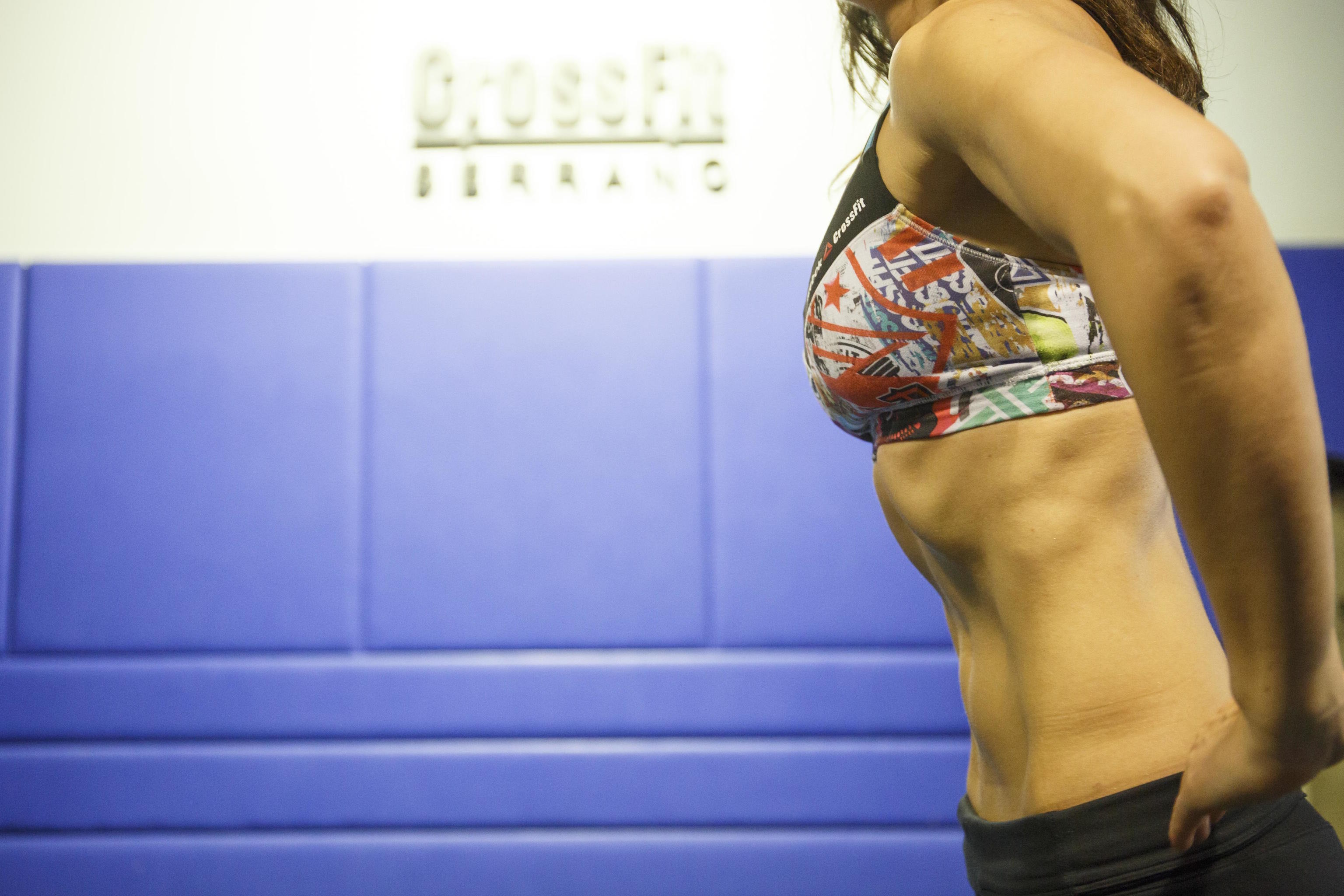
No, even though it may seem like it, this is not the classic 'clickbait' headline followed by an unfulfilled promise. Simply by adopting a correct body posture, we can not only improve our external appearance, but also achieve modulation of our emotions and our sense of well-being. Just by standing in front of the mirror, we can see how with small modifications we can look much better.
And this is not magic, but pure anatomy. "Body posture significantly influences biomechanics, respiratory function, and psychoemotional state. A posture maintained in flexion, with anteriorization of the head and projection of the shoulders, alters the alignment of the spine, modifies the distribution of loads, and generates a body image associated with shorter stature, abdominal protrusion, and lower overall tone," says Elisa Riveres (CAFYD registered number 63,829), certified Pilates instructor and coordinator of Mad Club Pilates Majadahonda (Madrid).
From a physiological point of view, Riveres explains, "a hunched posture limits thoracic expansion and diaphragm mobility, reducing respiratory efficiency. This decrease in ventilation is associated with lower oxygenation and increased activation of the sympathetic nervous system, related to states of fatigue and stress." On the contrary, "an upright posture promotes more efficient breathing and more balanced neuromuscular activation, which can positively influence mood and energy perception."
However, according to this physical activity and sports professional, "postural correction should not be understood as a rigid or forced position, but as the result of adequate neuromuscular control. The key elements are cervical alignment with slight chin elevation, activation of the stabilizing scapular musculature, and functional activation of the core, especially the transverse abdominal and deep spinal musculature."
To improve posture, it is essential to "combine body awareness, strengthening of deep musculature, and mobilityof areas prone to stiffness, such as the shoulders, thoracic spine, and scapular waist."
A basic exercise to try to improve our postural hygiene "involves working on self-elongation in bipedal stance (standing). It consists of distributing weight symmetrically, gently activating the 'core' (abdomen, glutes, and pelvic floor), lengthening the spine from the pelvis to the head, and maintaining the position with deep and controlled breaths." In this way, it ensures that "postural reeducation is favored and more efficient postural patterns are integrated into daily life."
Additionally, this specialist emphasizes that "methods like pilates with machines are especially effective in this context, as they are based on movement control, activation of deep musculature, and improvement not only in strength but also in postural alignment progressively and safely, which are interesting and vital at any age."
Yasmina Sancayo gives us her perspective on the matter from her experience as a former dancer and creator of Ballet Workout: "Many times, a bulging stomach is not a matter of fat or age, but of posture. We spend many hours sitting looking at screens with a 'closed chest' and misaligned hips. When the body loses that natural alignment, the abdomen relaxes, the shoulders droop, and the neck protrudes. We tend to sit on the lumbar area, and gradually we shrink, also due to gravity."
Shoulders rotated forward, chin low, shrinking... All those bad postures sustained over time, warns Sancayo, "not only shorten our figure and make our stomach look more bulging, but also give us an appearance of tiredness and sadness. Without realizing it, we adopt a collapsed posture that is directly related to lower energy levels, poorer breathing, and a low mood."
To regain that good posture that will make us feel better physically and emotionally, there is no other option but to "have a lot of body awareness, be very attentive to how we are positioned, and identify what we are doing wrong to correct it until we internalize it naturally. Thus, little by little, we will start feeling that the abdomen begins to activate and, almost without the need for specific exercises, it regains its muscle tone and the waist narrows. Or that the chest opens up, elongating and stylizing our entire figure, making us 'grow' those centimeters that bad postures and gravity had made us lose."
To help us feel that 'mechanism,' Sancayo proposes a very practical and visual exercise. "Feel as if we are zipping up an imaginary zipper that cinches our torso, from the pelvic floor to the lower part of the ribs."
The creator of Ballet Workout, who has just launched her first capsule collection of workout clothes with the Spanish brand Klauss Brand, emphasizes a very important point: "Although not as visible as the figure stylization, the internal change is much more powerful than the external one, because breathing improves, the deep 'core' musculature is activated (something basic for preventing back pain, protecting organs, and caring for the pelvic floor)." But there's more. "In the end, we are sending a message of security and stability to our brain that changes how we feel and how others perceive us," she concludes.