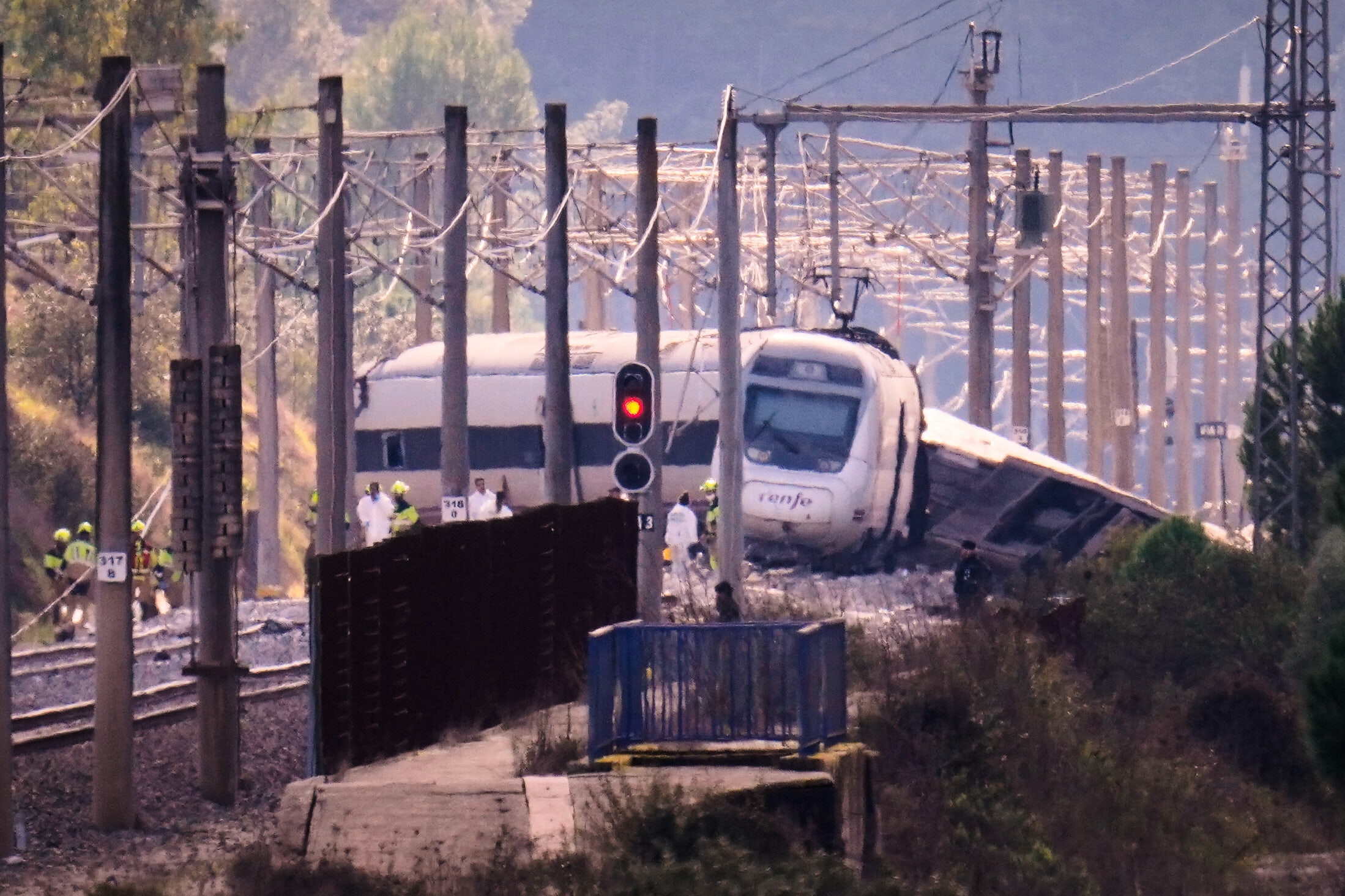
The European Commission has demanded explanations from Spain regarding the use of European funds in the Madrid-Seville line. Following the train accident in Adamuz, Brussels contacted the Spanish authorities as the EU allocated 111 million in 2023 for the renovation of that line, which had become "obsolete." And, as confirmed to EL MUNDO by sources from the European Commission, they have not yet received any response.
"Following the accident in Adamuz, the Commission requested the Spanish authorities to provide data on the status of the project's execution. Once received, they will evaluate the response from the Spanish authorities," those same sources explained to this newspaper. "We are waiting for an official response," they added at the Commission.
When approving the allocation of those 111 million, the Commission stated that "the line is designed for speeds of up to 300 km/h and, in this sense, currently operates at maximum performance levels." "Projects carried out since 1992 have improved the quality of service and maintained high levels of safety. However, given the latest technological advances, the line has become obsolete compared to the rest of the Spanish high-speed network," it stated. And now, after the accident, Brussels wants to know the status of that project, how the funds have been used, and if the necessary regulations have been complied with.
"Any investment supported by European funds must comply with the applicable national and EU legislation," they continue at the Commission, and they remind that "the project Infrastructure Improvements on the Madrid-Seville high-speed line spans two EU funding periods [2014-2020 and 2021-2027] and can be implemented until the end of 2030."
The Commission's request for information is undoubtedly very relevant, and it is compounded by the pressure that the PP has been exerting in Brussels in recent days. The Spanish delegation of the EPP not only inquired with the EU about this obsolescence situation but also pointed out to the European Commission that the European Investment Bank (EIB) stated in 2022 that the Madrid-Seville line was "at the end of its service life."
"Therefore, the EIB granted ADIF a 90 million euro aid for its renovation," popular sources stated yesterday, while adding that this is documented "in the official documentation of the European Investment Bank, which on March 25, 2022, granted a loan of 90 million euros to ADIF Alta Velocidad for this railway infrastructure." And to these figures, "the 111 million that were also invested in European funds in the same line in 2023 and which have also been made known by the work of the Partido Popular," they emphasized.
The PP insists that in the project file, the EIB noted that the financing aimed to maintain the high standards of "availability, reliability, and security" required for this type of critical infrastructure. "The project identified the need to renew the civil works, the track, electrification, signaling and telecommunication systems, as well as to deploy the European railway traffic management system, precisely due to the aging of the essential elements of the line, in service since 1992," they added.