The difference between reading a novel, adapting it, or making a hat out of it is not always clear. William Wyler, for example, read Wuthering Heights back in 1939 and brought it to the screen with taste, dramatic sense, lots of thunder, and an unleashed Laurence Olivier and Merle Oberon. Buñuel took Emily Brontë's novel in his hands and saw in it the most evident and crazy illustration of all that is dark, all that is dreamt, of the surrealist forces by necessity of the sinister. Taking it a step further, what Andrea Arnold dared to do just a few years ago, in 2011, was something like tearing the soul out of the book itself and violently throwing it against the screen. The three are readings, adaptations, and, pushing it, magnificent hats, so that, each in its own way, they have irreverence with a text whose nature is irreverence.
And then there is what Emerald Fennell proposes, which is basically the same as the three aforementioned predecessors (there are countless more), but in reverse. Here, what matters is the hat, one with many feathers. The idea is to subject the most tortured, bleeding, murky, and visceral version of the much-maligned romantic love to something like an electroshock or, better - given that the soundtrack is by Charli XCX - electropop. The director of the undeniable earthquakes Promising Young Woman and Saltburn proposes not so much a reading or an adaptation as a kind of total amendment, an exaggerated revision of the foundational principles of passion, of passion in colors. It seems that, faithful to the times that run and rush us, the idea is nothing but to turn every fragment of the novel into a kind of dazzling Instagram post for consumption as fast as it is obsessive. And with many emojis. Everything surprises, everything enchants, everything demands to be shared immediately, and, worst of all, everything is condemned to oblivion in the infinite scroll of images proposed by the film.
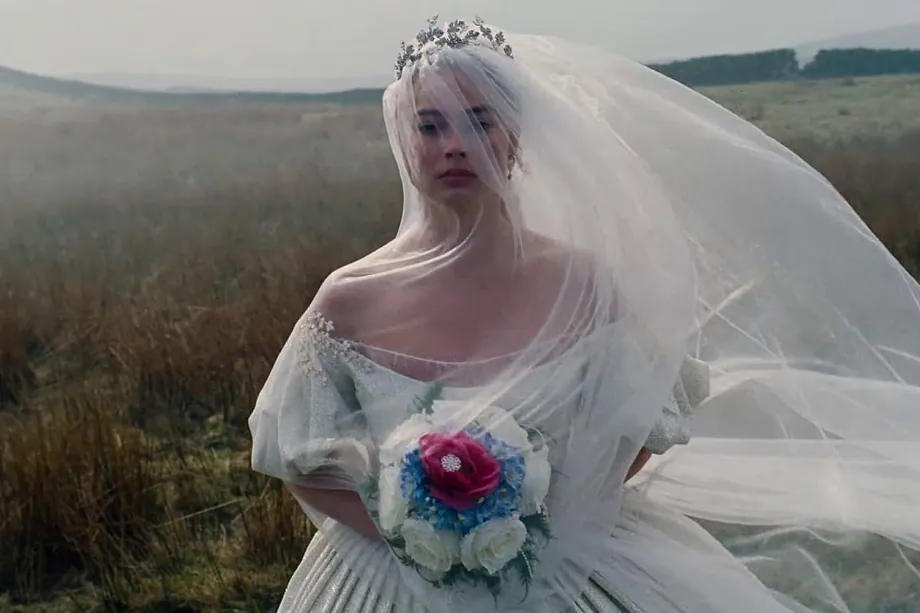
In this way, and oblivious to the narrative fairy tale structure of the original text, the film linearly fables the encounter, in the mansion of Wuthering Heights and in the most tender of childhoods, of the poor disinherited Heathcliff (Owen Cooper) and Catherine (Charlotte Mellington). The start of the film, between the morbid, the raw, and the extravagant, during the celebration of a hanging followed by a hint of an orgy sets the tone. The relevant thing is to never leave indifferent. The kids grow up, they become Jacob Elordi and Margot Robbie, and they love each other. But, and this is what matters, they love each other poorly in a display of worrying lack of chemistry. They do so, yes, without measure, without control, and without hope. They love each other so much that they have no choice but to make life impossible for each other. They love each other to the most exhausting of exhaustion. They love each other in a palace with the appearance of the storage room where Jean Paul Gaultier piles up all his nightmares or, worse, the leftovers from the last Christmas campaigns. It's not baroque, it's worse, it's uncontrolled. All the part about the heirs, by the way, is left out.
Let's say that all the visual solutions, from the wall the same color as the protagonist's skin to the dollhouse that exactly reproduces Thrushcross Grange of the Lintons, passing through the fireplace made of human hands, overwhelm. And they do so with a fascination for anachronistic winks and pop excesses as amusing as self-indulgent, as hypnotic as gratuitous. The reinterpretation of the classic that Fennell proposes (let's not forget that we are talking about the director of the bomb Promising Young Woman) is allowed everything, and it's fine that way. The problem, and not a minor one, is the insignificance of everything, the lack of emotional pulse, the grammatical emptiness, the hasty confusion. When the protagonist recites before his beloved's corpse those words, "I cannot live without my life! I cannot live without my soul!", the weariness, both visual and argumentative, is such that the words, some of the most serious and superb ever written, are left without strength, unsupported, without edge, without abyss. A hat.
Director: Emerald Fennell. Cast: Margot Robbie, Jacob Elordi, Hong Chau. Duration: 136 minutes. Nationality: United States.