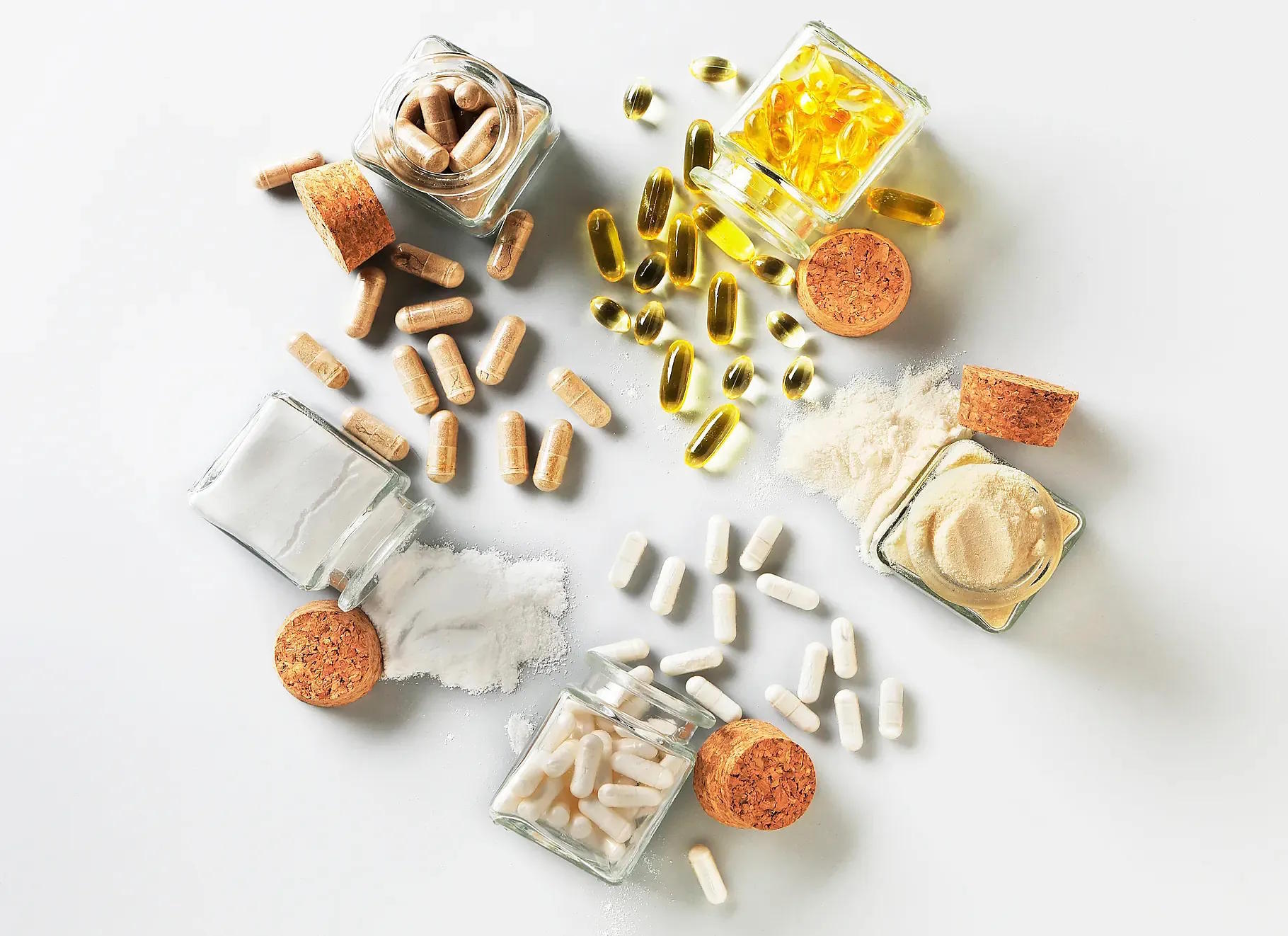
We all seek the magic pill. A miracle so we don't have to do things right for ourselves. And perhaps that's why supplementation is thriving. It's less tough and easier to buy a blister than to reserve an hour daily for strength training, walk 10,000 steps, eat good nutrients, and sleep eight hours. But not only laziness justifies buying collagen to compensate for those ultra-processed foods, melatonin because we don't manage stress, or vitamin D because we don't go out in the sun. We live in a world not designed for health: sedentary jobs, cheaper sugar-rich products, and little free time.
Marketing has been brilliant in convincing us that the solution comes in a bottle. According to a Statista report, 80% of Spaniards over 18 have consumed some dietary supplement, and 70% have done so in the last year. The sector went from billing 1.7 billion euros in 2019 to over 2,000 million in 2023, with an annual compound growth of 8.6%. And that's not even counting the last two years, where there has been a real boom. However, the trees prevent us from seeing the forest, according to the family doctor Odile Fernández (Granada, 1978), author of El poder de la suplementaciónThe (Power of Supplementation (Ed. Planeta), on sale on February 11.
"A dietary supplement helps, but good habits are the foundation of the pyramid," says someone who overcame metastatic cancer and decided to study and research what changes she could make in her life to improve treatment. "This happened in 2010, I overcame the disease, I am a mother of three children, and now I try to provide my patients with tools aimed at prevention, but also to people with the disease, through books and talks."
She chose medicine out of a vocation for service, to help alleviate human suffering, and now practices it from another perspective that fulfills her more as a professional. "At first, it was a tragedy, but I emerged stronger. I changed my attitude towards life, and I trained in what I believe can really save us: good habits," she reflects. That's why she is surprised in consultations when a diabetic prefers to take metformin rather than walk more or eat better. "With supplementation, we are seeing the same: people prefer to take a multivitamin without taking the step to medication, but they also don't go to the root and change the habit," she concludes.
Question. Is supplementation necessary?
Answer. We aim for good health. What role should supplementation play?
Supplements can help, but habits remain the foundation, the most important aspect. We need to be aware that we should eat better, exercise, sleep, reduce screen time, and try to be calmer. Supplements help us address deficiencies, improve symptoms, and prevent long-term diseases. However, lifestyle is the key.
Q. In North America, almost everyone takes supplements. What do you attribute this trend to, which Spain is starting to adopt?
A. People are increasingly aware of the side effects that medications often have and that they sometimes alleviate but do not fully cure. Therefore, individuals seek alternatives to avoid medication. We also perceive that our health is deteriorating: poor eating habits, lack of sleep... and we seek a magic pill to relieve symptoms not related to any specific disease but rather to the Western lifestyle.
Q. We seek to improve focus or have more energy through vitamins, but what do we do if the environment is not conducive?
The issue is that we live in a society where we are constantly rushing, making it challenging to do things properly, no matter how conscious we are. The Western lifestyle indeed poses challenges, and supplements can help. However, it is crucial to know which supplements are worthwhile and which are not, as often we self-prescribe, mix substances, choose low-quality supplements, which is not a solution either.
Q. Is it true that foods no longer provide the same level of nutrients?
A. Certainly, how foods are cultivated or how livestock is raised also plays a role: foods are deficient in many minerals, enzymes, and vitamins. Additionally, the use of mobile phones and screens makes it almost inevitable to overuse devices, even if we try to go to bed early, which also contributes to deficiencies. Nighttime exposure disrupts circadian rhythms, worsens sleep, affecting how we absorb and utilize nutrients.
Q. What supplementation do we need?
A. One of the issues with nutritional diagnosis is that we do not always measure what we should, and routine tests do not necessarily reflect reality. For example, vitamin D does not appear in routine tests: if you do not specifically request it, you will not know if you have a deficiency. This explains why many people only discover low levels when tested on their initiative or when a doctor suspects a deficiency. Magnesium presents an even more complex situation. Blood tests measure serum magnesium, but this represents less than 1% of total body magnesium: most of it is in bones, muscles, and cells. A person can have "normal" levels in the blood and still have intracellular deficiency. "That is the goal of the book: to shed some light on this matter. When do we need to supplement, what supplement do we need, how to take it, and for how long," says the doctor.
Q. The paradox is evident: we buy supplements based on trends or feelings, but often do not know if we really need them. Are we doing it wrong?
A. In an ideal world, all doctors should have training in supplementation. This way, patients could resolve many doubts. However, official medicine progresses slowly and relies heavily on traditional pharmacology. If we are fortunate enough to find a doctor with an integrative vision and training in supplementation, they can guide us. However, it is true that doctors also face challenges: if you are limited in the number of vitamin D tests you can request, or if magnesium levels appear normal in the blood, intracellular levels may still be deficient. Hence the importance of information, to be able to make a decision if we have not had that healthcare support. We need to know which things are safe and which may interact because some supplements can interact with the medications you take, which could be disastrous.
Q. Which supplements are safe? Are there any innocuous ones?
A. Vitamin D and magnesium, in appropriate doses, are practically safe for everyone. For example, vitamin D supplementation between 2000 and 4000 units per day is generally safe for most people. Ideally, having a test that indicates if we need it and for how long would be beneficial. Knowing which supplements are safe and in what doses allows us to supplement and improve our quality of life. Especially magnesium and vitamin D, which are among the most necessary.
Q. Is it true that, despite being a sunny country, the majority experiences a vitamin D deficiency?
A. Studies indicate that nearly 80% of the Spanish population is affected by a vitamin D deficiency. We also know that we consume little magnesium because the soils are depleted, and stress and lack of sleep increase our requirements. If we do not obtain it through food, a magnesium supplement can be very beneficial, in safe doses of around 300 mg per day. We live at a fast pace, and perhaps the mineral most needed in this stressed society is magnesium.
Necessary dietary supplements
Sometimes we accumulate supplements without purpose, duplicate doses, and are unaware of the optimal time for consumption... Let's shed light on how we consume supplements with Fernández.
Q. If people wanted to have a basic set of supplements, the most common and useful ones, although everything is personalized, what would you say are the essentials?
A. There are supplements that we could almost say are a "must-have." Especially from the age of 40, vitamin D during the months with less sunlight is crucial. In many countries, the entire population is already supplemented in autumn, winter, and early spring. Vitamin D not only plays a role in bone health, as we have always been told, but also in the immune system. It is anti-inflammatory, antioxidant, and involved in the aging process. It should be taken for at least six months a year, with doses of 2000 to 4000 units daily.
Q. Most professionals also point out magnesium as essential.
A. For most of the Western population over 40, yes. In the form of bisglycinate or malate, which are best absorbed. Magnesium is involved in 300 enzymatic reactions: it helps produce energy, relaxes us, improves sleep, maintains muscle and bone health, and activates vitamin D. The recommended dose is around 300 mg per day.
Q. Another essential is omega-3. It is an essential fatty acid that we do not produce and must obtain from the diet, right?
A. Omega-3 has a great anti-inflammatory power, supports brain and heart health, and aids in concentration. The issue is that we consume insufficient omega-3. It is found in fatty fish, flaxseeds, chia seeds, and to a lesser extent in nuts. Not everyone eats fatty fish three or four times a week, which would be ideal. In the Western diet, we consume a lot of omega-6 and very little omega-3. Omega-6 is pro-inflammatory, while omega-3 is anti-inflammatory. Hence, this supplement can be crucial.
Q. Regarding omega-3, why is it said to need the IFOS seal to guarantee quality?
A. There are three forms of omega-3 supplements: from fish, microalgae, or krill. In my opinion, the most interesting ones are krill and algae. If the supplement is from fish, it is important to ensure that it comes from small fish like anchovies or sardines, rather than large fish like salmon or cod, as they will have fewer heavy metals or dioxins. Also, it should be from wild-caught fish, not farmed. The IFOS seal guarantees the quality of the fish.
Q. What is krill?
A. Krill is a small crustacean that whales feed on, harvested in the Antarctic, and free of heavy metals and dioxins. I find krill more interesting than fish because it penetrates cell membranes better, is more effective, and requires lower doses since its omega-3 is in phospholipid form. Then there is microalgae, which is also very interesting, cleaner, more environmentally friendly, and suitable for vegans.
Q. What about the buzz around melatonin?
A. With age, we produce less melatonin, which is the sleep molecule. This is why we age and why cancer is more prevalent in older individuals. A sustained-release melatonin supplement can help us rest better, and with better rest, we age better. For me, it is one of the most interesting supplements, more personalized, and recommended from around the age of 50. It is also anti-inflammatory and antioxidant, aiding in disease prevention by allowing damaged cells to repair during the night.
Synergies and Interactions
It is said that every supplement triggers an effect. So sometimes, even if we choose well, we may not optimize consumption, as Dr. No supplement is completely harmless if taken with medication, for example, and we must be careful with that, she warns, because we can harm ourselves and do more harm than good.
Q. Does collagen absorb the same without vitamin C?
A. Synergy is important. Sometimes, if I don't take one supplement with another, it will be of little use to me. For example, collagen: there are many on the market. Ideally, collagen should incorporate vitamin C because it helps produce collagen and also hyaluronic acid, which enhances its action. If I buy collagen alone, without vitamin C or hyaluronic acid, it will be of little use.
Q. What other combinations are interesting?
A. Vitamin D should always be taken with K2 and, ideally, also with magnesium, which enhances the absorption and activity of vitamin D. Another important combination is turmeric with black pepper. Turmeric is a potent anti-inflammatory, but it is poorly absorbed. When combined with black pepper, its absorption improves. Another good combination is magnesium with vitamin B6 because B6 promotes neuromuscular support and relaxation of the nervous system provided by magnesium. And iron with vitamin C.
Q. What interactions are dangerous when taking supplements?
A. There is a risk of interaction with medications. That is one of the current problems: people take many mixed things that can interact with the medication they are taking. For example, turmeric is wonderful, it can reduce pain and inflammation, but it interacts with some chemotherapies, so caution is needed. Or St. John's Wort, which many people take to improve mood, can make the antidepressant you are taking ineffective. We have said that there are very safe supplements, the three or four we have mentioned, but there are others that interact and the remedy can be worse than the disease.
Q. Are multivitamins, understood as a pill with a bit of everything instead of taking several separately, useful?
A. When we choose a multivitamin that has a bit of everything, sometimes we duplicate doses with other supplements we take separately. And the compound amounts are not close to optimal daily doses. Sometimes multivitamins contain subtherapeutic doses, which are useless. They contain so many things, trying to pack many ingredients into one capsule, and we end up wasting money because they are of little use. That's why it's important to know what doses I need. For example, magnesium: we have said that we need about 300 mg a day. If I take a supplement that only provides me with 50, it is of little use to me.
Q. So, self-supplementing, as many people are doing, do you see it as a bad idea?
A. No, there are things that I do see as good. As I said, I believe that most of us should supplement without the need for great supervision: vitamin D for six months a year, magnesium, omega-3, and melatonin from the age of 40. But taking probiotics without knowing which ones, or herbs because they work for the neighbour, doesn't make sense. Maybe she has anxiety and you have migraines, and what works for her may not work for you. There are supplements that are good for almost everything and others that only work in specific situations. If we do not have a professional to guide us, it is important to know what each supplement is for: what we need in menopause or in diseases like cancer. In oncology patients, due to treatments and stress, it can be interesting. But it must be done sensibly because some things interact with chemotherapy.
Q. Is the time of day also important? Some people take everything in the morning or everything at night so as not to forget.
A. Yes, it is important. Sometimes we spend money on a quality supplement, but we do not take it when it really works. For example, vitamin D should be taken at breakfast or lunch, always in sunlight. Taking it at night is not effective. And better with food because it is better absorbed. Omega-3 is also better with food. If I take magnesium to help me sleep, it is better at night. And if I have nighttime anxiety and take lavender, also before going to bed. Light must also be shed on this: just like medications are taken at a specific time, the same goes for supplements.
Menopause, Microbiota, and Stress
Q. Finally: the star topics. Why does everyone claim to have SIBO? Is there a probiotic that can help?
A. To what extent is ashwagandha useful for improving stress, anxiety, and sleep? Should all women supplement from the age of 40? The doctor responds.
Q. You have a specific chapter on menopause. What supplementation can be useful for women in this stage, where quality of life is often poor?
A. It is a time where supplementation seems particularly important to me. Menopause is not a disease, it is just another stage in women's lives. Furthermore, we come out of menopause more liberated and empowered. The issue is that transition: hot flashes, night sweats, mood swings, anxiety, disrupted sleep, increased risk of osteoporosis, drier skin, or decreased sexual desire due to the drop in estrogen levels. During these transitional years, lifestyle plays a significant role: good nutrition and exercise. But smart supplementation makes a difference, and this is where the positive effects to alleviate symptoms are most noticeable. Plants like black cohosh are very effective. It has been shown that 40 mg per day significantly reduce hot flashes, night sweats, and mood swings. Also, saffron, used by the Egyptians, improves mood, anxiety, or mild depression associated with menopause.
Q. Keeping in mind the basics mentioned?
A. Bones suffer when estrogen levels drop, so vitamin D supplementation is essential, along with K2. Magnesium is also ideal because it helps relax the mind and body. And omega-3, as estrogen protects the heart and brain, and when it decreases, the cardiovascular risk and difficulty concentrating increase. Thinking about the skin, collagen can be interesting. And for libido, which tends to decrease, maca, saffron, or ashwagandha can help.
Q. Speaking of this adaptogen, is it as miraculous for stress as it is marketed?
A. For managing stress, lifestyle comes first: learning to pause, breathe, do yoga, or meditate. But there are plants and supplements that can help. Magnesium is essential. For me, it is one of the most important supplements. Then there are plants that help the body deal with stress. It is not like an anxiolytic that leaves you "KO," but they improve how the body copes with it. Here, ashwagandha, rhodiola, and lavender are the three that can help the most. Perhaps the most effective and most studied is lavender, which has been used for many years. It is the most relaxing and calming for mild anxiety.
Q. Is there any truth to the recent bad reputation of ashwagandha circulating on social media?
A. Ashwagandha is an adaptogen: it does not remove anxiety but improves how it is dealt with. Its effect has been demonstrated in clinical trials with doses of 300 to 600 mg per day. The issue is that if taken for more than six months, it has been observed that in some people, it can alter liver transaminases. That is why it is not recommended to take it for more than six months in a row: it is taken for that time and then a few weeks break before resuming. Hence the importance of information: not everything is suitable, neither any dose nor any duration. Also, choosing the right supplement is crucial. The appropriate form is the extract of ashwagandha root, which is what helps and is non-toxic. If you simply take powder from the plant, which is cheaper, it can have side effects, especially on the liver.
Q. If you see that one ashwagandha supplement costs two and another six, you have to wonder why.
A. That's why when choosing a supplement, quality must be sought. In plants, always standardized extracts, with a seal, patent, or brand that backs the product. Perhaps one is cheap powder and the other is a concentrate of active compounds, which are the withanolides.
Q. Regarding microbiota issues, is it beneficial for people to take probiotics if, for example, they are taking an antibiotic?
A. I believe it is important to seek a professional who knows what we need. One of the problems is that people go to the pharmacy or herbal store and ask for any probiotic, which may not be suitable for their case. Taking probiotics after antibiotics to repopulate the flora is different from taking them for a mood issue