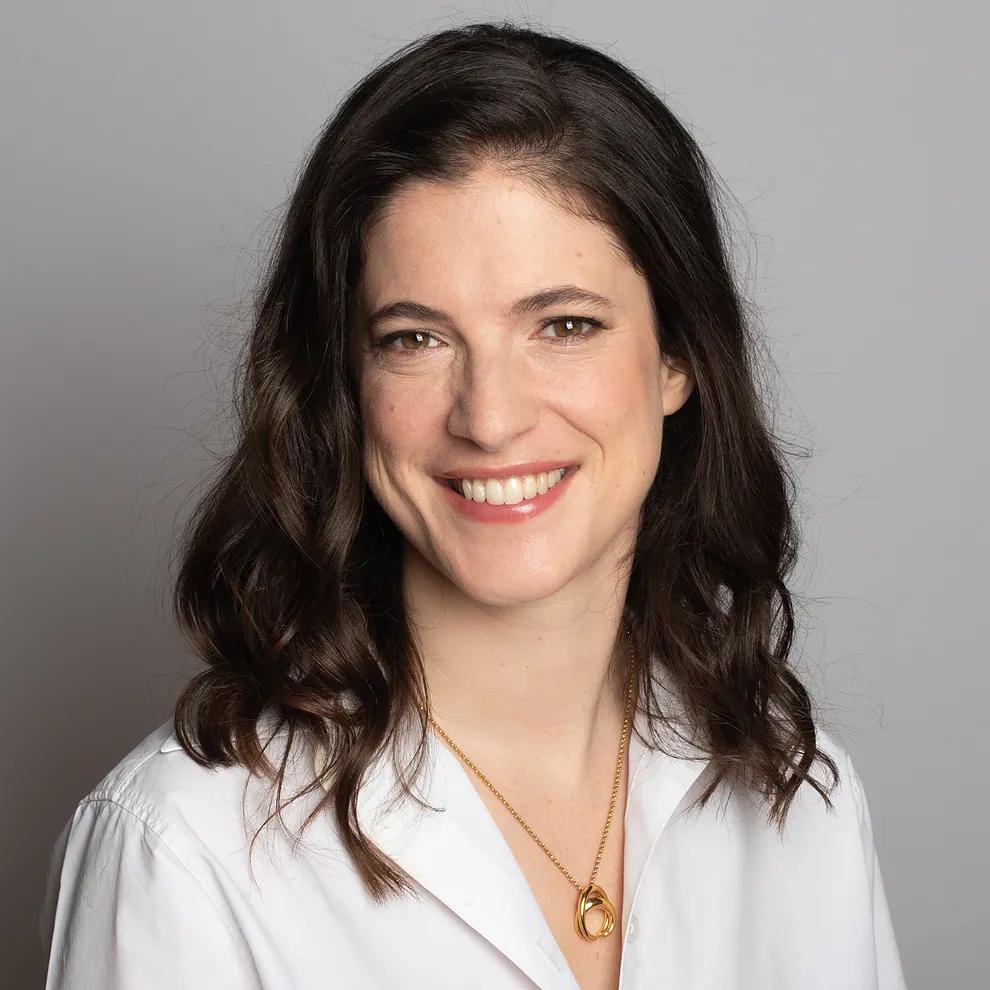
Why do we constantly feel tired? How can we explain our constant food cravings? What is the relationship between our sleepless nights and our lifestyle? Emilie Steinbach (Brussels, 1992), Ph.D. in Integrative Biology and expert in neuronutrition, reveals in her new book El Protocolo (The Protocol ) 10 simple and sustainable steps over time to reset our health in just 24 hours. She clarifies that "it is not a magic solution that fixes all our problems, but a set of interconnected practices that mobilize the body as a whole."
In these pages, there are curiosities like properly brushing your teeth can be key to protecting our brain, to very solid evidence backed by science, such as strength training being a life insurance. The Dr. ensures that by applying this decalogue, small improvements can be noticed from the first day.
Question. We are in January and many people are looking for immediate results. In your new book, you propose a protocol that delivers results from day one, while also discussing long-term habits. Isn't it contradictory to offer quick changes when criticizing the 'miracle solution' mentality?
Answer. I am a scientist, so I am completely against the idea of a magical solution. I believe that setting goals to change overnight is very dangerous and harmful because it leads to failure. That is not the idea of the book. I know the title's marketing is strong. We had to find an angle to make it accessible to everyone. The goal is for it to be easy to read, even at the beach, and to propose small changes that are very easy to implement with real impact. The way to make it didactic and accessible was to structure it as a one-day protocol. It's like a toolbox. It was very important to me that people understand how their habits influence their health.
Q. You state that many diseases are not due to bad luck, but to our daily choices. What habits do you consider most harmful and normalized? For example, alcohol is assumed to be normal in almost all generations.
A. Life expectancy is increasing, but we are dying slowly. In France, up to 84 years old, but we spend 10 or 15 years with chronic diseases. The main factors are alcohol, smoking, obesity, type 2 diabetes, eating ultra-processed foods rich in sugar, and compensating for them with unhealthy behaviors. For example: a tough workweek and we open a bag of chips. Also, more and more young people are using drugs. In the book, I don't focus too much on those with addictions. I talk more about nutrition and habits that are easier to change on one's own. If someone has alcoholism, they should seek help beyond the book.
Q. Can a thin person be metabolically sick without knowing it?
A. Totally. In type 2 diabetes, weight loss can even occur initially. Physical appearance doesn't tell the whole story. You can be thin and feel tired, anxious, sleep poorly... There are also hidden obese individuals: thin people with low muscle mass and too much fat. That's why we need to talk about body composition, bone density, muscle tone, and fat distribution. Fat in the thighs may be healthy, but visceral fat is associated with a higher cardiovascular risk.
Q. What does the body tell us when we feel fatigue?
A. Fatigue can come from a bad night's sleep, accumulated stress, lack of contact with nature, or metabolic issues. It's multifactorial.
Q. What happens in those first 24 hours when we start synchronizing with light, improving food, and adapting sleep to the biological clock?
A. Exposing yourself to bright light in the morning is key to having energy and improving nighttime sleep. Going outside without sunglasses or a hat sends a signal to the brain to synchronize the internal clock. If there is no natural light upon waking up — as in winter — the melatonin synthesis is prolonged, making it hard to start the day. The brain doesn't understand that it's daytime. The first step is to always wake up at the same time and expose yourself to natural light within the first hour after waking up. It has clinically proven effects on sleep, appetite regulation, and serotonin synthesis.
Q. Chrononutrition is one of the pillars of the book: it's not only about what we eat, but when. What impact does that have?
A. It's never a good idea to have a croissant and juice for breakfast: they are refined sugars. Occasionally it's fine because food is also pleasure, but it's not ideal. A breakfast rich in proteins (eggs, fish, yogurt with seeds, ricotta on bread) promotes dopamine synthesis, improves cognitive function, energy, and reduces appetite throughout the day. It also decreases cravings for sugary foods, improves emotional stability, and increases frustration tolerance. I recommend 30g of protein for breakfast, fiber and good fats, and avoiding juice, which is equivalent to a Coca-Cola in terms of sugar.
Q. Why do you recommend not drinking coffee after 2 p.m., even for people who think caffeine doesn't affect them?
A. Nothing immediate happens after drinking coffee post-lunch, but from a physiological standpoint, it's best to avoid it. Caffeine has a long life and acts on adenosine receptors, masking tiredness. This delays sleep, makes it less deep and fragmented, even if the person believes it doesn't affect them. Additionally, in women on contraceptives or during menstruation, caffeine is eliminated more slowly and reduces iron absorption.
Q. You advocate for a nightly fast of 12 to 14 hours. What benefits does it have beyond being a weight loss strategy?
A. Counting calories doesn't work because it creates a neurotic relationship with food. And that's frustrating. Observing meal timings achieves a similar restriction in a simpler way. It's also an ancestral habit: we didn't eat at night before. Eating late interferes with melatonin, sleep, and hunger hormones (leptin and ghrelin). Ideally, dinner should be at least two hours before bedtime. This also improves intestinal function thanks to the migrating motor complex, which promotes transit and digestion. I recommend a minimum of 12 hours without eating (for example, from 8:00 p.m. to 8:00 a.m.) and up to 14 hours. If there are no eating disorders, muscle weakness, or chronic stress, occasionally trying a 16-hour fast for weight loss is possible.
Q. This will be challenging for Spaniards, who have dinner at 10 p.m...
A. You have dinner at 10:00 p.m., but you go to bed later. The cultural bedtime isn't as important, but trying not to eat during the two hours before sleeping is crucial. I imagine you also wake up later, right? In Mexico or France, sometimes we start at eight, it's horrible. I would love to live in Spain because in France, we have to wake up at six. I like going to bed early and waking up late; I would love to fall asleep in France and wake up in Spain... Sorry, I got distracted [laughs].
Q. How can we tackle the problem, which you describe as a pandemic, of obesity if it's multifactorial?
A. I did my doctorate on obesity. There is an obesity pandemic, and it's not just an aesthetic issue: it increases the risk of numerous cancers, affects mental health, promotes type 2 diabetes, and cardiovascular problems. We know that by 2050, one in two people will be obese or overweight. What I propose in the book is to have optimal mental health, maximum cognitive performance, feel energy, motivation, and the ability to fulfill dreams.
Q. You also mention that epigenetics can help against Alzheimer's.
A. Lifestyle has a huge impact on how the brain ages and the likelihood of developing diseases. You can reduce the Alzheimer's risk by 40% with good habits because they are linked to lifestyle. Genetic factors only explain between 1 and 3% of cases, meaning it's rare for it to be solely genetic. But these cognitive abilities are fascinating. In studies of older people over 10 years, those following a Mediterranean diet — like in Spain — have brains that are 7.5 years younger than those following an American diet and a 53% lower risk of developing Alzheimer's. I mention this in the book.
Q. Why is caring for muscle mass crucial for healthy aging and disease prevention?
A. Muscle mass isn't just for a nice body in summer, but to live longer and better, to be able to care for grandchildren at 70. It's a longevity predictor, especially in women, because many are hesitant to do strength exercises, and muscle mass deteriorates, especially after menopause. That's when we should strengthen it to avoid cardiovascular risks. In perimenopause, fat shifts from gynoid (thighs) to apple-shaped (abdomen), increasing cardiovascular risk. That's why increasing muscle mass is essential.
Q. Can a daily act like brushing teeth affect inflammation and the brain?
A. Yes. I have a dentist friend who told me about a bacteria related to Alzheimer's. At first, I thought it didn't make sense, but during my microbiome doctorate, I studied Porphyromonas gingivalis. Without good hygiene, resistant plaque forms between teeth and gums, causing inflammation. Gums should be impermeable, but they let bacterial fragments into circulation. The body then goes into alert mode: low-grade inflammation throughout the body (fat, brain, tissues). This inflammation is implicated in obesity, depression, diabetes, and chronic diseases.
Q. Is bleeding gums an indicator that something is wrong?
A. When gums bleed while flossing, it's a sign of disease, but it can be addressed. In people with type 2 diabetes, improving oral health leads to disease regression and metabolic improvement. Additionally, those with family history of Alzheimer's have two to three times more