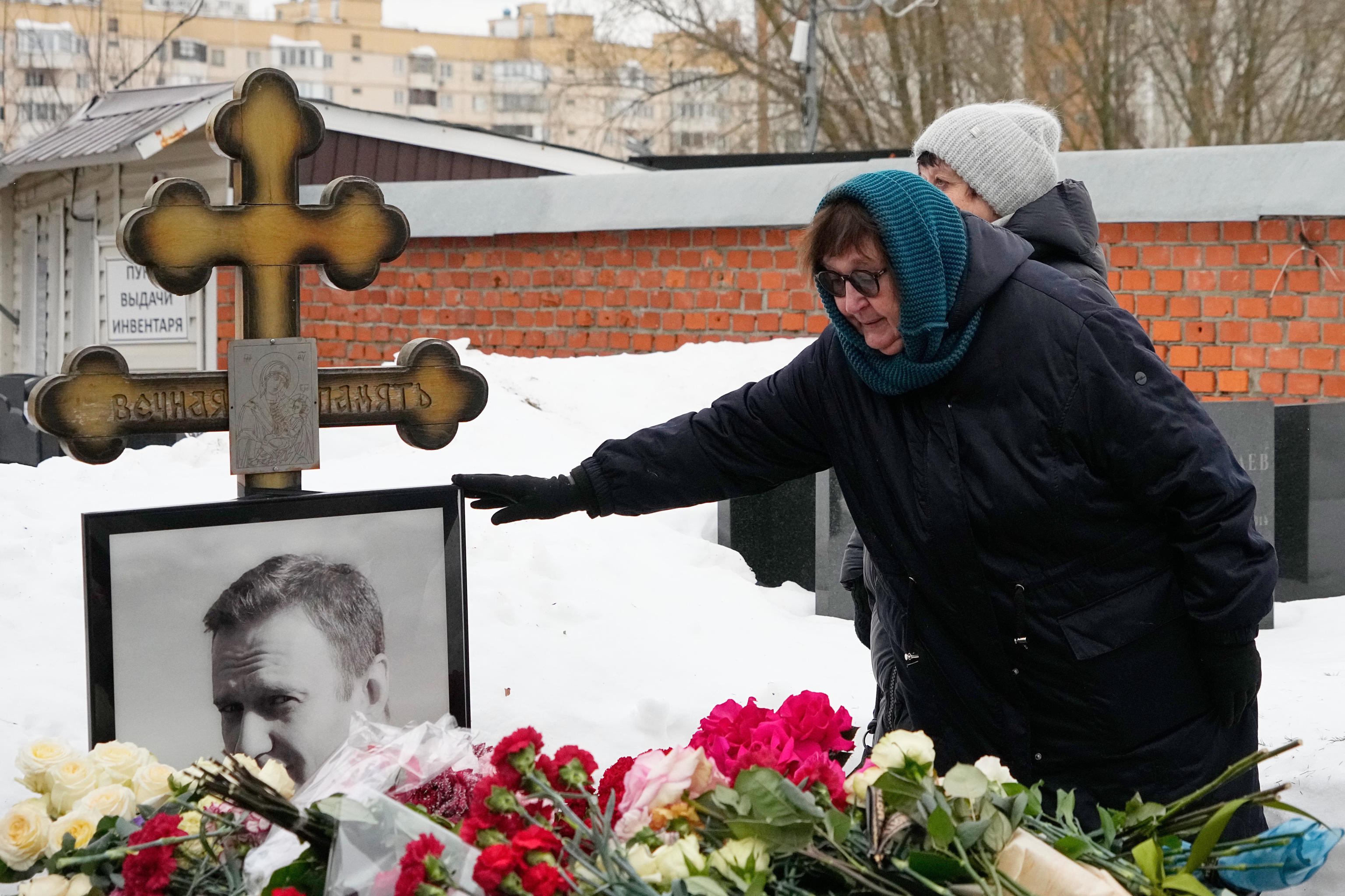
Russian opposition leader Alexei Navalny was killed with poison extracted from poison dart frogs, a genus of amphibians endemic to Central and South America. This was stated by the British Government in a joint official statement with France, Sweden, and the Netherlands just as the second anniversary of the dissident's death in a forced labor camp in the Arctic where he was serving a 19-year sentence for his anti-corruption activism is about to be commemorated.
London claims to have identified the type of poison used to kill Navalny through tissues of the dissident obtained (supposedly without the knowledge of Russian authorities) from the cell where he was when he died. The British Foreign Minister, Yvette Cooper, stated that "only the Russian Government had the means, motive, and opportunity necessary to use this deadly toxin against Alexei Navalny during his imprisonment." The British Foreign Secretary announced that the UK will report Russia to the International Convention on Chemical Weapons for the action.
Cooper made these statements at the Munich Security Conference, in which she is participating. British Prime Minister, Keir Starmer, denounced this morning in Munich that "Russia has shown its appetite for carrying out aggressions." Starmer also announced the deployment of UK warships to the Arctic, a new area of tension between NATO and Russia, which has been further complicated by threats from Donald Trump to occupy Greenland.
The toxin that killed Navalny was epibatidine, which, of the 203 known species of 'poison dart frog', is the only one, to our knowledge, that produces it. Moreover, this species — the 'Epipedobates Anthonyi'— only inhabits one country: Ecuador. All these frogs produce their poisons through their skin.
The UK investigation delves into extremely precise and somewhat macabre details. Cooper's words implicitly rule out the possibility that Russia produced epibatidine in a laboratory, despite this being feasible for the past three decades.
Furthermore, the frog only produces epibatidine from the food it consumes in its natural environment, making it practically impossible to obtain the toxin from specimens in captivity. This suggests an operation of enormous complexity by the Kremlin, perhaps with the aim of finding a poison exotic enough to hinder its identification. Epibatidine is about 200 times more potent than morphine. A very small dose causes death by respiratory failure.
Navalny died on February 16, 2024, in the penal colony IK-3, known as the "Polar Wolf", located in Kharp, within the Russian Arctic Circle. The penitentiary is one of the most remote in the country, situated in a region of extreme temperatures and almost total geographical isolation. According to the official version disseminated at the time by the Russian penitentiary service, Navalny felt unwell after a walk, lost consciousness suddenly, and could not be revived.
However, from the outset, his family and associates alleged that he had been murdered. For several days, the Russian authorities refused to hand over the body to his relatives, and when they finally did, the process was surrounded by strict restrictions and state supervision. His widow, Yulia Navalnaya, directly accused the Kremlin of ordering his death.
The toxicological confirmation announced now in Munich reinforces these suspicions and transforms the case from a death officially attributed to natural causes into a presumed murder by poisoning under state custody.
The fact that Navalny was under the total control of the Russian penitentiary system at the time of his death is a central element in the accusation. European governments emphasize that the Russian State was responsible for his physical integrity and that the administration of such a toxin would not have been possible without direct access to the detainee.
The case is also part of a broader sequence. In August 2020, Navalny had already survived an assassination attempt using the nerve agent Novichok, a military-grade substance developed in the Soviet Union. After falling seriously ill during a flight in Russia, he was evacuated to Germany, where he spent weeks in an induced coma before recovering. International investigations later concluded that the attack had been carried out by individuals linked to Russian security services.
Despite this precedent, Navalny voluntarily returned to Russia in January 2021, where he was immediately arrested upon arrival. He was subsequently sentenced in several judicial proceedings to long prison terms on extremism charges that he and his allies deemed politically motivated. His final sentence amounted to 19 years in a maximum-security penal colony.
During his imprisonment, Navalny was subjected to harsh conditions, including long periods of disciplinary isolation. His team repeatedly denounced the deterioration of his health and the harsh detention conditions.
The conclusion announced this Saturday at the Munich Security Conference introduces a formal international dimension to the case. The five European countries have presented their findings to relevant international bodies, arguing that the use of a toxic substance of this nature constitutes a serious violation of international law.
The Kremlin has repeatedly denied any involvement in the death of the opposition figure. Russian authorities have maintained that Navalny died of natural causes and have rejected Western accusations, dismissing them as unfounded and politically motivated.
However, the announcement made in Munich marks a turning point. For the first time, several European governments have officially stated, based on scientific analysis, that Navalny died as a result of deliberate poisoning while under the custody of the Russian State.