In March 2011, both the then British Prime Minister, David Cameron, and his Chancellor, George Osborne, grimaced every time they faced journalists, given their insistence on asking if they supported Prince Andrew as the UK's commercial ambassador, amidst a string of scandals during his honorary role. Publicly, they backed the Queen's favorite son, highlighting his efforts to open doors for British companies worldwide. However, behind closed doors, the media was reporting the government's true feelings, with no sympathy for the Duke if he were removed from the position.
Just four months later, Buckingham Palace announced that His Royal Highness was stepping down as the UK's Special Representative for International Trade and Investment, after a decade in the role. Naturally, the statement concealed the true reasons for his departure, which were the stain spreading over the prince's reputation. By then, discussions had started about his close relationship with the pedophile businessman Jeffrey Epstein, along with a long list of dangerous friendships, from Said, son of the Libyan leader Muammar Gaddafi, to the arms smuggler from the same country, Tarek Kaituni, and the intriguing son-in-law of the President of Kazakhstan, Timur Kulibayev, who bought the Duke a mansion in Sunninghill Park for £12 million, well above market value, in what was a royal jackpot. The first murky issue involving Sarah Ferguson had also surfaced, as she was recorded in 2010 offering access to her ex-husband in exchange for a substantial sum of money.
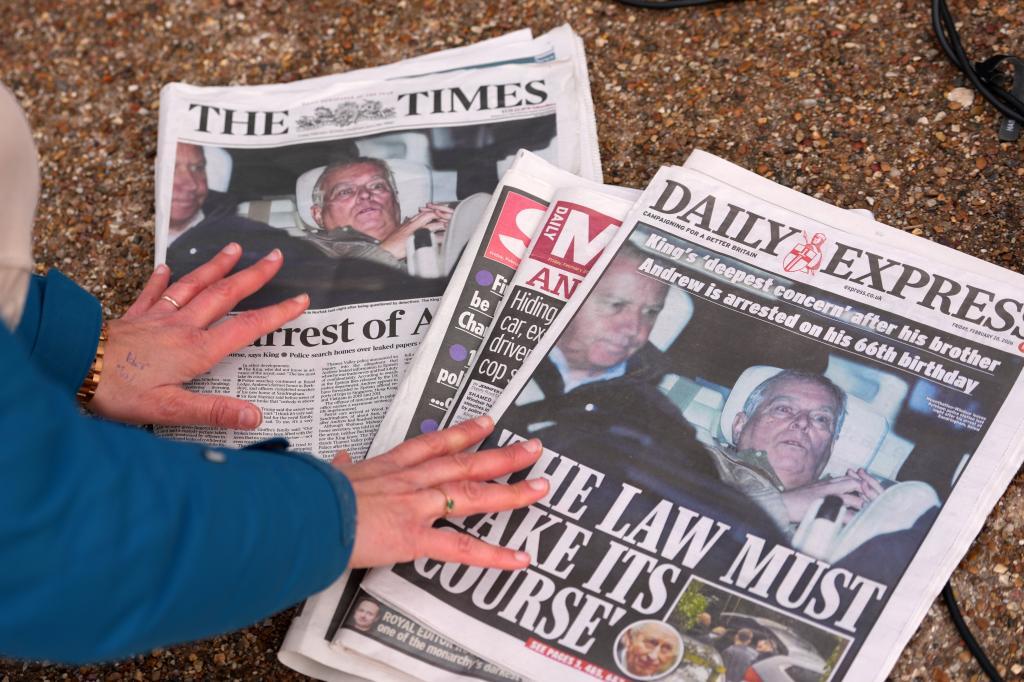
Last Thursday, the now former Prince Andrew Mountbatten-Windsor was arrested at his current residence, a mansion he describes as "a shoebox" in a secluded area of the Sandringham estate, owned by his brother, King Charles III. He was compelled to give an 11-hour statement at the police station as part of an investigation linked to the Epstein case, specifically focusing on the years between 2001 and 2011 when Andrew served as a commercial ambassador. There are suspicions that he may have engaged in "misconduct in public office", a serious offense that could lead to a life sentence, for allegedly leaking confidential UK Government documents to the pedophile businessman related to his official trips to destinations like Hong Kong, Vietnam, or Singapore, as well as privileged information on contracts, for example, in Afghanistan. Recently declassified US files suggest that the businessman arranged private meetings, trips, and presentations leveraging the connections of the Queen's son, who, in turn, had used his position, contacts, and influence for personal gain, a claim Andrew vehemently denies through his inner circle these days, leaving it to the police and the prosecution to determine.
A highly popular war hero
His appointment was not for any formal position, nor was it paid - Andrew, like the rest of the Queen's children, received a significant sum from the Civil List, the payment system in place until 2012 for active Windsors. Queen Elizabeth II appointed her son as a special representative for Trade in 2001 - supporting the government body UK Trade & Investment (UKTI) - to give him a prestigious role that would keep him occupied and enhance his image among the British public, which was excellent at the time. Andrew was an admired prince, much more than the Heir, Charles, especially because he had participated in the 1982 Falklands War, returning to Buckingham as a military hero - later on, the British fell in love with his nephew Harry for his military missions and bravery in the Taliban's realm. While tabloids portrayed him as a playboy, and his love life was a soap opera, it did not diminish his popularity back then.
After retiring from the military in 2001, Andrew needed a new life goal, which his mother sought for him, a coveted position that had been held since the late 1970s by the Queen's favorite cousin, Edward, Duke of Kent. There was some controversy surrounding his appointment, including objections that were not revealed at the time to the now King Charles III. However, then-Prime Minister Tony Blair thought it was a fantastic idea and accepted the Queen's request, advised among others by a key figure in the New Labour government, Peter Mandelson. Returning to the present, Mandelson is now at the center of another political earthquake in the UK due to the Epstein case, as he was also close to the financier and is being investigated, like Andrew, for possible misconduct by sharing confidential material with the pedophile.
During his tenure as a special commercial ambassador, Andrew faced various scandals, especially towards the end of his term. The press heavily criticized some of his actions, including trips to destinations that seemed to contradict the government's foreign policy. One memorable incident was when he clashed with a visit to China, revealing a complete lack of coordination in schedules.
His suitability was questioned due to the embarrassment caused by his meetings, such as a palace lunch with a fugitive member of the former Tunisian regime described by a former ambassador as the "worst criminal" he had ever met, investigated for money laundering, or his vacations with a Libyan arms smuggler. It was also revealed that some of his numerous trips supposedly for economic missions ended up as days of leisure at top-notch ski resorts, golf courses, luxurious resorts worldwide, and all sorts of paradisiacal experiences. All funded by the public purse, including his entourage's expenses. The press dubbed Andrew as Air Miles Andy.
A "rude" and reckless prince
The release of the famous Wikileaks archives allowed the dissemination of a secret cable from the US Ambassador to Kyrgyzstan, dated 2010, reporting to Washington on the prince's "rude language" and his reckless and inappropriate behavior in diplomatic circles. It detailed how the Duke of York openly criticized the UK Anti-Corruption Department during a lunch with several witnesses for jeopardizing a lucrative arms contract with Saudi Arabia, and journalists from the Guardian for "poking their noses everywhere," referring to investigations that uncovered the loopholes in the business with Riyadh.
When such episodes caused political crises, Buckingham remained silent, while the political elite tended to justify the prince's actions by claiming he had always been known for his frankness and somewhat arrogant character, which was a crime. It would take time before the first accusations from Virginia Giuffre emerged, vividly detailing how she was forced to have sex at 17 with the prince in Epstein's domains, marking the beginning of the disgraced Windsor's downfall.
From Downing Street and the British business elite, it was also highlighted that Andrew's role in promoting UK businesses provided a unique position as a member of the royal family, opening doors to dynasties, heads of state, and multinational CEOs worldwide that only royalty could achieve so effortlessly. However, it is now known that for too long, there were constant signs that the prince had a penchant for murky dealings, which were overlooked.
Central Asia and the Gulf Petro-monarchies were among the regions frequented by Andrew as a commercial ambassador. The close ties of the British royal family with all Arab dynasties guaranteed him a red carpet treatment on his trips to Saudi Arabia - one of the most visited nations - and neighboring states. Following the Wikileaks revelations, Simon Wilson, former Deputy Head of the British mission in Bahrain between 2001 and 2005, wrote an article in the Daily Mail where he mentioned that the prince was nicknamed IBH among the British diplomatic community in the Gulf: His Buffoon Highness, another example of his character.
Now, while the ongoing investigation could land the disgraced Duke in the dock, a Westminster parliamentary committee is considering investigating Andrew Mountbatten-Windsor's entire role as the UK's trade envoy during that decade. This could be a goldmine for the press. But the Monarchy faces turbulent times ahead, and it remains to be seen what foundations of the Crown will remain standing.
In this regard, the name of David Rowland, the controversial businessman and banker who was closely linked to Prince Andrew for years, resurfaced yesterday. Newspaper archives are full of reports about the business dealings that Rowland, a major donor to the Conservative Party for a time, allegedly conducted with the Queen's son. And the Daily Mail reported this Sunday that the former prince had told Epstein on occasion that Rowland was his trusted financial advisor. The banker and his son accompanied Andrew on some of his trips as trade envoy to destinations such as China and former Soviet republics in Central Asia. According to the Mail, the prince had been continuously providing Rowland with information about business opportunities arising from his role as a representative of the United Kingdom.
In August 2019, a whistleblower with detailed knowledge of the Queen's son's business dealings with Rowland reportedly sent an email to the then Prince of Wales, now Charles III, through the Royal Household lawyers, warning him about David Rowland's "abuse of the Royal Family." This revelation once again puts the current monarch in a very awkward position with the public.
If anything is clear, it's that delving into Andrew's time as a trade ambassador is opening a dangerous Pandora's box with unpredictable consequences. Time will tell if there are grounds for further shocks. And it doesn't seem too far-fetched to conclude that there are.