"I love this car, I love this engine!" shouted George Russell as he crossed the finish line at the Albert Park circuit, confirming himself as the first winner of the newly launched Formula 1 World Championship. His Mercedes is superior - indeed it is - which is why he aims for the title this season, but that's not the only peculiarity that sets the Englishman apart from the rest of the drivers: he is the only one excited about the new cars.
No one else likes them. After the race in Australia, the driver's area at the track was a procession of talented drivers, all dissatisfied with the driving or, more accurately, with the officials who have changed the championship regulations and invalidated everything they knew. It's no longer about being the fastest, but about being the most efficient, and that is bewildering. Now they have to release the accelerator on the straight. They have to brake much earlier before each corner. In short, they have to be more cautious. All this to recharge the batteries of the electric motors, which are the ones that decide everything.
In the early laps of the race, there was a series of overtakes between George Russell and Charles Leclerc - now you, now me - which brought Formula 1 back to past times and confirmed that this year there will be more battles on the track. Nevertheless, most of the championship's actors remained displeased. It was a spectacle, yes, but artificial. The Mercedes overtook the Ferrari using the surplus energy from the so-called overtaking mode, but then it ran out of power and was overtaken again. Again and again, on each straight. In the end, a pit stop allowed Russell to pull away alongside his teammate, Kimi Antonelli, and the position swapping came to an end. Everyone present, from the engineers to the fans, was left with the same question: what just happened? That back and forth should have been exciting, very exciting, and yet it felt rather strange.
"It's chaos. You overtake on a straight and then you get overtaken again. I've seen very strange things, like in Mario Kart," said the four-time champion Max Verstappen, perhaps the most critical of the new regulations. His track record is explained by his daring: he was always the last to brake, the one who pushed the limits in the corners the most, and now that is no longer decisive. "This is not fun," he said in the preseason, even hinting at retirement. Yesterday, when asked about any positive aspect of the new regulations, he bluntly replied, "For me, there isn't any." "Many things need to be changed in this Formula 1, like the engines and the batteries, but that is no longer possible," added the Dutchman.
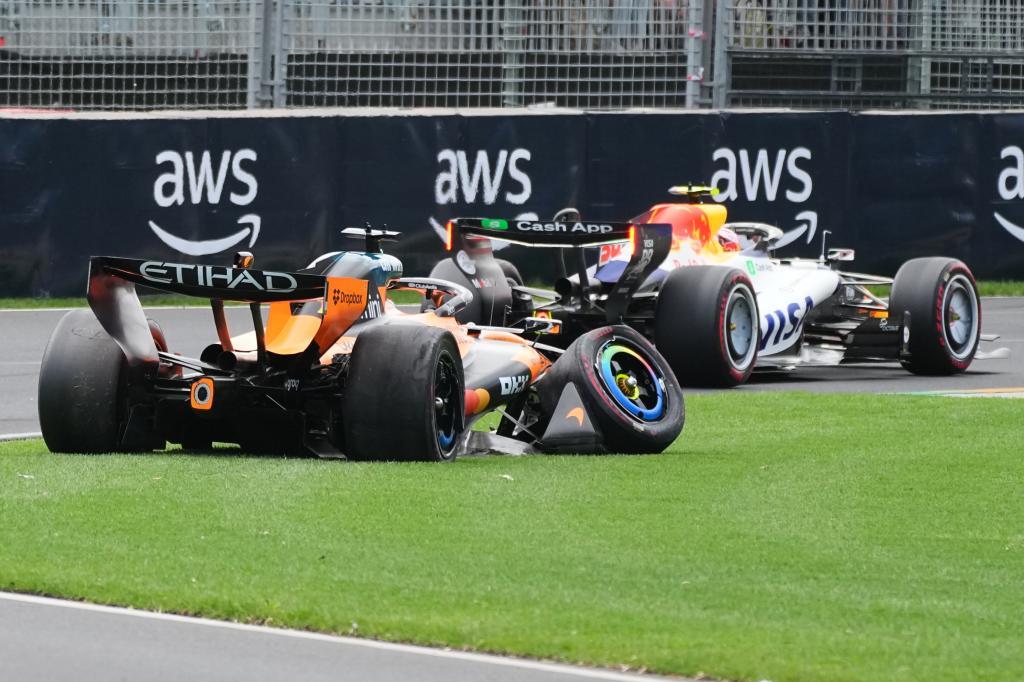
"They have turned the best cars in the world into the worst," echoed the reigning champion Lando Norris, who in Melbourne could only manage fifth, just ahead of Verstappen. "George may be happy, but the new regulations are not right," acknowledged the McLaren leader, who saw his teammate, local driver Oscar Piastri, crash on the warm-up lap after his car experienced an unexpected power spike that he couldn't control. "There will soon be a big accident," Norris concluded.
His words put the championship organizers on alert, who admit to being in a trial phase. After the first races, modifications could be introduced to assist the drivers: Liberty Media is willing to listen, as announced in the preseason. But Formula 1 will be electric or it won't be. "If we see something that needs to be addressed, we will do it in the right way. I think we are on the right track now," pointed out Stefano Domenicali, CEO of the championship, who welcomed the arrival of Audi and Cadillac and made it clear that going back is impossible: "We have introduced a new power unit to attract more manufacturers. Sustainable fuel, electrification... that's why this project was born." The former Ferrari boss didn't hesitate to confront the critical drivers: "I think, in general, speaking badly about an incredible world that allows us all to grow is a mistake."
The new Championship holds uncertainty about what will happen, if any changes will bring back smiles to its stars, although it already has several certainties. One is the exaggerated dominance of Mercedes. Even yesterday, after the duel between Russell and Leclerc, there were rumors about whether the British team was holding back power to protect its advantage in view of the regulators. Their one-two finish in the first race sets the tone for a season with a clear winner; the condemnation of excitement. Only Ferrari, with its speed at the starts, seems capable of challenging for victories, and it remains to be seen how McLaren and Red Bull will evolve.
Neither of the two Spanish drivers in competition will be with them, that's for sure, both doomed to the back positions. With several aerodynamic issues, Carlos Sainz could only finish second to last with his Williams, behind his teammate Alex Albon, and Fernando Alonso's Aston Martin barely lasted 14 laps. The two-time champion's start was promising - he even reached tenth place - but then he lost position after position until retirement. In just seven days, he will try again the miracle of finishing a race with the Honda engine and thus maintain motivation at 44 years old.