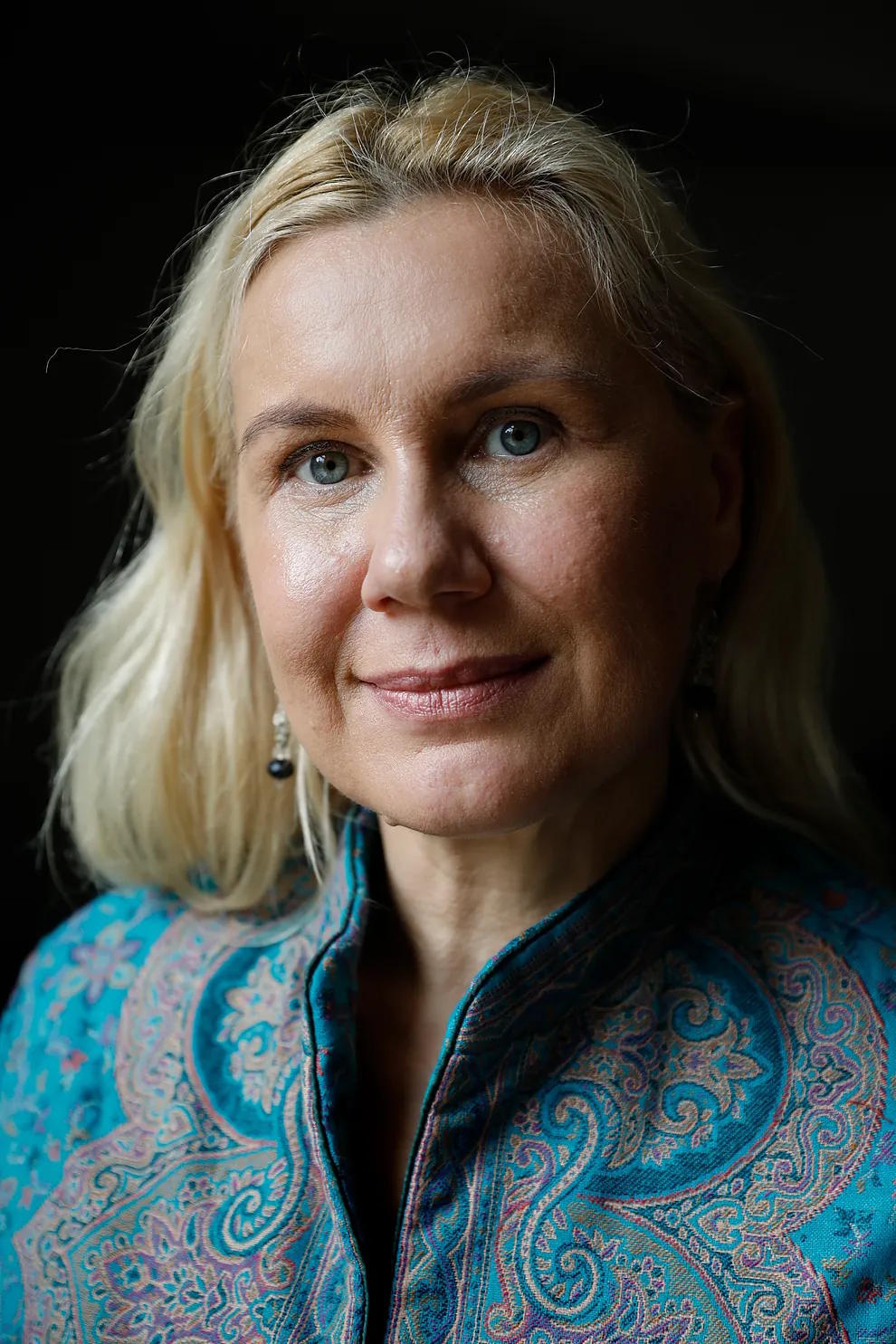
If there is one thing Kadri Simson (Tartu, Estonia, 1977) knows, it is making decisions in times of crisis. Historical decisions, one could add. During her five years as European Commissioner for Energy, during the first term of Ursula von der Leyen, she weathered the shock of the global supply chain during the pandemic and led the European response to the unprecedented surge in gas and electricity prices due to the invasion of Ukraine. Today she watches from the sidelines, but she is clear that the current crisis centered in Iran affects Europe less directly, and that the Twenty-Seven are facing it with new strengths.
In the only interview she will give during her visit to Spain to participate in a conference organized by Fundación Naturgy and IESE Business School, she reviews the lessons learned and is unequivocal: the only way out for Europe is through the green agenda, because "as long as we continue to import fossil fuels, we will remain vulnerable."
Question. The war in Iran has drawn a dividing line in the European Commission between those urging to defend a rules-based global order and those who believe that Europe cannot continue to be the guardian of a world that has disappeared. Where do you stand?
Answer. International law and decision-making processes have always been a nuclear weapon for small countries like the one I come from. That said, I admit that now, when the United Nations Security Council, Russia, and the United States do not follow procedures, we have to adjust as Europeans and cooperate more among ourselves. The EU must be a global region that sets the standards. And this message is key because regions like Mercosur or India want to sign contracts with us because they feel that trading is not only profitable but also safe. The division in Europe over the Middle East crisis is nothing new; we always face it when Americans do these kinds of things. With the Iraq war, some UN members contributed their troops to support the Americans, and others did not.
Q. On this occasion, Trump has threatened Spain with a trade embargo for not allowing the use of its bases for his offensive against Iran...
A. Europe is a single market; precisely, the EU consists of that. You cannot impose tariffs on a single country out of the 27; therefore, it is impossible to materialize that threat and treat Spain differently from the rest. Moreover, Spain is a key partner for American liquefied natural gas (LNG) producers who are importing a lot of product. I don't think it is in the interest of the United States to block trade in that sense. And, of course, Spain is a sovereign nation to decide on its military bases.
Q. What similarities and differences do you see between the current shock and that of 2022?
A. There are many parallels. The first is that Europe, which imports 90% of the oil and 90% of the gas it consumes, is very vulnerable to incidents in producing countries. This volatility in global markets impacts us, but there are differences. Now, with the closure of the Strait of Hormuz, it is the countries in Asia that are suffering firsthand. Europe is now experiencing instability, but four years ago, the crisis was ours because Russia had control over infrastructure that gave it power over 40% of the gas consumed by the EU.
Q. Europe is now less dependent on Russian gas, but much more on American gas. Do you consider Trump a reliable partner?
A. In the tariff negotiations, Trump asked Europe to replace Russian natural gas, which it still receives today, with American products. Trump encourages Americans to export more. Europe, on the other hand, should invest its money in renewables instead of sending it to third countries as payment for their fossil fuels.
Q. These days, Russia has opened the door to cutting the gas flow to Europe earlier than planned. How would that impact prices?
A. Russia no longer has the power to blackmail us. Traders who continue to buy Russian gas do so because it is cheap, and Europe has no sanctions in that regard. But here is an important point. Countries receiving Russian gas via pipelines already have alternative routes. And now it is Russia that lacks alternatives, needing income to finance its war.
Q. In 2022, Spain and Portugal managed to set a cap on gas prices. Today, the Government has once again opened the door to price intervention to prevent a blow to consumers. Do you see it as appropriate?
A. In 2022, when Russia cut off a significant part of the natural gas supply, at one point we wondered who would be able to consume gas because we knew there wouldn't be enough. Those who could afford it bought LNG ships, and prices multiplied by ten, reaching 300 euros at one point. Then, European ministers decided to cap the market at 180 euros. The price this Monday was 56 euros. We have to remember those days to remind ourselves that we are in a better situation now.
Q. If not through intervention, how else can the price shock be contained if the situation worsens?
A. We have many tools. Governments should use taxation because in Europe, we tax energy too heavily. The moment we see that the escalation restricts economic development, taxes will have to be lowered. And we also need to support vulnerable households. If they cannot heat or cool their homes, they may turn against European policies and stop believing in innovation, even though innovation is the only way for Europe to be competitive.