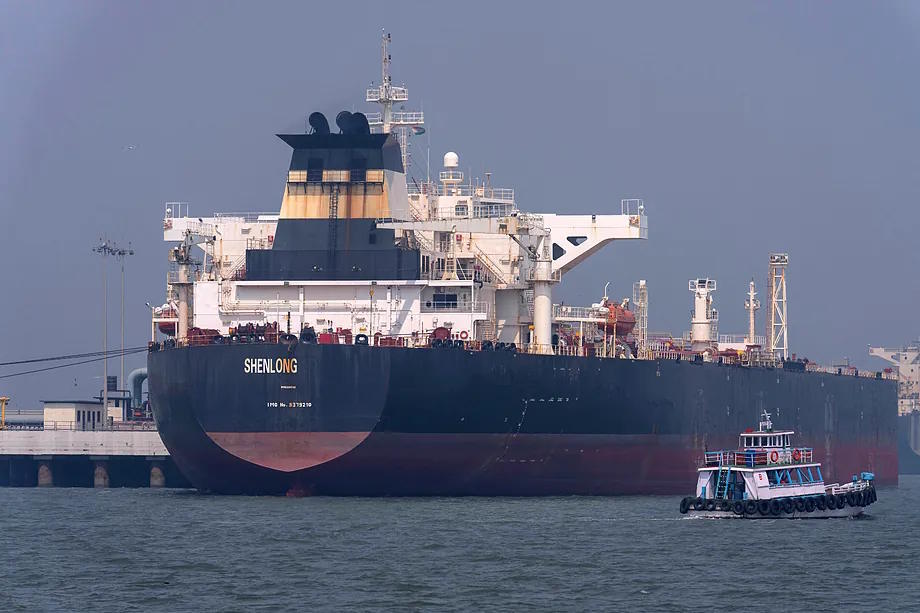
The International Energy Agency urges to protect ships in the Strait of Hormuz amid what it already describes as "the biggest supply disruption in the history of the global oil market".
The IEA has released a dramatic report on the market situation regarding the effects of the war in the Middle East and concludes that "with crude oil and petroleum product flows through the Strait of Hormuz dropping from around 20 million barrels per day before the war to just a trickle currently, with limited capacity to divert traffic through this crucial maritime route and storage tanks filling up, Gulf countries have reduced total oil production by at least 10 million barrels per day. In the absence of a rapid resumption of maritime transport flows, supply losses will continue to increase." And, for this resumption, it calls for "physical protection of transportation," something that US President Donald Trump has not guaranteed so far. On the contrary, at least half a dozen cargo ships have been attacked by Iran.
Contrarily, the US says its military forces are "not ready" to escort ships in the Strait of Hormuz. "It will happen relatively soon, but it can't happen now. We're just not ready," said US Energy Secretary Chris Wright to CNBC. "Right now, all our military resources are focused on destroying Iran's offensive capabilities and the manufacturing industry that supplies those offensive capabilities." Wright added that it is "quite likely" that these escort operations will take place towards the end of this month and rules out the oil price rising to $200, as Iran threatens.
The IEA, which includes 32 countries, including the US, Japan, Germany, and Spain, is helplessly witnessing on Thursday its biggest effort in history to release strategic oil reserves not containing the price spiral due to attacks on ships in the Strait of Hormuz, further collapsing oil and gas supply in this area through which 20% of international oil trade passes. "Global oil supply is expected to fall by 8 million barrels per day in March, with cuts in the Middle East partially offset by increased output from non-OPEC+ producers, as well as Kazakhstan and Russia following disruptions earlier this year," the report adds.
"The ultimate impact on oil and gas markets, as well as on the global economy, will depend not only on the intensity of military attacks and damage to energy infrastructure but also —and crucially— on the duration of disruptions in maritime transport through the Strait of Hormuz." Therefore, "adequate insurance mechanisms and physical protection of transportation are essential to resume flows, a matter of utmost importance for the oil market."
Prices are climbing back above $100, when they were around $70 before the war, despite a decrease in demand. "The massive cancellation of flights in the Middle East and significant disruptions in LPG supply are expected to reduce global oil demand by approximately 1 million barrels per day during March and April compared to previous estimates. Higher oil prices and a more fragile outlook for the global economy pose additional risks to the forecast," notes the IEA led by Fatih Birol.
On the other hand, a spokesperson for the European Commission states that the EU does not have an immediate oil supply issue as its major suppliers are the US and Norway.