Nearly 6,000 kilometers or 3,200 nautical miles separate the Strait of Gibraltar from the first islands of the Caribbean Sea, the Antilles. It takes between 10 and 15 days of sailing on a conventional sailboat to cross them. However, despite the distance, the Strait of Gibraltar and the Caribbean are getting closer and even starting to resemble each other. It could be said that the Caribbean is beginning to colonize the gateway to the Mediterranean Sea, or rather, some of its species are reaching where they were not previously imagined.
The reason is the increasing temperature of the seas and oceans due to climate change, which is causing the waters along the coast from Algeciras to Almería, passing through Málaga and Granada, to warm up to the point where fish native to other warmer latitudes have found a new home here, an ecosystem where they feel comfortable. Just like at home.
The tropicalization of the Strait of Gibraltar is one of the conclusions reached by a group of researchers from the Spanish Oceanography Institute led by the oceanographer Manuel Vargas after studying the changes that have occurred in recent years in that area and in the Alboran Sea, on one hand, and in the Mediterranean waters surrounding the Balearic Islands and reaching the Catalan and Levante coasts, on the other.
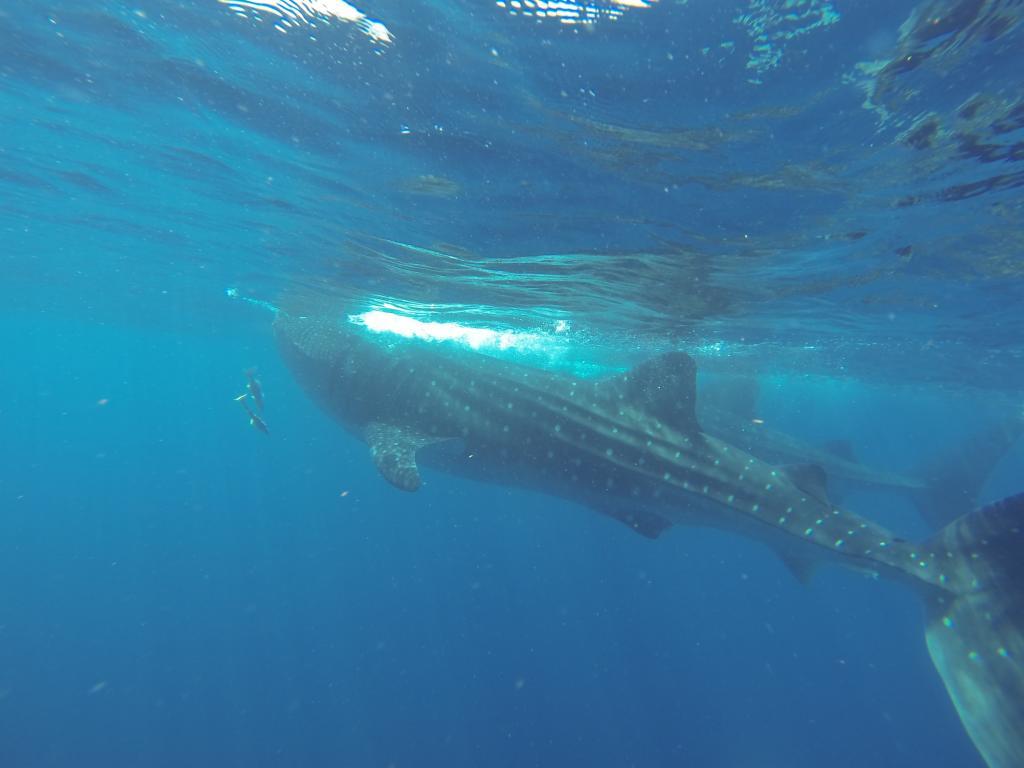
In the Strait and the Alboran Sea, specimens of exotic species such as the bigeye, the Lobotes surinamensis; the bigeye soldierfish, or Paranthias furcifer; the soldier lionfish, Pterois miles, or the whale shark, scientifically known as Rhincodon typus, have been discovered.
For example, the bigeye is usually found in the Western Atlantic and Pacific, from New England to Argentina; the bigeye soldierfish in the waters from South Carolina in the United States to Brazil and the islands of the Southern Atlantic; the lionfish is common in the Indian Ocean, from the Red Sea to South Africa and Indonesia, although it is also present, as an invasive species, on the east coast of the United States and in the Caribbean Sea up to Venezuela; and the whale shark, considered the largest fish at 15 meters in length, is native to the coasts of Mexico, Australia, the Philippines, Mozambique, and the Galapagos Islands.
This article on how the tropicalization of Spanish Mediterranean waters is affecting fish communities has recently been published in the Journal of Marine Science and Engineering. In it, a dozen researchers from various Spanish and international institutions have documented the result of research based on data accumulated over the last three decades from the periodic campaigns carried out by the Oceanography Institute to assess fishing resources in Spanish waters.
The scientists who conducted this research compared these records and found that tropical species began to be detected as early as 2017.
Although climate change is a triggering factor that must be taken into account, highlights oceanographer Manuel Vargas, it is not the only one. Equally decisive is direct human action, which manifests, for example, in the introduction of distant species arriving aboard large vessels or through aquaculture. The opening of the Suez Canal, Vargas adds, is another example of human action that has allowed species native to the Indian Ocean and the Red Sea to reach the Mediterranean.
In addition to the fact that Mediterranean waters, up to the Strait of Gibraltar, have been increasing in temperature (and continue to rise), these are the reasons explaining why the whale shark has reached the Andalusian coasts. "Climate change is undeniable and this is the main disruption to ecosystems, but there are others," emphasizes the researcher from the Oceanography Institute.
A dozen warm-water species
In total, up to ten species were identified in the waters of the Strait and the Alboran Sea, of which their presence was previously unknown, although four of them come from warm waters.
In the other study area, in the coastal waters of the Balearic Islands, Catalonia, and the Levante, new species were also found, up to 15, but they were not from warm waters. Some are even common in even colder waters.
According to Vargas, this result may be "surprising" because if the cause is the warming of the water and the Balearic waters have also experienced an increase in temperature, tropical species should have been found there too. Furthermore, the temperature increase in this area is greater than in the Strait or the Alboran Sea, warming at a rate three to four times the global average.
The thermometer in the Strait and Alboran Sea rises by two degrees Celsius per century, while in the Balearic, Catalan, and Levante waters, the increase is between three and four degrees Celsius per century. Vargas points out that this increase may seem small, but what is concerning is mainly "the speed" at which it is rising. If there is no halt, by the end of the 21st century, the global average temperature of seas and oceans will have risen by four degrees. Up to five in the case of the Mediterranean, which, if it reaches that point, will be "very different" from the sea we currently know.
It remains to be studied whether the presence of these allochthonous fish, originating from warm latitudes, is temporary or if they have settled and are reproducing. And, in that case, likewise, what effect these intruders may have on the balance of ecosystems.
All this makes it necessary to continue with scientific studies, according to the study's authors. Regarding the impact on the studied waters of these tropical species, Vargas believes that "it is difficult to predict, but in principle, this alteration of the ecosystem is not desirable."