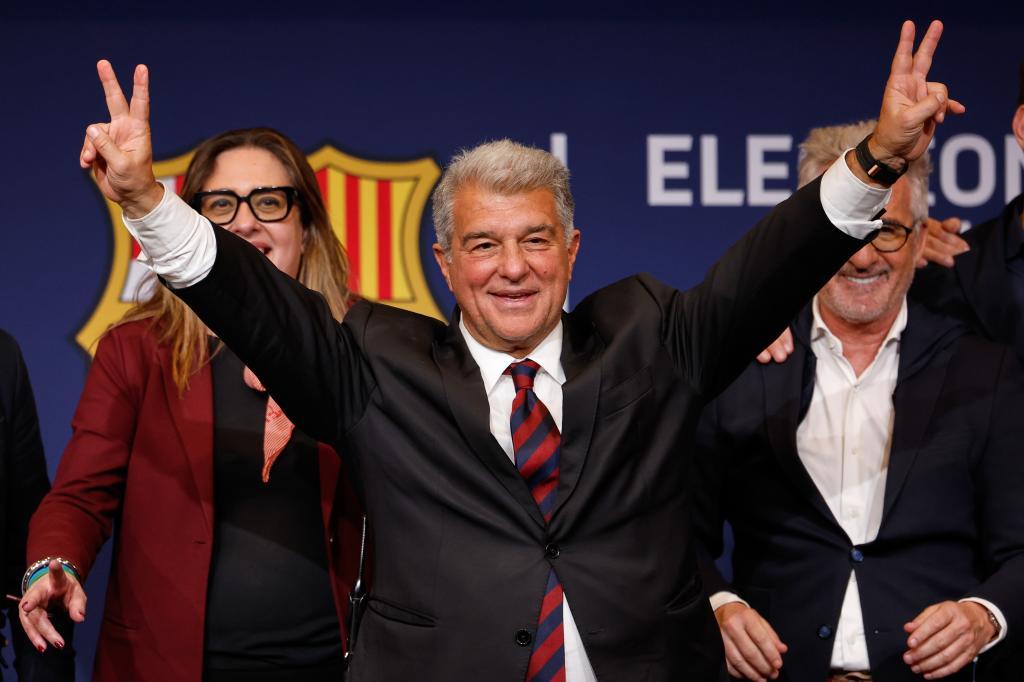
García Márquez wrote that Pérez Prado's music was like a "coup d'état against the sovereignty of known rhythms." The Cuban musician based in Mexico was already known as the King of Mambo, the greatest promoter of a kind of musical syncretism, because mambo, like santería, is a manifestation of African heritage in the Caribbean. Joan Laporta has not staged a coup d'état. On the contrary. Clinging to the mast of the sports project, he renews his mandate in a club that has all the virtues and vices of old democracies: participation and debate, but also backstabbing, resentment, and intrigues. Everyone wants Barça with the same intensity that they hate each other. Amid the crossed glances of the Camp Nou ballroom, no one moves like Laporta, despite the extra weight and his 63 years. Perhaps he is not the best president, but he was the best candidate, capable of adapting to any melody shamelessly and leading on the dance floor with his partner, be it Negreira, Xavi, Messi, Víctor Font, or Florentino Pérez. He is the King of Mambo.
We are facing the most Laporta-like Laporta, more irreverent, as demonstrated by waiting and hobnobbing with the players at the polls, and more transparent personally, although that transparency would be desirable in some of the operations carried out by Barcelona. Like in old companies with debts, and the one at the Blaugrana club is colossal, many balls need to be juggled. They are now called levers, but it's the same: advancing income, mortgaging the future. This does not necessarily imply that illegalities are committed, although they may violate the rules of regulators, La Liga, and UEFA.
Javier Tebas turned a blind eye to the initial levers, because he needed Barça for two balances: economic and institutional in this endless football war. You can't be against everyone, unless you're Florentino. Not even then, but there are monarchies where no one tells the king he's naked in the palace. A bad situation. UEFA, on the other hand, has already warned and fined Barça, albeit with reductions. The rejection of the Super League is the payment. We will see if with that decision they also cover the latest in the Negreira case, as when the criminal process ends with convictions, however minor they may be and even if they do not affect Laporta, the sentence will reach Nyón.
The re-elected president has navigated an electoral campaign full of mines. Accustomed to attacking, as a good Cruyffista, he has had to defend himself, apart from Negreira, from Xavi and even from an anonymous partner who filed a lawsuit in the National Court for several economic crimes, including money laundering. A thorny, dirty issue, with detectives involved on both sides and very dangerous in two directions: for the accused and for the accusers. If the trail that is intended to be established from the New Era Visionary Group, based in Dubai, to the president's circle is true, this term would be Laporta's brief one; if not, the origin of the papers should be traced.
Comfortable in the populism that leads him to jump in the stands and make a rude gesture, as well as to cook macaroni, ride a tractor, or assist a deteriorated Jordi Pujol at the polls, Laporta points to Madrid when he feels pressured, just like Donald Trump does with the ayatollahs. Create a threat and you will have tight ranks. That works. Even Florentino has copied him, with an exercise in Laportism at the last Real Madrid Assembly, where he lashed out against refereeing, La Liga, and UEFA, as if there were a Judeo-Masonic conspiracy against one of the most beloved and admired teams in the world. With that Manicheanism, none of them tries to protect their club, only their management, themselves.
Laporta is one of the presidents who paid Negreira and that question will always haunt him. The leader has once again addressed everything in his new book, How We Saved Barça (Now Books, 2026), presented during the campaign. "I invite all those who accuse us of arbitral corruption with such lightness and frivolity to specify the match, the goal, the play, or the suspicious act of favoritism as a result of this technical advice. For seventy years, members, former players, or former directors of Real Madrid appointed the referees who should administer justice in each of the matches. That was the biggest scandal in the history of Spanish football!" he explains in the book, where he defends the hiring of the Turkish construction company Limak, among other reasons, to avoid "political" tensions with the choice of a Spanish one. Curious.
Regarding the dismissal of Koeman, the Xavi era, or even Messi's non-return, he talks about them in his pages: "Am I your coach?" Koeman asked. "And I tell him: 'Ronald, for me, you are a legend; I cried at Wembley, but I have to tell you that you are not.' He didn't take it well. (...) 'What I plan to do - I added - is to decide on the coach I want,' which was Hansi Flick, but he was then coaching Germany and couldn't. That's why, in the end, we kept him: 'If he can't be, it's okay for you to continue'."
Neither was Xavi, who, linked again to Font in this campaign, called Laporta a liar in an interview with La Vanguardia. Xavi descended from the altar to the sewers of Barcelona, an unnecessary journey, given his colossal legacy as a footballer. Resentment is always a bad advisor. The midfielder also attacked Laporta for the alleged dependence on his former brother-in-law, Alejandro Echevarría, very influential in the club's decisions without holding a position. The reality is that no one like Xavi heeded Echevarría's advice in the past. Except once. "Don't come," he said when Mateu Alemany and Jordi Cruyff tempted him in Qatar. Echevarría knew that Xavi, like Koeman, was not the president's coach. If he had listened, he would have saved himself a self-destructive period for his image, which does not fulfill a League.
The reality is that after Xavi's departure and Flick's arrival, everything changed. Laporta's instinct once again hit the mark on what matters most to the soci, as had happened in the past with Fran Rijkaard or Pep Guardiola.
Laporta has been asked again about the connection his former brother-in-law had with the Francisco Franco Foundation. "All forms of thinking fit in Barça," he said on TV3, a more difficult dribble than Negreira's, because it comes from within, and because it places him in front of his own contradiction: there was no greater centralism than Francoism.
Echevarría does not have to give any explanation, faithful to his pragmatism and ability to relate, and to observe football with a certain relativism and far from the overwhelming passion of the president. Footballers are tired of the passions of fanatics, which is why they ended up approaching and listening to the brother-in-law. Xavi, Iniesta, and Messi, then, as now Lamine Yamal. The day they stabbed his father, Echevarría helped his family, and on the day of reflection, the star who personifies the current sporting success linked to La Masia, posted a photo with Laporta and two hearts. That is a quality vote. Such influence is not achieved with a mambo.
We are witnessing Laporta at his most irreverent, as demonstrated by his waiting and cozying up to the players at the ballot box, and more transparent in his personal life, although such transparency would be desirable in some of Barcelona's dealings. Like in the old days of companies burdened with debt—and the Blaugrana club's debt is colossal—they have to pull strings. Now they call it leverage, but it's the same thing: advancing income, mortgaging the future. This doesn't necessarily imply illegal activity, although it could violate the rules of the regulators, La Liga and UEFA.
Javier Tebas turned a blind eye to the initial leverage because he needed Barça for two balances: the economic and the institutional in this endless football war. You can't be against everyone, unless you're Florentino Pérez. Not even then, but there are monarchies where no one tells the king he's naked in the palace. A bad situation. UEFA, for its part, has already warned and fined Barça, albeit with reductions. The rejection of the Super League is the price to pay. We'll see if that decision also covers the final costs of the Negreira case, since when the criminal proceedings conclude with convictions, however minor and even if they don't affect Laporta, the sentence will reach Nyon.
The Dubai Papers
The re-elected president has navigated a minefield of an election campaign. Accustomed to attacking, like a true Cruyffian, he has had to defend himself, not only against Negreira, but also against Xavi and even an anonymous partner who filed a lawsuit in the National Court for several economic crimes, including money laundering. A thorny, dirty affair, with private investigators involved on both sides, and very dangerous in two directions: for the accused and for the accusers. If the trail being traced from the Dubai-based firm New Era Visionary Group to the president's inner circle is true, Laporta's term will be the shortest; if it isn't, then the origin of the papers should be investigated.
Comfortable in the populism that leads him to jump in the stands and make an obscene gesture (like a sausage), as well as to cook macaroni, climb onto a tractor, or help a frail Jordi Pujol at the ballot box, Laporta points the finger at Madrid when he feels threatened, just as Donald Trump does with the ayatollahs. Create a threat and you'll have ranks closed. It works. Even Florentino Pérez has copied him, with a display of Laporta-style rhetoric at the last Real Madrid General Assembly, where he railed against the refereeing, La Liga, and UEFA, as if there were a Judeo-Masonic conspiracy against one of the most beloved and admired teams in the world. With this Manichean approach, neither of them is trying to protect their club, only their management, themselves.
The Real Madrid "scandal"
Laporta is one of the presidents who paid Negreira, and that question will always haunt him. The former president has addressed it all again in his new book, *How We Saved Barça* (Now Books, 2026), presented during the campaign. "I invite all those who accuse us of referee corruption with such ease and frivolity to specify the match, the goal, the play, or the act suspected of favoritism as a result of this technical advice. For seventy years, Real Madrid members, former players, and former directors appointed the referees who were to officiate each match. That was the biggest scandal in the history of Spanish football!" he explains in the book, where he defends the hiring of the Turkish construction company Limak, among other reasons, to avoid creating "political" tensions by choosing a Spanish company. Curious.
He discusses Koeman's dismissal, the Xavi era, and even Messi's non-return in its pages: "Am I your coach?" he says Koeman asked him. "And I told him: 'Ronald, for me you're a legend; I cried at Wembley, but I have to tell you that you're not.' He didn't take it well at all. (...) 'What I intend to do,' I added, 'is decide on the coach I want,' which was Hansi Flick, but he was coaching Germany at the time and it wasn't possible. So, in the end, we kept him on: 'If it can't be him, it's fine that you continue.'"
Nor was Xavi, who, linked again to Font this season, called Laporta a liar in an interview with La Vanguardia. Xavi descended from the pedestal to the guttering of Barcelona, an unnecessary descent, given his colossal legacy as a footballer. Resentment is always a bad advisor. The midfielder also criticized Laporta for his alleged dependence on his former brother-in-law, Alejandro Echevarría, who wields considerable influence over club decisions despite holding no official position. The truth is, no one listened to Echevarría's advice more than Xavi did in the past. Except for once. "Don't come," he told him when Mateu Alemany and Jordi Cruyff tried to lure him to Qatar. Echevarría knew that Xavi, like Koeman, wasn't the president's chosen coach. Had he listened, he would have spared himself a self-destructive period for his reputation, a period that doesn't even include a league title.
The reality is that after Xavi's departure and Flick's arrival, everything changed. Laporta's instinct once again proved correct regarding what matters most to the members, as had happened in the past with Franz Rijkaard and Pep Guardiola.
Laporta has also been asked again about his former brother-in-law's connection to the Francisco Franco Foundation. "At Barça, all ways of thinking are welcome," he said on TV3, in a more difficult maneuver than Negreira's, because it comes from within the club and confronts him with his own contradiction: there has been no greater centralism than Francoism.
Echevarría doesn't have to offer any explanation, true to his pragmatism and ability to connect with people, and to observe football with a certain relativism and far removed from the president's fervent passion. The players are fed up with the fanaticism of die-hard supporters, which is why they ended up approaching and listening to their brother-in-law. Xavi, Iniesta, and Messi, then, just like Lamine Yamal now. The day his father was stabbed, Echevarría helped his family, and on the day of reflection, the star who embodies the current sporting success linked to La Masia posted a photo of himself with Laporta and two hearts. Now that's a quality vote. Such influence isn't achieved with a simple gesture.