Hollywood has nothing to do with theology, and yet, with a little scrutiny among this year's Oscar winners, one finds sinners, doctors determined to be gods, and characters desperate for redemption (the latter being the most abundant). The comment is related to the Beatitudes in general and the first one in particular. "Blessed are the poor in spirit, for theirs is the kingdom of heaven," somewhat cryptically states the first of the maxims from the Sermon on the Mount. Why the poor in spirit and not just the poor? Judging by the recent political and economic movements in the heart of the film industry, it seems that what was intended as an incentive for good, healthy, and decent conduct has taken on the status of prophecy. The new purchase of Warner by the creatively struggling Paramount (with zero nominations) confirms that the poorest in spirit (not in other ways) have ended up inheriting the same heaven by literally devouring the most imaginative, restless, and therefore, rich studio. And that, which well-intentioned theology could defend, is truly very bad news.
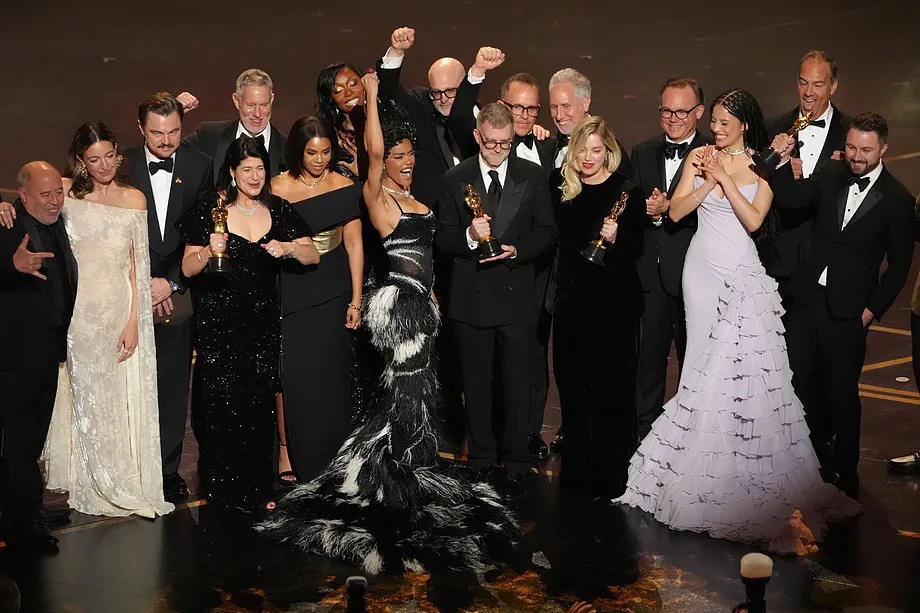
Warner bids farewell to all of us in the best way possible. Their three flagship films of 2026 have swept in every possible way: the prestige and success are theirs. What the Hollywood Academy has been desperately seeking for some time, to legitimize itself intellectually and popularly, has been achieved this year thanks to two box office successes like The Sinners by Ryan Coogler and Weapons by Zach Cregger, and the great film of the year that also served to redeem its director from years of ostracism. One Battle After Another, the long-ambitioned project of Paul Thomas Anderson, seems to be the perfect summary of a filmography as admired and nominated as it is under-awarded. Hollywood has always considered its most prestigious filmmaker probably too eccentric and elitist to crown him before a global audience. Until today. Adding up, there are six Oscars for the comedy (that's it) by Paula Thomas Anderson starring Leonardo DiCaprio (film, director, adapted screenplay, supporting actor, editing, and casting); four following the record of 16 nominations for the vampire movie starring Michael B. Jordan (Original screenplay, lead actor, cinematography, and soundtrack), and one, the most emotional of all, for Amy Madigan for her role in the other horror movie of the year. Undoubtedly impeccable: a total of 11.
And all this, we insist, thanks to a legendary studio that, let's remember, was once known as the home of the working class. While Metro, back in the post-Depression years and beyond, was busy making elegant, glamorous films like Grand Hotel (1932), the studio of the four brothers got their hands dirty producing films like Little Caesar, The Roaring Twenties, The Maltese Falcon, or White Heat.Names like Edward G. Robinson, James Cagney, Lauren Bacall, Humphrey Bogart, or Raoul Walsh shaped the imagery of a world inherently and necessarily mean. And, therefore, essentially real.
A tycoon with a past as a bad actor
Its farewell comes hand in hand with the multi-billion dollar offer from David Ellison, son of Larry Ellison, in turn a close friend of the current President of the United States. This man, who is about to rewrite the history of all cinema in the United States, was just half a year ago the owner of a small film production company called Skydance (responsible for blockbusters like Mission Impossible or Top Gun) with some experience himself as an actor (bad, by the way). Last summer, through 8 billion dollars, he took over Paramount and now, with the purchase of Warner Bros after shattering Netflix's offer, he directly takes charge of the largest audiovisual production company in the world and global entertainment leader. At his feet, two legends of ancient Hollywood, news channels like CBS and CNN (hated by, once again, President Trump himself), and, pay attention, the HBO Max platform. Glory and the poor in spirit.
It is curious, or rather worrying, that the tycoon with excessive ambition and a very conservative creed appropriates this and not another studio. The proposals of both Ryan Coogler and Paul Thomas Anderson, and also, to a lesser extent, Zach Cregger, are essentially, each in their own way, a declaration of faith (and also of love) in the dark room, in the conception of cinema as a total experience for immersion in a different, transformative, and unique world. It sounds poetic and, indeed, neither the sound nor the music nor the IMAX format image of Coogler's bluesy vampires nor Thomas's low-flying pursuits nor Cregger's depth of terror at night admit any format other than the movie theater. It is not lost on anyone that Ellison's primary concern is streaming. But not only that. It is at least paradoxical in the same way that the three mentioned films are essentially political and, each in its own way, essentially anti-Trump. And furthermore anti-Ellison, be it David or Larry. Both The Sinners, an anti-racist film, and One Battle After Another, a film eminently anti-xenophobic, and Weapons, a film portraying the paranoia of today's American middle class through the horror genre, bring Warner back to the spirit of what made it great and identifiable in the 1930s. Remember, Warner was the first studio to tackle Nazism in Confessions of a Nazi Spy (Anatole Litvak, 1939). It seems that Warner is becoming Warner again just as it is about to become exactly the opposite. This must be the poverty of spirit.
If all the above were not enough for dismay, the gala presented by Conan O'Brien in the early hours of Sunday only confirmed the worst fears. It seems that, awaiting what is to come, all members of that hardly identifiable and increasingly global space called Hollywood have already put on the blindfold before the wound. Not even the Oscar winners with their highly political films made a mark in a display of certainly anomalous cognitive dissonance. The total absence of demands, protests, or simply calls for help — with the almost sole exception of Javier Bardem and the directors of the winning documentary — the whiteness of the speeches, and the politically apolitical nature (nothing is innocent) of the acknowledgments, sketches, and various interventions in a world literally on fire only confirm that, indeed, Warner, the brightest of studios, has been bought by Paramount, the darkest of them all. The paradise (sad paradise) is now owned by the poor in spirit.