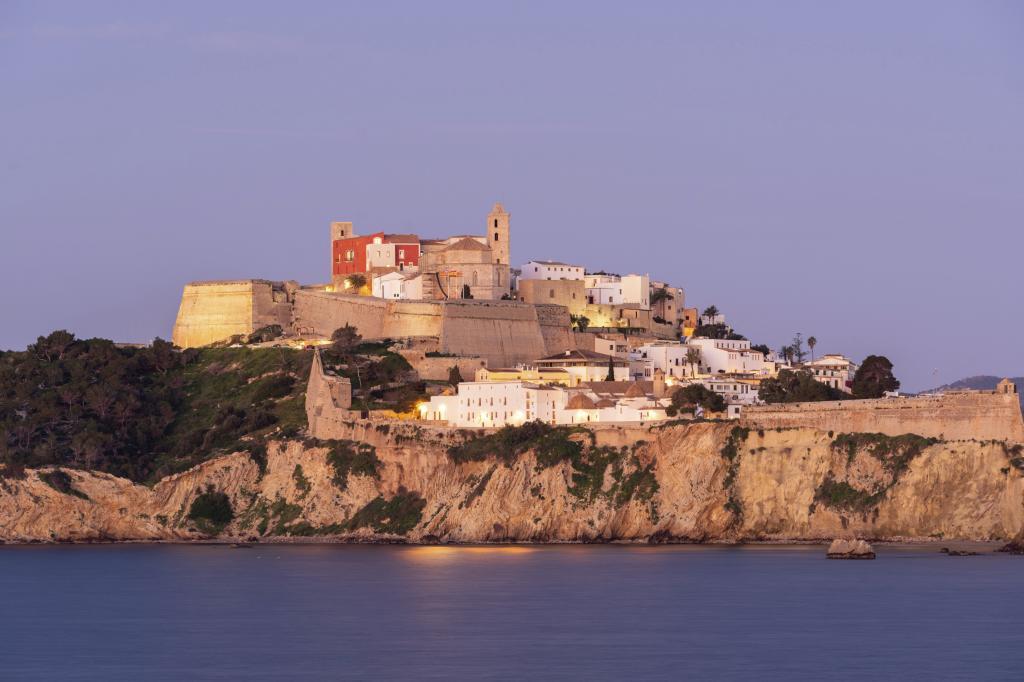
There are places where one arrives with preconceptions in their suitcase. In Ibiza, for example, many land with the idea that sleeping is a secondary activity, and silence is officially prohibited. Hence, when the opening of a National Parador is announced in the island's walled city, one might imagine an architectural paradox: institutional rest with a view of the dance floor.
Punic acropolis, Islamic headquarters, Renaissance fortress, and military barracks. Twenty-eight centuries offer much, including the newly inaugurated Parador. Where once the horizon was watched for enemy sails, today the same sea is observed, awaiting to be attacked by a cocktail or a gastronomic delight.
Ibiza has been demanding a different narrative from the perpetual party: that of its millennia-old history. Therefore, the opening of the new Parador in the heart of Dalt Vila is not just a hotel with great views, but an architectural intervention that engages with centuries of history. Unearthing it led to a project that started with 27 million euros in 2009, surpassing 47 million euros and 17 years of work and discoveries: Punic amphorae for transporting oil, wine, and grain, evidence of trade with Carthaginians and Greeks; Islamic and Mudéjar ceramics; medieval tableware.
Climbing up to Dalt Vila has always had a touch of secular pilgrimage. The cobbled streets wind towards the cathedral, creating the sensation of floating between stone and sea. Upon reaching the top, the air changes. It blows cleaner, older. And now it also smells of a new hotel.
The parador occupies the historic complex of the Castle and the Almudaina, in the former bastion of Santa Lucía, which is part of the UNESCO World Heritage site. The rooms open up amidst stone walls older than many European capitals.
The windows of the 66 rooms turn any everyday gesture into a cinematic scene. Drawing back the curtain in the morning feels like a new day, while down below, ferries and yachts that seem like toys set course for the island of Formentera. Large windows, earth tones, Ibizan whites, and that light that enters without asking permission. The interior design—inspired by traditional farmhouses—opts for natural materials and a very unpretentious calmness. Nothing shouts. Everything breathes. Even the textile headboards, exclusively created by the artist Koral Antolín, seem to remind you that life, like its embroidered lines, progresses with small detours.
The building retains its military robustness—thick stone, echoing corridors—but inside, it is all light, clean lines, and light wood, as if history had decided to get comfortable. Going down for breakfast involves crossing spaces where Renaissance walls, medieval structures, and even the ruins of a Roman temple built on an ancient Phoenician sanctuary coexist. Orange juice and coffee on layers of civilizations. Remnants that remind us that Ibiza was Phoenician, Roman, and above all, strategic, from what is now a pool that seems suspended over the wall, with the sea spread out at its feet like a liquid carpet.
On the terrace, with the sun setting over the walls, it's hard to believe that the island has been overrun by electronic music temples, because Ibiza doesn't need background music. Here, silence is highly valued.
The restaurant reminds us that the Paradores network usually takes local gastronomy seriously, and here is no exception. At midday, lighter options—red prawn, fresh fish, rice dishes for sharing—; in the evening, a more refined menu, with nods to Balearic recipes. The bullit de peix, the sofrit pagès, or desserts made with almond and honey are all present.
The interesting aspect of the new parador is not just its beauty—which it is—but what it symbolizes. In an island accustomed to nocturnal superlatives, opting for a hotel in the pearl of the historic heart, in a structure abandoned since the 1970s under constant collapses that threatened its extinction, is almost a statement of intent. Here, luxury is not in excess but in context: sleeping within a 16th-century walled enclosure and walking down to get lost in alleyways that, as evening falls, once again belong to the locals and the cats.
It's the choice for those who want to wake up without epic dark circles, for those who enjoy a long conversation more than an impromptu sunrise on the dance floor. Or simply, for those who want to verify that the island's melody offers more variety than an electronic music session.
Sleeping at the Parador de Ibiza is, fundamentally, a way to reconcile with the island. To look at it from above, from the ancient stone that has protected it for centuries, and admit that beneath the label of a hedonistic destination lies a historical, elegant, and surprisingly intimate city. And that, in Ibiza, is almost a revolution. The novelty is not that there is a new hotel. It's that the fortress is alive again. And this time, the siege consists of booking in advance.