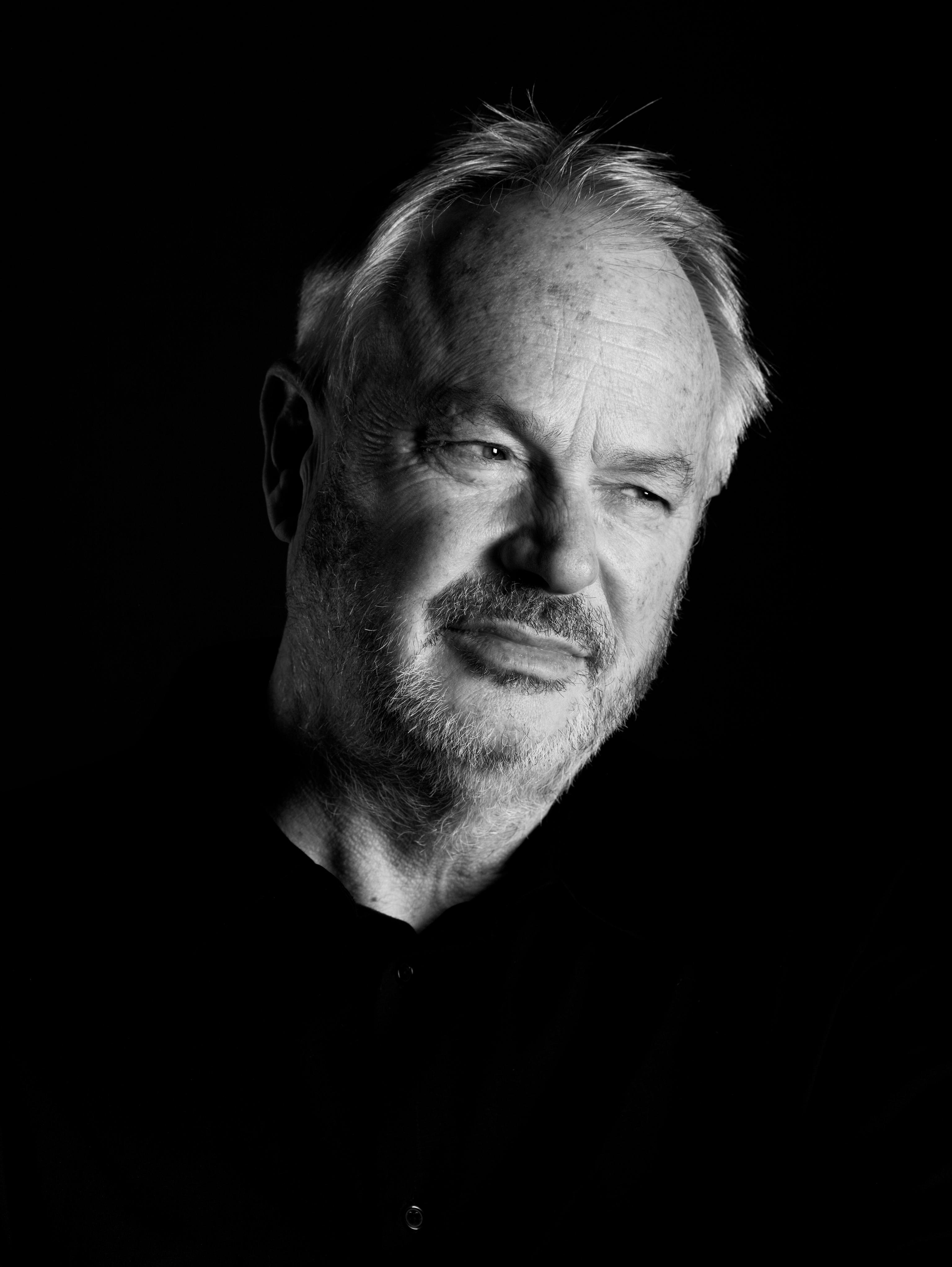
His book Prisoners of Geography has been a constantly reviewed and reissued bestseller and one of the greatest contributions to bringing geopolitics closer to society in general. This was followed by others such as Worth Dying for: The Power and Politics of Flags and The Power of Geography, and more recently The Future of Geography. In his extensive experience as a correspondent, the British journalist and writer Tim Marshall knows that the geographical features of a place determine its history.
In his books, he often mentions the Persian Gulf and the Strait of Hormuz, now key in the war with Iran, as critical points on the planet. But he also knows that Iran is literally an unconquerable country. However, he clearly sees Iran's weak point on the small island of Jark, because all the oil pipelines that the Islamic Republic exports arrive there. In contrast, on the island of Qeshm, Iran has a strong point, as he analyzes throughout this interview.
"Iran is what is called a fortress country. As soon as you approach from the coast, you encounter mountains. And militarily, that is key because it favors the defender. It has been like this for thousands of years. Even if you manage to cross those mountains, you enter the interior of a huge country, the combined size of Spain, Germany, and France. And now what do you do? It is a harsh territory, with extreme heat, vast desert areas. It is very difficult to operate there," he explained to EL MUNDO on Friday.
With the natural barrier of the Zagros and Elburz mountains, along with the Central and Eastern mountain ranges, for the author, a land intervention is completely ruled out: "The United States is not going to invade Iran by land. But it can act in the Persian Gulf. If you look at the Gulf, there are about 1,400 km of coastline. Much of it is steep mountains that reach directly to the sea. There are no beaches as such, but cliffs. In addition, there are many coves and islands where you can hide speedboats, drones, coastal missiles... This allows for very strong defensive positions."
He adds: "Then there is the Strait of Hormuz. It is the key point. It is about 34 km wide, but only six miles are navigable for large oil tankers. Ships have a two-mile lane to enter, another two to exit, and one in the middle of two miles to separate the two directions. This makes it a strategic bottleneck."
Next to that bottleneck is Qeshm, which is the largest island in the Persian Gulf and measures about 100 kilometers long, with 1,500 km2 of surface area. "There are rock formations with underground salt caves, on the surface, and also underwater, where Iran hides hundreds of armed speedboats with machine guns and missiles. Some could even be prepared with bombs for suicide missions. That is the first major problem for any naval operation," Marshall adds.
That island has an added disadvantage for any external force wanting to enter the gulf: bombing it would also not eliminate those hundreds of hidden boats, as there are caves at such depths that would not be affected by the attacks: "Furthermore, Qeshm is full of the Revolutionary Guard. It could be a real nightmare. Before attempting to escort any ship in the area, you have to deal with that island."
But let's suppose that a US ship manages to control that island and sails into the gulf: "Towards the northwest, near the city of Busher, there is another much smaller island called Jark. All the oil pipelines that Iran exports arrive there. And that represents 60% of the Iranian economy. On that island of a couple of miles. A few days ago, the Americans bombed some positions on that island, but did not touch the pipelines because it is the type of action that would escalate the conflict."
Destroying the pipelines on Jark, for Marshall, would be an action that "would make Iran take years to be able to return to the market. It would destroy Iran. And I don't think that option is being considered yet."
But under certain circumstances, could the United States go through with it? "They could destroy it without hesitation. They also dropped the bomb on Nagasaki. We have seen what happens when energy infrastructures are bombed. You cannot destroy an infrastructure that would take years to rebuild."
On the other hand, the blockade of the strait is not just about gas or oil. "Around 30% of fertilizers or the chemicals needed to produce them pass through here, which will increase the price of food this year if crops are left without these fertilizers. We have never seen so much economic pressure to reach a ceasefire."
That's why Marshall believes that something new will happen in the area soon: "By the middle of this week, there should be a point where a decision is made: to negotiate with the Americans, who will offer a ceasefire in exchange for reopening the strait and not shooting at the tankers, and then negotiate. But by now, everyone will know who has won. It would be known as a surrender, but they would survive. It's like in the Vietnam war: they just had to survive to win."
"But the Americans have another option: take the island of Jark and not destroy the energy infrastructure. They could cut off the oil sale, collapse the Iranian economy without ending the industry. Although to do that, they would also have to occupy Qeshm. I'm not saying they will do it, but they are putting the option on the table. A few days ago, the USS Tripoli left Okinawa, Japan. It is an amphibious assault ship, crewed by the 31st Marine Expeditionary Unit, which is a self-sufficient unit: it has planes, helicopters, land vehicles, marines... Recently, the ship passed through the Straits of Malacca and is still heading towards the area. I think it will appear in the region soon, and it could be an alternative for the second option: overcoming the defenses in Qeshm and occupying Jark and squeezing the Iranian economy," concludes the reporter.