You may have woken up this morning thinking that you still live in Spain. It's a fairly common mistake. The radio plays in Spanish, or in some regional language; the neighbour greeted you with a "what's up, mate?"; and your colleagues at work are talking about Real Madrid's elimination. Downstairs, in the cafeteria, there are Spanish omelette bites, potato salad, or churros. And the newspaper says that another MP, or councillor, has hit the jackpot. These are details with which we continue to feed a fiction because, whether you believe it or not, you live in the People's Republic of China.
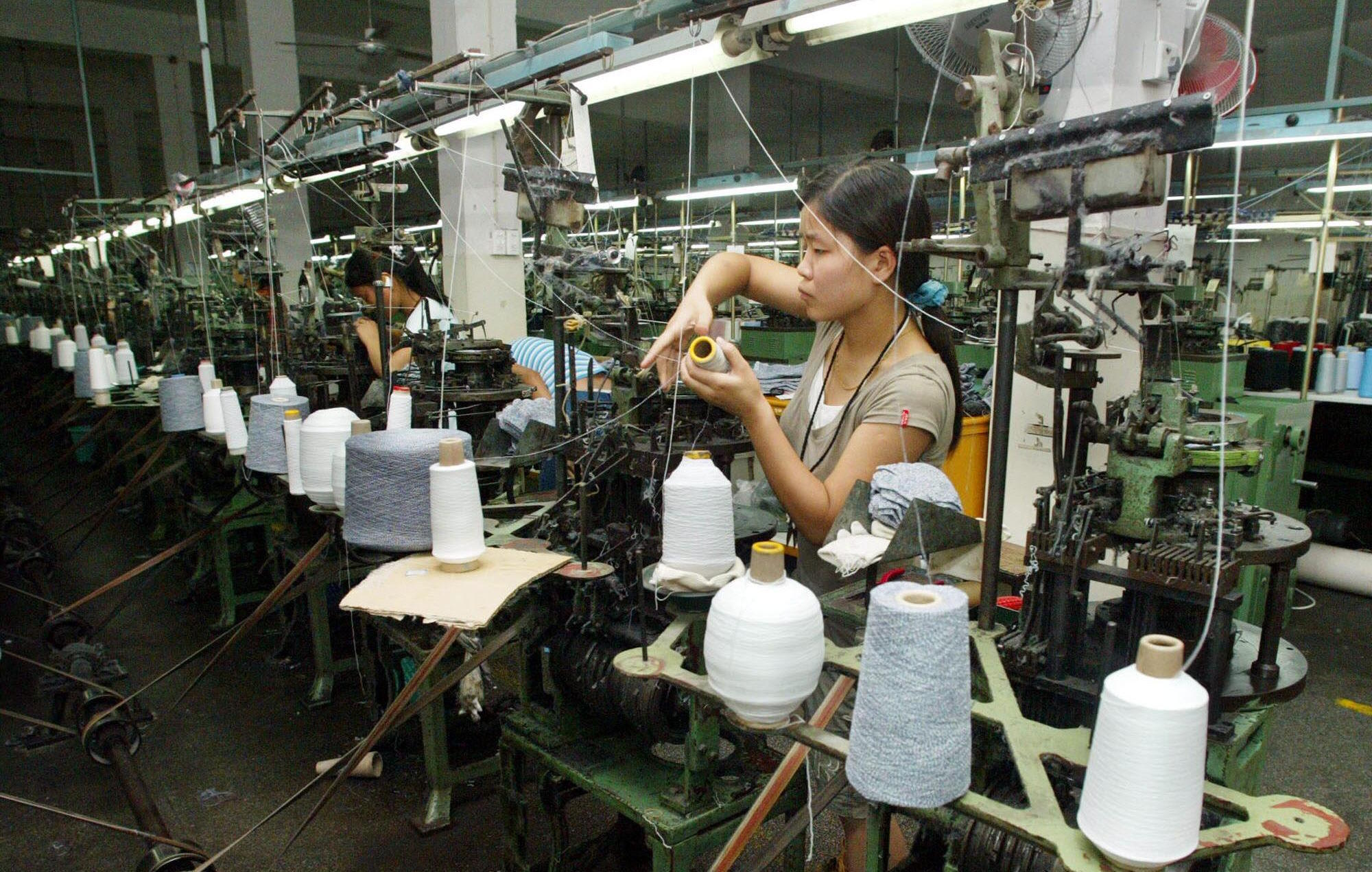
It doesn't matter if you don't have a Huawei or Xiaomi on your bedside table, because this morning you woke up with a mobile phone assembled in Zhengzhou. You went to the bathroom and brushed your teeth with a toothbrush from Yangzhou, which you then placed in a container extracted from an industrial chain in Shenzhen, like the digital scale, the LED light mirror, and the soap dispenser. None of these have a national identity. But almost everything refers to production chains concentrated in the Pearl River Delta, between Hong Kong, Macao, and nine cities in Guangdong. Cheap, repeatable, interchangeable objects designed precisely not to be seen.
China has integrated into our routine piece by piece. There has been no invasion, no missiles, no flags, no skies in flames, no paralyzed cities. "It's the market, friends," as former minister Rodrigo Rato would say. It's like a caravel arriving from a new world with tomatoes, potatoes, and cocoa, but on a massive scale. Accumulation and assimilation. The big deception is to believe that they are just things, and not the dictatorship of a global system that is structuring your daily life without you noticing.
"People don't consider what lies behind what we do in our daily lives," points out Mario Esteban, professor at the Center for East Asian Studies at the Autonomous University of Madrid and Principal Researcher at the Elcano Royal Institute. "We make decisions as consumers, we see the cost-benefit, and we don't go much further. The significant thing is that we consume through China, not Chinese things, but designs or elements that are adapted to Western taste."
President Pedro Sánchez doesn't need to travel to strengthen ties with China. Just open your wardrobe, because your basic t-shirt came from textile factories in Nantong. Your sneakers, despite having a Western design, were produced thousands of kilometers away. Because in European brands like Inditex, the global supply chain depends on Asian manufacturing. Clothing is no longer about origin. It's about flow. As British writer Martin Jacques contextualizes, "China's power lies not in what it sells, but in how it is reconfiguring the system that makes it possible." This is also explained by sociologist and former minister Manuel Castells: "Power no longer resides in institutions, organizations, or symbols of control; it lies in the networks that structure society."
Breakfast time arrives, and the coffee maker has parts invoiced in Guangdong. The toaster was assembled in Suzhou. And the kitchen utensils come from Yiwu, the city of household items. Nothing is flashy. Everything is functional. That's why we like it. The same if we start opening drawers in the fridge and freezer: tofu, curry paste, seaweed, rice noodles, bottled bubble tea, green tea, ice mochis, soy sauce, hoisin sauce, sesame oil, gyozas, dumplings, ramen. And much of this is adapted in Europe to suit our taste: less spicy, sweeter, different texture, or ingredient changes due to Brussels regulations.
As you step out onto the street, the rooftops are filled with solar panels. An industry in which China concentrates over 70% of global production. And not just the panels. They dominate the entire chain of silicon refining, assembly, and export. People move around on scooters, bicycles, and electric cars. And behind them are batteries from BYD or CATL that depend on invisible minerals, lithium, cobalt, rare earths. Yes, they were extracted from mines in Chile and the Democratic Republic of Congo, but their refining and industrial transformation are concentrated in China. Even European cars depend on sensors, chips, and electronic systems produced in the Asian giant. In fact, they are now planning to build batteries in Spain with two projects for this year: the CATL gigafactory in Figueruelas (Zaragoza) and the Hithium factory in Navarra. The Chinese car market share has increased from a modest 1.4% in 2022 to 10% by the end of last year.
You arrive at the office, and there you are still in China, with the computer, screen, keyboard, cables, and a router with Huawei connection. Even if the brand is American or European, the physical manufacturing of many components has gone through China or its industrial chains. The digital infrastructure is invisible and constant.
You open your phone, and TikTok doesn't ask you what you want to see. It decides for you in real-time, with an algorithm fine-tuned in data engineering ecosystems developed in China. From Temu and Shein, you receive at home an egg ornament, a dental floss dispenser, a peanut peeler, a mirror with aesthetic tips, a simple cable, an object that may seem insignificant but hides a silent transformation.
The Chinese shop on the corner has disappeared because now it's in your hands. Jiajun Yin, a Chinese influencer living in Spain, mentioned in the TikTok podcast Un chino y medio: "Chinese people are quick in that sense. If something doesn't work, they close it and move on to something else. They don't seek to improve the business; they move on to the next thing."
And the next things are fashion stores, nail salons, Chinese language academies, travel agencies specialized in China, legal advice and consulting firms for negotiating with China, supermarkets with Asian products, souvenir shops. The Asian food restaurant is still there, but next door, a Chinese citizen has started making Valencian paella, Galician octopus, Segovian suckling pig, and Basque tuna stew. The Chinese community in Spain, which barely exceeded 25,000 at the beginning of the century, now approaches 250,000 and is growing.
They are not particularly interested in politics, like the Chinese Communist Party, which they must see as a Western pastime. More gently put by Gladys Nieto, professor of Chinese Anthropology at the Autonomous University of Madrid and researcher at the Center for East Asian Studies (UAM), their participation in political institutions, unions, or civic associations is limited both by their economic priorities and by coming from different cultural models of relationship with the state. "The migratory project of many Chinese families is to earn and save money to fix up the family home, help their relatives, and send what is needed to dependents who remain in the hometown," emphasizes the professor.
"The Chinese Communist Party is very pragmatic. They won't fight the ideological battle because they won't win it; they will fight it in the economic sphere," Mario Esteban points out. "Furthermore, President Xi Jinping has made a very clear commitment to technological development. They want to become an essential economic partner. It's not about ideological or geopolitical constructions. It's simply about developing more advanced and cheaper technologies than other countries."
Spanish imports from China reached €50.25 billion in 2025. Their gateway is the sea. A journey that takes between 25 and 40 days to reach Valencia, Barcelona, Algeciras, and Bilbao with containers full of electronics, textiles, toys, industrial components, machinery, automotive parts, and pharmaceutical precursors. Everything is cheap and massive.
For some reason, in your living room, you have placed a Moon LED lamp, a humidifier with 13 essential oils, and a lucky bamboo plant. And in your daughter's room, three Labubus, an ugly plush toy, with imperfection as the Z culture identity, addictive because you don't know which one you'll get, and very TikTok. And in the console, now we play Genshin Impact and Star Rail: Chinese architecture, Asian mythology, and philosophy based on harmony, order, and destiny.
Mario Esteban, professor at the Center for East Asian Studies at UAM and Researcher at the Elcano Institute: "The ideological battle will not be fought because they will not win it, it will be fought in the economic sphere."
But all this is nothing compared to what awaits us in the future. It's not that we will become more Chinese, but that we will become whatever we want as long as we buy it from them. A recent article published in the American magazine Wired stated: "China is the explosion of robotics, the energy revolution, the cultural transformation. It's everything you wished for the United States, but better."
They recently surprised the world with the new abilities of their robots. Over 200 Chinese companies are building humanoids that already push us in wheelchairs through airports, bring us food, and restock shelves in warehouses. And they will soon become street sweepers, security guards, caretakers, and household employees. And who knows what will come after the release of He Jiankui, the Chinese scientist who revealed having created the world's first genetically modified babies. The Chinese government imprisoned him for three years, but now, free and thanks to private donations, he continues experimenting in a small independent laboratory in Beijing. And what will the country do with the Shenzhen China National Gene Bank, where it stores over 10 million biological samples, including human DNA, plants, and microorganisms. An Ark of Noah for biological research and biodiversity.
They have also launched plans to address how we will feed 10 billion people by 2050. They are working on cloned and genetically modified cows to produce double the amount of milk. Construction? Perhaps it will no longer be a problem in Spain with the 28 hours and 45 minutes it takes the Chinese company Broad Group to erect a ten-story building.
Fireworks are in danger because fireworks will become drone night shows. And although we already knew that AI had started to occupy emotional spaces and not just practical ones, virtual romantic relationships have taken a double somersault in China, as Generation Z women have fallen so in love with digital relationships that their characters now materialize with hybrid experiences, where someone plays the character.
Maybe it's not that we live in China, or have become another one of its global white-label brands, but that we are in the process of understanding that sovereignty is no longer measured in flags and parliaments, but in logistical chains, software, energy, data, and objects that cross the planet without asking for permission. The spectacular thing about China is its invisibility. That almost everything we use, consume, and desire is mediated by a mechanism designed thousands of miles away, and we perceive it as a product of our freedom.