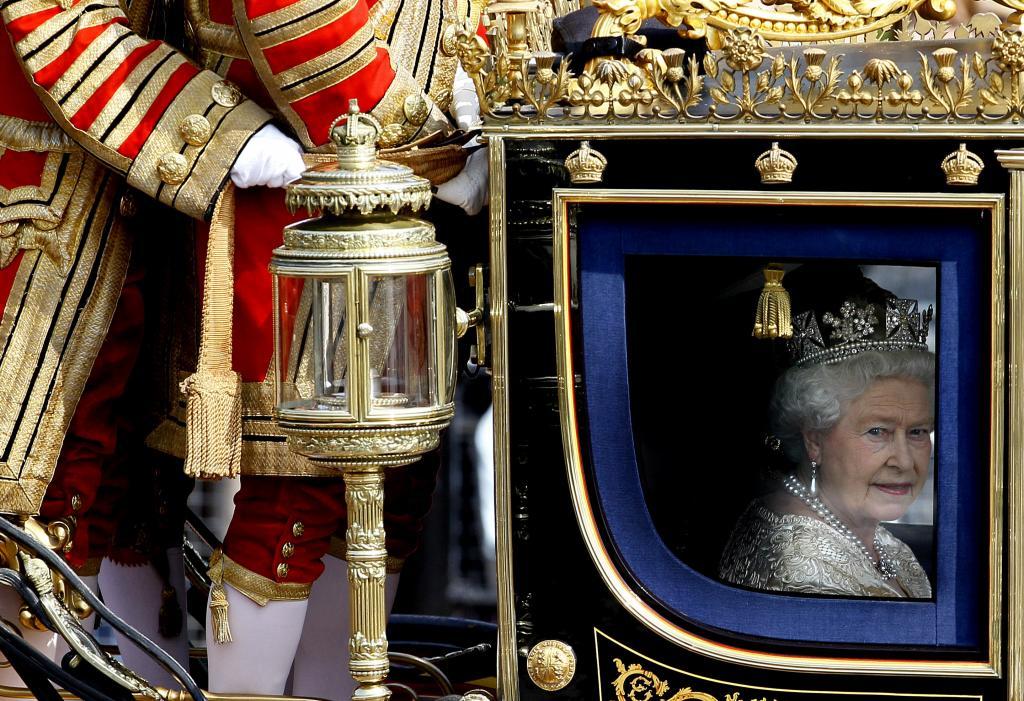
On April 21, she would have turned 100. And, although she passed away on September 8, 2022, at 96, her memory remains vivid, and her influence on British public life is so significant that the UK is getting ready to celebrate in style the centenary of the birth of probably the most prominent woman of the 20th century globally: Queen Isabel II. .
The sovereign who had the longest reign in her country - 70 years and 214 days - was much more than a Head of State. She became a symbol, fully aware of the responsibility that came with it. For her fellow citizens, she was an inspiring symbol who had to guide a nation through the transition from the proud British Empire where she was born to the post-Brexit United Kingdom seeking its place in an era marked by the vertigo of globalization and technological revolution where identities blur but Humanity more than ever needs role models almost as spiritual anchors. And, for the whole world, a symbol of a way of understanding the Monarchy that served as a mirror for royal families worldwide, although the concept of Majesty embodied by Isabel II also died with her. Today, it is no longer a valid formula to meet the demands of societies increasingly demanding of those in power.
Isabel II, the Great, a title bestowed by many historians in recognition of her achievements on the throne, was the ultimate representative and perhaps the last of a Monarchy in decline, of an almost sacred Monarchy where tradition determined almost everything and where, in the words of the great theorist Walter Bagehot, the institution still enjoyed a "mystical enchantment." This allowed the beloved queen to remain true to the principle that characterized her entire reign: "Never complain, never explain". If a monarch educated in those principles and convinced that it was expected of the Crown already struggled at the death of her daughter-in-law Diana, Princess of Wales, in 1997, to accept that populism was sweeping in like a whirlwind even through the palace gates, and that as a queen she was suddenly forced to tread the path of sentimentality, what would go through her mind now, so shortly after her passing, seeing how her offspring are constantly required to explain and be held accountable for everything, just like all Western reigning dynasties.
Today, citizens only accept Monarchies that are useful, transparent, and embrace exemplary behaviour. If it took so long for this to prevail in the Monarchy of Monarchies, the British one, it was precisely because the reverence for Isabel II allowed her to maintain the course unchanged during her lifetime. Of course, she earned it. For her political acumen and the exquisite neutrality with which she led alongside no less than 14 successive Prime Ministers throughout her reign. In this incredibly challenging feat of remaining silent for seven decades, an extraordinary achievement among many. But also for her rectitude, integrity, and ethical exemplariness. She was a sovereign committed to virtue in times when so many of her peers fell too easily into the clutches of impunity. To the extent that, despite every page of her long life being scrutinized, no weaknesses or scandals involving her in person are found, despite the countless ones in which those around her, including her own children, were embroiled.
Shortly before her passing, Isabel II had an 81% positive image among the British. An overwhelming figure, a consequence of the above. Furthermore, a YouGov survey this week indicates that, even in death, she remains the most popular member of the Windsor family, with 84% support for the work she did, followed by Diana and, at a greater distance, Princes William and Catherine. The immaculate support for the monarch was not shaken in the final stretch of her life not even by the eruption of such a despicable matter as the involvement of her favorite son, Prince Andrew, with the American pedophile Jeffrey Epstein.
Today, it is easy to fall into some revisionism. And there is no doubt that the worst thing Isabel II did as a queen was not being able to impose greater order in her family, to cut ties when rotten apples appeared, to turn a blind eye to behaviors like that of the Duke of York. Reigns as long as hers are great for expanding the pages of the Guinness World Records - she set numerous records - although they are not usually effective in terms of the necessary renewal and modernization that the Crown demands in the modern era. But it is also worth noting that the much-loved queen, like any child of her time and circumstances, would probably not have known how to reign under the scrutiny of public opinion. That was not the DNA of the woman who found herself on the throne of St. George without being destined for it.
Isabel Alexandra Mary was born in London on April 21, 1926, the first child of Prince Albert and Duchess Mary. Her grandfather, George V, was reigning at the time, and both she and her sister, Margaret, were raised as well-behaved girls who did not cause much concern, given that the Heir was their uncle Edward, expected to assume the Head of State and have his own offspring, something that would have left our protagonist with a rather anonymous life. As is known, the abdication of Edward VIII, after only 325 days on the throne, more devoted to his love for the divorced Wallis Simpson than to his historical responsibility, was an earthquake for the Monarchy and suddenly changed the dynastic course. Albert was crowned as George VI, and Isabel became the successor of what was still an empire. From London, the lives of one in four people on earth were governed.
Although Isabel's diligence led her to make an effort for learning throughout her life, it is no secret that she always lacked a solid academic education - something she felt as a frustration - and she was not a woman of artistic or cultural interests, unlike, for example, her husband, Prince Philip, or her eldest son, now Charles III. However, this did not prevent her from assuming the role at 25, upon her father's death in 1952, and serving as a monarch with a profound sense of duty.
The coronation took place in 1953, at Westminster Abbey. It was the first of a British monarch to be broadcast on radio and television, with coverage that sparked incredible global interest and boosted the institution's popularity. That day, she dedicated her life to serving "our great imperial family." And she fulfilled this commitment rigorously for 70 years.
On Tuesday, Charles III will address the nation in a Message paying a special tribute to his mother and highlighting her legacy, on the occasion of the historic centenary.
But that won't be the only event. The entire royal family will participate in a birthday celebration at Buckingham Palace attended by members of charitable organizations and entities linked to the late queen, such as Cancer Research UK, the Jockey Club, and the Army Benevolent Fund. Centenarians from the country will also have a place of honor. There will be cake for everyone.
Prior to that, a solemn ceremony will take place at the Elizabeth II Memorial at the British Museum in London, attended by the Windsors and the British government, led by Prime Minister Keir Starmer. Following the reception, Princess Anne—the monarch's only daughter—will proceed to Regent's Park to inaugurate the Queen Elizabeth II Garden. An exhibition featuring 300 iconic outfits that belonged to the Queen has also been organized at The King's Gallery in Buckingham Palace. Such pomp is well deserved for someone who, even today, embodies the essence of the monarchy for many.