When we think of pink landscapes in Spain, the usual is to look towards the Mediterranean coast. However, far from the sea and hidden in the north, there is a corner that surprises those who discover it.
In the heart of the province of Burgos, a little-known small village holds one of the most curious natural secrets of the country. It is a pink lake surrounded by history and an environment that seems frozen in time.
Poza de la Sal, the unknown village of Burgos with a beautiful pink lake
The village we are referring to is Poza de la Sal. With just 300 inhabitants, it does not usually appear on the lists of the most popular destinations. However, it has a charm that is hard to match. Among its treasures is a beautiful pink lake, which is actually a pool of saltwater.
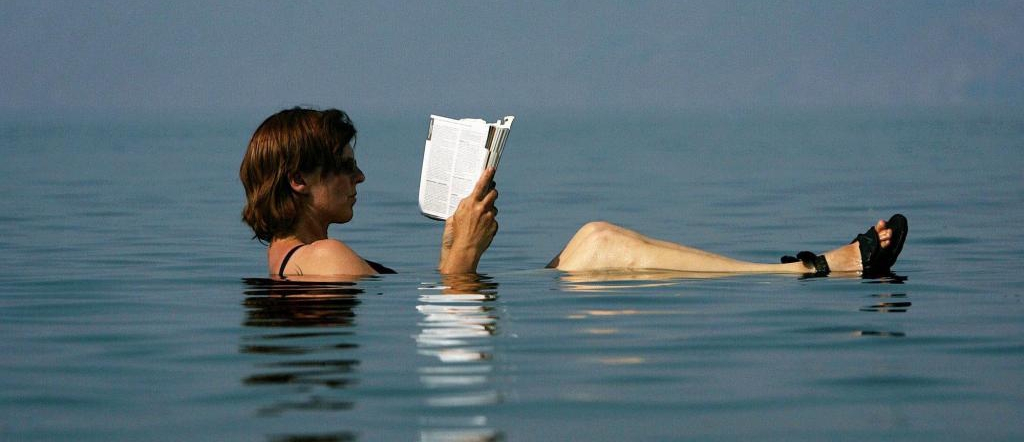
Its water has so much salt that you can float, as in the Dead Sea. Its color is due to the presence of Artemia salina, a tiny crustacean adapted to extreme environments. This natural pool has become one of the most photogenic and curious corners of Castilla y León.
The name of the village is not coincidental. Since Roman times, Poza de la Sal was one of the most important salt-producing centers in northern Spain, thanks to a diapir that pushes rock salt to the surface.
Production ceased in 1974. However, in recent years, several structures have been restored, such as the Interpretation Centre of the Royal Saltworks, where you can learn about the ancient extraction process and bathe in a saltwater pool.
What else to see in Poza de la Sal?
In addition to its pink lake, Poza de la Sal has much more to offer to its visitors. Belonging to the association of The Most Beautiful Villages in Spain, its urban area is declared a historical-artistic ensemble. It preserves a medieval layout, with narrow streets and stone houses.
At the top of the municipality, on a rocky outcrop, stands the Castle of the Rojas, built in the 16th century on an earlier fortress. "At the foot of the outcrop are the remains of the two towers that flanked the entrance arch, of which the lintel can still be seen, and which constituted the entrance gate to the courtyard of the fortress," explain from the town council of the locality.
On the other hand, Félix Rodríguez de la Fuente was born in Poza de la Sal, a figure much loved in Spain for his educational work on nature. In the village, there is a space dedicated to his memory.
The village is surrounded by a spectacular landscape that can be explored through various hiking routes. It also stands out for its gastronomy. You cannot leave Poza de la Sal without trying the oven-roasted suckling lamb, the tostones, or the morcilla de Burgos.