There was a time - not so long ago - when the end of the world was a genre in itself. It was consumed packaged as a series on a Sunday afternoon or as a dystopian novel to escape the mind before sleep. The Walking Dead, The Last of Us, The Fifth Wave, War of the Worlds... It was a recognizable fiction, with its codes, its extreme situations, its monsters, its survivors.
Today, however, the apocalypse is no longer a product of the imagination and creativity of a handful of scriptwriters and directors. The catastrophe is sliding and continuous: it appears between a recipe for orange salmon and a political discussion in Congress, drowned in the endless stream of images and videos that we consume non-stop. Total collapse is no longer the exception, total collapse is the rule.
"The problem is not so much what happens, but how we tell it," summarizes Eudald Espluga. The philosopher and communicator publishes Imagining the End (Ed. Paidós), an essay that transforms the apocalypse "into a tool of hope to imagine a post-capitalist future." His starting point is as simple as it is uncomfortable: data alone do not make politics. What does is the way in which those data are turned into a narrative, even if they are used imprecisely or questionably. And that narrative, in recent years, has adopted a very specific theme: that of collapse.
One day you wake up to a tweet from Donald Trump threatening to destroy an entire civilization. Pandemics, forest fires, impossible heat maps, entire cities turned into uninhabitable areas, wars explained as disputes over energy or resources. All in real-time, at your fingertips.
"We have never had so much information about what is happening, and at the same time so much misinformation. Rarely has this accumulation of data served to trigger a clear collective response. Rather, the dominant feeling is one of saturation, of fatigue, of a kind of paralysis that is difficult to name," says Espluga.
It is not only that we live in a moment of interconnected crises - climate, health, technological, geopolitical - but that we have learned to interpret them under the same narrative framework, when the reality is that there are several. For the philosopher, the future appears "as a downward slope, a sequence of inevitable losses that leads, sooner or later, to some kind of ending. Sometimes fast and horrifying, sometimes slow and almost imperceptible, but always an end."
"Today, being hopeful is countercultural. Pessimism has somehow become a form of prestige," warns Francesc Torralba, also a philosopher and author of Anatomy of Hope (Destino), which he defines as "a lucid and hopeful immersion in the force that keeps us standing when all seems lost."
But this way of narrating the world did not emerge out of nowhere. It has been decades in the making in popular culture, in the references we consume almost unconsciously. Writer and theorist Mark Fisher formulated it almost definitively when he wrote that it is easier to imagine the end of the world than the end of capitalism. "We have seen the collapse so many times in movies, series, video games... that it seems more plausible to us than any political alternative", explains the author of Imagining the End. In his pages, he compiles recent cases in which the world anticipated the definitive cataclysm, as supposedly irremediable as the controversial American Eagle campaign with Sydney Sweeney that accused the jeans brand and the actress of "white supremacy" or the fever for labubus as the umpteenth object of pop desire.
The problem is that this "cultural familiarity" has consequences. Because when disaster becomes imaginable - and, above all, repeatable - it ceases to be an exception and becomes a horizon. And when something is perceived as a horizon, it becomes overly naturalized.
This is where Fisher's "reflexive impotence" comes in: that feeling that the more terrible images we consume and the more we understand the magnitude of the problem, the less room we have to intervene in it. A kind of paralyzing awareness that does not lead to action, but to withdrawal. As if an excess of lucidity ends up nullifying any impulse for change.
"We live in a society of self, the we is dead. We try to survive our day-to-day lives as individuals, while democracy requires collective projects, shared struggles, which have disappeared. Without common horizons, democracy empties," insists Torralba.
So, has the internet turned the apocalypse into entertainment? Have we become accustomed to consuming snippets of the end of the world on the news as if watching football replays?
Espluga explains that the way we encode information can lead us to completely different courses of action. Not everyone who accepts the same data proposes the same solutions: "Some see the climate crisis as the need to radically transform the economic model, and others interpret it as an opportunity to accelerate technological development or even imagine exits beyond the planet." Just ask the astronauts of Artemis 2.
Between one thing and another, a space opens up where all kinds of responses proliferate. Some involve resignation. Others, a kind of almost delirious hyperactivity. Espluga points out that the American philosopher Eugene Thacker spoke of an increasingly "unthinkable" world, a reality that exceeds our traditional categories and leaves us without tools to process it. "Faced with that sense of limit, some choose to withdraw, assuming that there is nothing more to do, and others decide to double down: if we have been able to transform the planet, perhaps we can also rebuild it, colonize others, reinvent ourselves as a species," he explains.
On a more everyday level, that same logic takes on much more recognizable forms. Doomscrolling - the widespread practice of swiping for hours consuming negative news - functions as a kind of contemporary anaesthetic. It's not that we don't care about what we see. It's that we see it all the time, without hierarchy, without distance, without context. Catastrophe becomes just another image in the flow of clips: "We often say that we live permanently in an episode of Black Mirror," summarizes Espluga, pointing out how our daily lives have intertwined with the logics of dystopian fiction.
Platforms and social networks have a lot to do with this transformation. What was once presented as a new public square has evolved into something else: a space where algorithms not only select what we see, but how we see it. Espluga refers to the biblical Apocalypse to talk about the importance of iconography within the narrative: "The horsemen of the apocalypse, the monsters emerging from the ocean... were something like the memes of the time. Now we are inundated with images generated by artificial intelligence, things we don't know if they are true or false, but that are everywhere."
The result is a strange combination: information overload and loss of control. A vague feeling that everything is happening at once and that, at the same time, we have no real capacity to intervene. This is what Espluga identifies as a deeply rooted anthropological pessimism.
"It's a world where no one is capable of dreaming anymore. What we have are nightmares," agrees Torralba. What is to come is terrible and dark... Housing is impossible, work is precarious, relationships are volatile, and furthermore, the world is collapsing from an ecological perspective. We say to young couples: 'How can you have the foolishness to bring an innocent child into the world, who will be devoured by all these lunatics who lead us?'
In this context, it is not surprising that another idea gains ground: that of preparation. The collapse scenario invariably translates into a politics of fear. States strengthen their borders and compete for resources, a logic based on a very specific premise: when the essentials are lacking, everyone will look out for themselves. "There is a preparatory policy at all levels, from YouTube, Reddit, and TikTok niches where we see young people preparing for the worst with very tough training, learning to make fire, with 70-liter backpacks, knives, radios... to the European Union asking you to make your own emergency kits," Espluga recalls.
In his essay, he also explains how the far-right has managed to appropriate the apocalyptic narrative to turn it into an ultra discourse. "History has shown on multiple occasions that the end of the world mobilizes reactionaries better than progressives. And often, what threatens us is not the end of the world, but the end of my world as a white heterosexual man," he says, emphasizing how catastrophe is interpreted from very specific cultural positions, fueling populism. From there arise conspiracy theories like the much-repeated Great Replacement that stigmatizes immigrants.
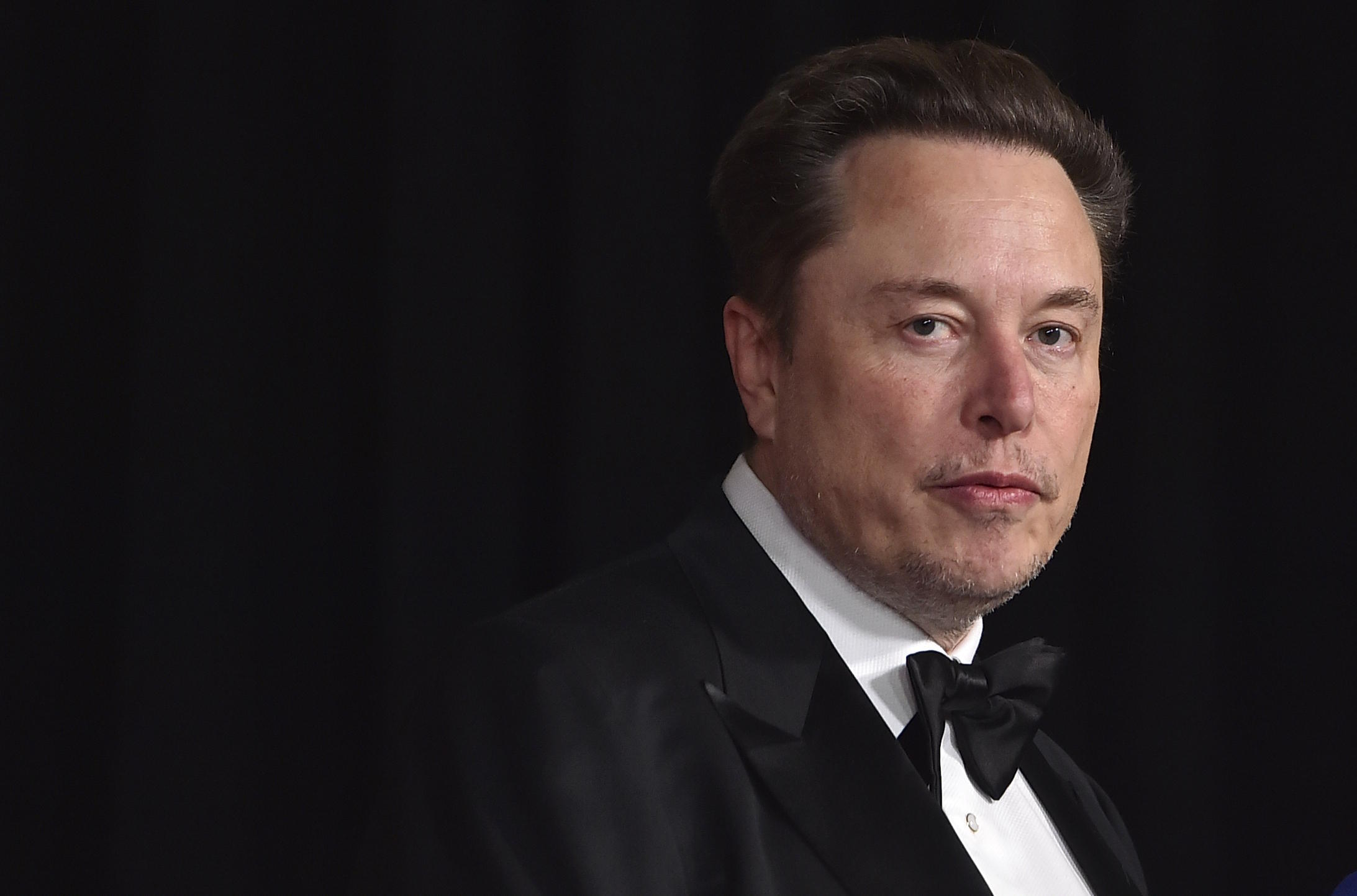
Figures like Elon Musk epitomize that logic: "His actions demonstrate that he doesn't care about climate change because it will end 99% of the population. What matters to him is controlling technology, so that it doesn't end him in a hypothetical future."
According to Espluga, phenomena like the replacement of spirituality with coaching - and vice versa - or the preference for horoscopes are symptoms of the constant search for fragmented meaning in an uncertain world. "There is much talk about young people returning to being believers, but there have always been waves, different ways of clinging to the present to try to interpret the future."
Torralba questions the resurgence of religious sentiment among the new generations: "It is hasty, although there is undoubtedly an explanation behind that void. There is a youth that is fed up, disgusted with the consumerist, individualistic, and materialistic world that we have presented to them. For me, it has to do with dissatisfaction, exhaustion, with the frustration that breeds an army of disillusioned."
But another reading is also possible. One that does not deny the seriousness of the moment, and also does not limit itself to reproducing it in the form of fatalism. An antidote against paralysis. The author of Anatomy of Hope insists on the need to regain a "certain dimension of meaning," not to reduce the human experience to a succession of crises without a horizon: "It is not about returning to lost certainties, but about preventing uncertainty from turning into paralysis."
The urgent question that arises is: what do we do with this fear of the apocalypse? Is there a manual or guide to manage it collectively? Some voices, from philosophy to activism, point towards the need to build other imaginaries. Not closed utopias or grand saving narratives, but concrete ways of thinking about the present that open up possibilities. Writer Rebecca Solnit speaks of "hope in the dark": small transformations that are already happening, often invisible and unexpected, but capable of altering the course of things.
"Stories of overcoming like that of Gisèle Pelicot are admirable and luminous, an invitation not to fall into despair, to trust in change," recalls Torralba, who believes that citizens today have more responsibility in sustaining hope than politicians or the media. Therefore, the key is not so much to imagine a completely different future, but to learn to see what is already happening in a different way. To recognize that, against the dominant narrative of collapse, there are also other stories, less strident, less spectacular, but equally feasible.
For both philosophers, the problem is not so much that the world is ending. It is that we only know how to imagine it ending. And at that point, the battle is inevitably cultural. Resisting, in that sense, is not so much about denying the apocalypse as it is about challenging it.
"We always think and speak in terms of collapse fantasies, and I believe we should try to make a collective exercise of re-symbolization of how we think about this end of the world. We have to do that work as a society to know how we want to become after the end," concludes Eudald Espluga.
A piece of advice that Torralba adds to: "It is possible to aspire to something better, even if not immediately. Everything we have achieved has been the result of hope, work, and tenacity. We suffer a lot from intolerance and impatience, but difficult horizons require time, common purposes, and a lot of perseverance."