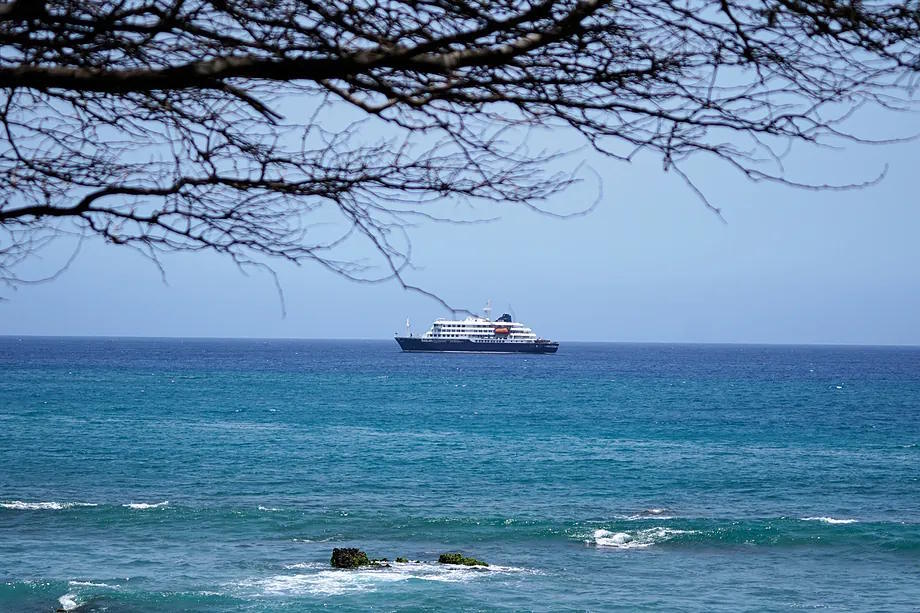
On the same day, the possible culprit was identified, a Andes hantavirus variant whose presence has been confirmed in five affected individuals. Three other cases remain as suspects, while the origin and extent of the outbreak are being investigated. The main hypothesis being considered by the WHO is that the first individuals affected by the disease, a Dutch couple who had been traveling in South America before boarding the cruise, contracted the virus before boarding. Subsequently, indications suggest that person-to-person transmission occurred on board the cruise ship.
Mónica García, Minister of Health, explained on Tuesday that hantavirus is mainly transmitted through rodents, especially through the inhalation of particles present in places contaminated by their urine or feces, as well as through direct contact with these animals or their secretions. "Transmission between people is not common, but it is not impossible," she commented, adding that "when it has occurred, it has always been in situations of close and direct contact with symptomatic individuals."
The two elements that define the course of the outbreak are the definition of close contact and the presence of a virus carrier with visible symptoms.
The outbreak on the MV Hondius suggests that contact does not have to be as close as initially assumed. "This variant mainly presents respiratory symptoms, which is what we are facing now," detailed yesterday Pedro Gullón, Director of Public Health. "Transmission between humans occurs in close contact or in situations where there can be no separation from the person with symptoms."
The outbreak on the ship meets these requirements. "The proximity inside the ship is so close, so neighborly, sharing environments, dining rooms, etc. all the time, which makes this type of horizontal contagion more likely," emphasizes Daniel Antenucci, Associate Professor of Physiology at the University of Mar del Plata and associated researcher of Conicet (National Scientific and Technical Research Council of Argentina). This hantavirus expert also emphasizes that "transmission on board has been possible, due to the conditions of closeness and enclosed spaces."
Scientific literature shows evidence of other instances where isolated cases of person-to-person transmission with the Andes variant have occurred, following close interpersonal contacts. In the vast majority of cases, hantavirus infections occur through the inhalation of particles contaminated by the virus from the excrement, saliva, or urine of rodents carrying the pathogen.
This was reiterated by the WHO Director, Tedros Adhanom Ghebreyesus, in a press conference held on Thursday. "In previous Andes virus outbreaks, person-to-person transmission has been associated with close and prolonged contact, particularly among household members, intimate partners, and healthcare providers. This seems to be the case in the current situation."
An investigation analyzing an outbreak that occurred in Argentina in 2018 and 2019 has shown that this virus variant is not only transmitted through such close contact, but also through so-called super-spreaders, individuals with a high viral load who can transmit the virus with more superficial contacts.
In the analyzed outbreak, which affected 34 people and resulted in 11 deaths, transmissions occurred through three symptomatic individuals who attended social gatherings, such as a birthday party and a funeral.
The Head of the Department of Alert and Response Operations for Health Emergencies, Abdirahman Mohamud, pointed out during the press briefing that the current situation could resemble that outbreak. "We had a similar situation then, where a symptomatic person attended a social gathering, leading to many infections. The current case is similar, with contagions in a closed space with close contact," he recalled.
"If we follow public health measures and apply the lessons learned in Argentina regarding contact tracing and isolation, which have been shared with all countries, we can break the chain of transmission," added the expert.
As far back as 2002, Antenucci recalls that a person-to-person transmission was confirmed on a bus trip: an individual who had never been in an endemic area contracted the virus after traveling on a bus with a symptomatic person. "We know that transmission occurs, but this virus is not like the flu, which is much more contagious. In this case, you have to be very close to the other person, use utensils they have used, or have their breath almost next to you," he points out.
However, experts emphasize that we are dealing with a virus with a very different transmissibility capacity compared to other respiratory viruses like SARS-CoV-2. In most studied cases, no secondary transmission chains have been detected after an initial infection.
According to sources from the Communicable Diseases Area of the National Center for Epidemiology (CNE), of the Carlos III Health Institute, "with the information available so far, including the fact that the hantavirus type causing the outbreak is the Andes variant, it is plausible that there are cases that contracted the disease through contact with rodents during their stay on land before boarding the cruise, and others through person-to-person transmission during the cruise."
Pello Latasa, Vice President of the Spanish Society of Epidemiology, also agrees with this view. "The main hypothesis being considered by the WHO, given the sequential appearance of cases, is that a transmission chain has occurred," he points out. "The most plausible scenario, as the disease's incubation period is usually long, is that the initial cases were exposed to the virus off the ship and subsequently, there was secondary human-to-human transmission on board," explains the SEE spokesperson.
In his statement, Tedros confirmed that, so far, eight possible cases have been detected in the outbreak. Here is what is known to date about each of them:
Case 1: Dutch man, 70 years old, showed symptoms of fever, headache, and mild diarrhea on April 6, 2026, aboard the ship. Just five days later, on April 11, he developed respiratory difficulty and passed away on board the same day. According to WHO information, no microbiological tests were conducted at that time. The passenger's body remained on the ship until it was transferred to Saint Helena (British Overseas Territory) on April 24.
Case 2: The partner of the first case, a 69-year-old Dutch woman, disembarked in Saint Helena on April 24, 2026, along with her husband's body with gastrointestinal symptoms. Her condition worsened during a flight to Johannesburg, South Africa, on April 25. She passed away upon arrival at the emergency service on April 26. On May 4, it was confirmed by PCR that the case corresponded to a hantavirus infection. WHO reported that passengers who traveled on the same flight are being traced.
Case 3: On April 24, 2026, an adult British man went to the ship's doctor with fever, difficulty breathing, and pneumonia symptoms. On April 26, his condition worsened. He was evacuated by air from Ascension to South Africa on April 27, where he is currently hospitalized in the Intensive Care Unit (ICU). Laboratory tests for an extensive panel of respiratory pathogens were negative; however, the polymerase chain reaction (PCR) test confirmed hantavirus infection on May 2, 2026. Serological, sequencing, and metagenomic studies of the virus are being conducted.
Case 4: An adult woman, of German nationality, with pneumonia symptoms, passed away on May 2, 2026. The first symptoms appeared on April 28, with fever and general discomfort.
Case 5: On May 6, Swiss authorities confirmed a hantavirus case identified in an individual who had been a passenger on the MV Hondius cruise and presented at a hospital in Zurich, Switzerland. The patient, who left the cruise at the end of April, had received an email from the ship operator informing passengers about the outbreak. The virus was confirmed as the Andes hantavirus, a type of hantavirus present in South America, by the National Institute for Communicable Diseases of South Africa and the University Hospitals of Geneva (HUG), Switzerland. The patient is isolated with their partner, who is asymptomatic but also traveled on the cruise. Three other suspected cases were evacuated this Wednesday. This includes the ship's doctor, who had symptoms compatible with the disease and is now in the Netherlands, his country of origin. Two other patients with suspected infection, one British and one German, were also evacuated. The latter is currently asymptomatic, Tedros noted in his press conference. Possible new cases The WHO director mentioned that "given the virus's incubation period, which can be up to six weeks, it is possible that more cases will be detected." Due to the possibility of person-to-person transmission of the virus, researchers are working to identify the people who traveled on the plane with the woman who passed away in South Africa.
Similarly, doctors at the Ascension Island hospital who treated one of the patients are self-monitoring for symptoms. In this regard, Tedros emphasized that the organization is aware of reports of other individuals with symptoms who may have had contact with one of the passengers. "In each case, we are in close contact with the relevant authorities," he said, without providing further details. Nevertheless, WHO officials stress that the virus appears to be transmitted directly from person to person only rarely and that the risk of a broader outbreak is low.
Maria Van Kerkhove, responsible for managing epidemics and pandemics at WHO, emphasizes that "this is an outbreak on a ship, in a confined area with five confirmed cases so far. We are not treating this as an epidemic outbreak at WHO. The risk to the population is low." More on El Mundo Starmer's Labour Party suffers setback in municipal elections and several party authorities call for his resignationTracking the hantavirus outside the ship: more than 500 people exposed worldwide"Although this is a serious incident, WHO assesses the risk to public health as low," Tedros emphasized, in the same vein. "Our priorities are to ensure that affected patients receive care, that the remaining passengers on the ship remain safe and are treated with dignity, and to prevent any further spread of the virus."
Health
From pandemic updates to the latest advances against cancer, get the most relevant health news of the week.