Guillaume Picard has spent his whole life devoted to the sparkling blue of the south of France. His first job was on a ship, where he worked for 30 years in the merchant navy and eventually became a commercial captain, transporting containers and tourists in the Mediterranean that has seen a radical change in a short time.
He always tried to carry out his work "respecting and even surpassing certain regulations," he says. Once retired, in his seventies and with his feet on the ground, he looked at the horizon and became aware of the "devastating impact of those increasingly large monsters with higher energy consumption."
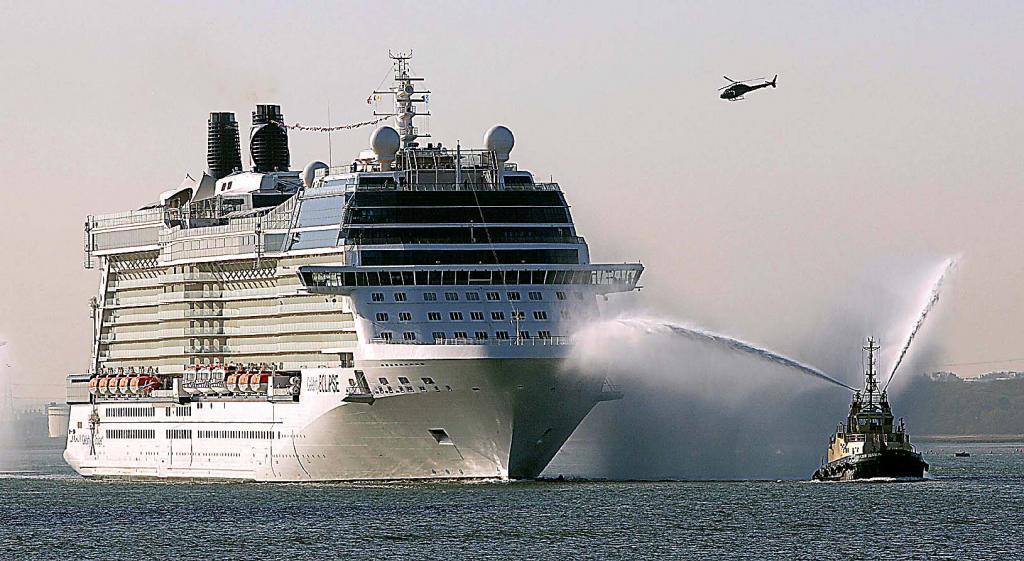
Captain Picard has now embarked on a very different mission: Stop Croisières, the NGO with a hundred activists that has undertaken an unusual crusade against the glamorous cruises flooding Marseille. Fifteen years ago, they barely docked in the second French city, burdened by its bad reputation. Nowadays, they unload 2.5 million cruise passengers a year in the redeveloped streets of the Vieux-Port and are responsible for 10% of atmospheric pollution.
"Nothing justifies the maintenance of these absurd and toxic floating cities," reads the manifesto of Stop Croisières. "That is why we have decided to put an end to this disastrous industry: our air, our seas, and our health are non-negotiable."
The blockade with canoes of the huge Wonder of the Seas, the world's largest cruise ship, was one of the most notable actions of Stop Croisières, which made headlines again when its activists unfurled a giant banner on a bridge north of the city: "In Marseille, breathing kills".
"The city sees 1,200 premature deaths per year due to pollution generated by commercial maritime transport," emphasizes Captain Picard in his new anti-cruise role. "According to AtmoSud, the institution responsible for air quality in France, this represents an expense of 4 billion euros paid by citizens, a figure that must be compared to the benefits it generates for certain individuals."
"My sense of guilt for having been part of that polluting industry is no greater than that of a truck driver or a bus driver", acknowledges Guillaume Picard, father of two daughters and a grandfather. "I will never regret getting involved with Stop Croisières and this crew of young people committed and concerned about their future and that of our planet."
"With them, I have the pleasure of sharing my experience as a ship captain and exposing the greenwashing of the cruise industry," warns the sailor on land. "Are we going to continue chartering larger and larger ships with more people on board in times like the one we are living in? It is regrettable that we always have to wait for a major crisis or a disaster to rethink the impact of our actions."
The high-profile actions of Stop Croisières led Mayor Benoît Payan to launch a petition, supported by 50,000 citizens, to limit the number of cruises, under the slogan "Marseille is suffocating." "Like a good politician, Mr. Payan took advantage of the impact of our first port blockade in 2022, but then he didn't even want to meet with us," laments Picard.
The opening of a new terminal, mainly for luxury cruises, has intensified the naval battle in Marseille. However, the captain points directly to Paris, where everything related to the port is managed: "Emmanuel Macron lives in his king's bubble, serving financial interests and caring nothing about the destruction of the lives of the people of Marseille."
The image of the port blockade and the siege of the cruise ships by canoe, reminiscent of Avatar, remains vivid in the minds of the people of Marseille. The last major action was in 2024, organized by Stop Croisières and Extinction Rebellion, when three cruise ships could not enter the port until the police arrested the rower-activists.
"Our strength lies in actions and in informing the public through the media," admits Captain Picard. "But mindsets change very slowly, and the cruise industry invests huge sums of money to make us believe that their sector is virtuous."
Facing a summer where the record of cruise passengers in Marseille could be broken, the crew of Stop Croisières is focused on the imminent filming of a documentary for French television about the impact of mass tourism and cruises. In Nice and Cannes, they have already taken the first steps to set limits, as Venice, Santorini, Dubrovnik, and even Barcelona have done, among other besieged towns in the increasingly crowded, polluted, and less blue Mediterranean.