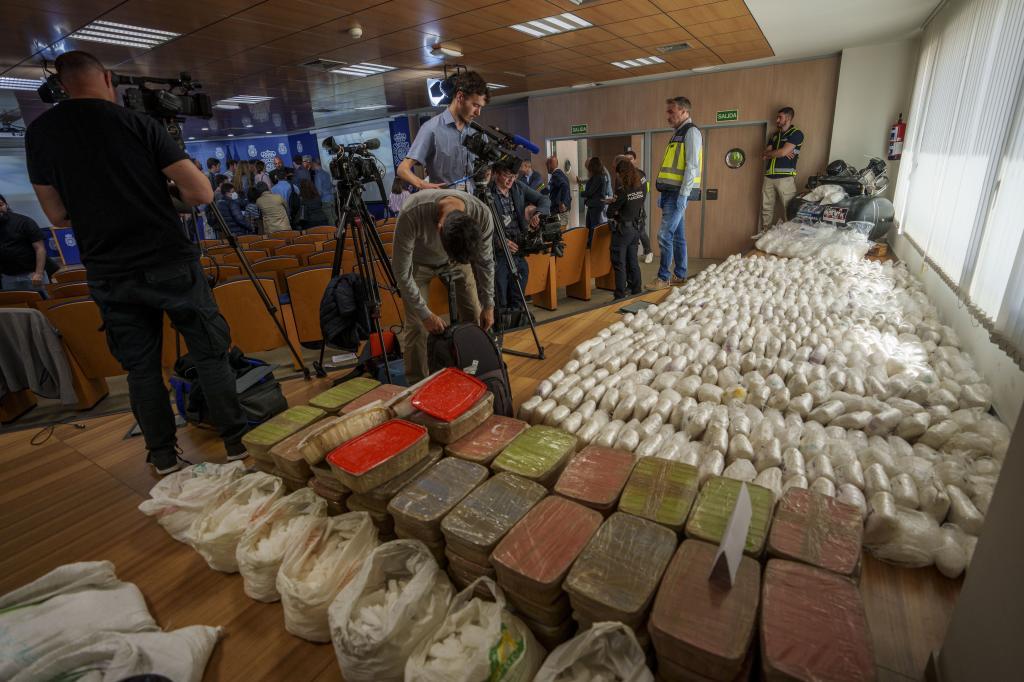
Cocaine is circulating and being consumed like never before in Europe. The Commissioner for Home Affairs and Migration, Magnus Brunner, certifies this reality based on data collected by the European Monitoring Centre for Drugs and Drug Addiction (EMCDDA). All very institutional, very EU, and very scrutinized.
"Cocaine is more available today than ever before" is the specific statement made by Brunner during the presentation of the annual document published by the EMCDDA. Delving into this document reveals numerous examples. For instance, wastewater data shows that cocaine consumption is substantially increasing in all cities analyzed.
Social distribution is also broader, meaning it is no longer just consumed among the higher socioeconomic classes. The methods of use are also evolving: besides snorting, it is now also smoked and injected, which is undoubtedly the most dangerous form of consumption. Notably, 94% of syringes analyzed in Barcelona were used for this purpose. It is the second European city with the highest percentage, only behind Thessaloniki (Greece). Madrid also records a significant figure of 69%.
However, Spain's role in this document and in this reality goes beyond consumption data. Spain is crucial in the increase of cocaine consumption in Europe. It is the main supplier in the EU as it is the primary entry point for the drug from Latin America.
"Spain has a special situation because it is also the gateway to the European Union for drugs from Latin America," Brunner confirmed. Alongside him, the Executive Director of the EMCDDA, Lorraine Nolan, also addressed the press. She, beyond political messages, deeply understands the figures and realities. And she only reinforced the same message.
"Out of the 330 tons of cocaine seized in 2024, almost 40% was intercepted in Spain," Nolan explained. The exact figure was 124 tons compared to France's 53 tons. "We are witnessing a diversification of maritime trafficking, with increasing sophistication and variety of methods used. Now we see a focus on smaller ports, unloading vessels, and the use of drones and motorboats," continued the EMCDDA's head in her analysis of Spain.
Nolan also explained that Spain "is a fundamental transit route for the trafficking of cannabis resin produced in Morocco destined for Europe, and some of the largest seizures of cannabis resin in Europe have been made in Spain." Or that it is "a country for the cultivation of herbal cannabis itself," as it accounts for "over 75% of cannabis plants seized in Europe in 2024." It is not just the cocaine supplier, but also of cannabis.
Beyond Spain's role, the director of the European drug agency also highlighted something very relevant: that Europeans are increasingly abusing substances, many of which are highly potent. "The variety of opioids and stimulants available on the market continues to grow. Polydrug use is also common, with individuals combining substances in ways that increase risk and complicate responses," she warned.
"What concerns me the most is that Europe could be facing a narrowing window of opportunity to strengthen its preparedness before these substances take deeper root. We have seen in other parts of the world how quickly synthetic opioids transform drug markets and drive up overdose deaths," she emphasized.
Among these synthetic opioids is, of course, fentanyl, and the other parts of the world are, for example, certain cities in the United States. Currently, the data in Europe is not very high, but Nolan's warning is clear. It will arrive, or it may have already arrived and not been fully detected.