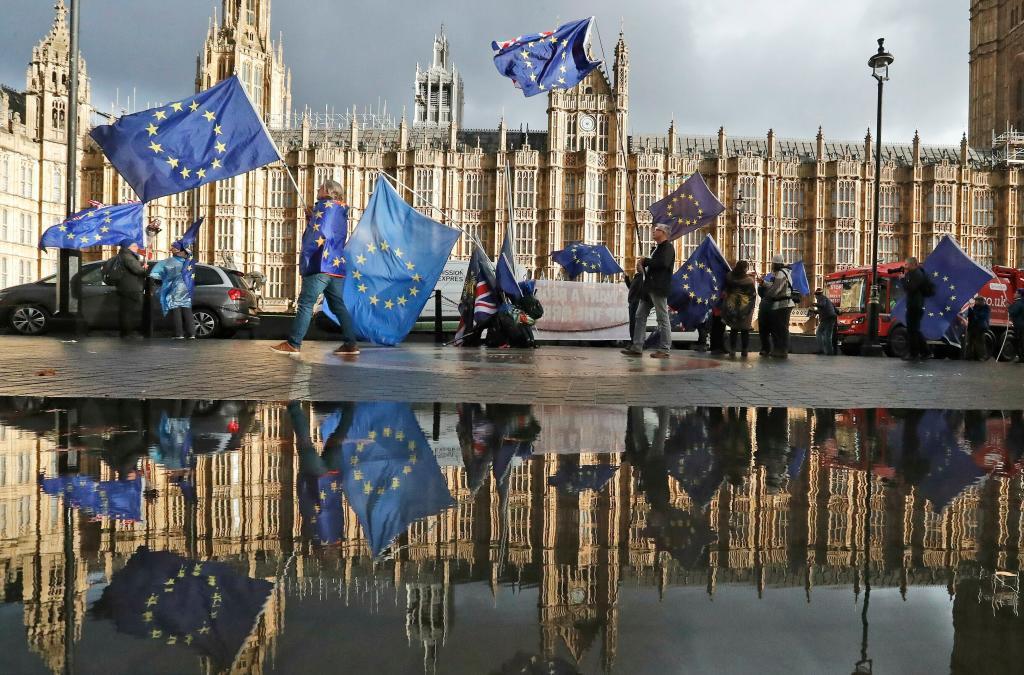
The columns of this British journalist in the prestigious 'Financial Times' are today a reference for deciphering international current affairs.
QUESTION. You are one of the most respected voices in international affairs. Your articles in the newspaper 'Financial Times' help interpret current events, but also anticipate trends and future scenarios. Ten years after Brexit, I would like to go back to that decisive day. How do you remember the exact moment when you knew that 52% of the British had tipped the balance towards the UK's exit from the European Union against 48%?
ANSWER. I was watching it on television. I knew that Brexit would happen long before the final result was known. When the results of the first constituencies were announced - specifically, those of Sunderland in the north of England - it became quite clear that the outcome would be negative. So, I went to sleep, and when I woke up, my worst fears had been confirmed.
Q. How has your stance on Brexit evolved? Shortly after the referendum, you wrote that perhaps Brexit would not materialize and the possibility of a second referendum. Has your way of looking at and dealing with Brexit gone through different phases? In which phase are you now?
A. You remember correctly. I was recalling the precedents of referendums held in Ireland, France, and the Netherlands, which had voted against certain aspects of the European Union but were eventually reversed. There was an attempt to push for a second referendum in the UK, but it ultimately failed. I am now in a phase where I believe the issue is ripe for reconsideration, initiating a gradual process that could eventually lead the UK to rejoin the European Union.
Q. To what extent is Brexit responsible for the problems facing British society today? Isn't it too simplistic to directly attribute all political polarization or the rise of populism to it, or is there truly an undeniable relationship between them?
A. It hasn't helped. All political problems are compounded without economic growth, and Brexit has reduced our growth rate.
Q. Would Nigel Farage's arrival at 10 Downing Street be the political culmination of Brexit? Do you really envisage that scenario?
A. I think it is very possible, though not certain. As for it being the culmination of Brexit, it's interesting that Farage doesn't talk much about it because he knows it's an unpopular issue. Lately, he mainly talks about immigration.
Q. Does the perception of shared threats today bring Downing Street and the European Union closer, from populism to the war in Ukraine and the Russian threat?
A. Yes, that and the passage of time.
Q. What role does Donald Trump play here? Has he also helped to bring both sides of the Channel closer together?
A. Undoubtedly. It was interesting to see that on key issues - such as Greenland, aid to Ukraine, and opposition to tariffs - the UK sided with the European Union, not with Donald Trump. We are discovering that our interests align against a erratic and sometimes threatening United States.
Q. Defence is another of our links, the need to join forces and close ranks. Could it be said that what separated the European Union could now unite it through NATO with the construction of the European pillar?
A. It is possible. There is still a long way to go before NATO has a European pillar. But it is clear that Europe will have to do more for its own defence, one way or another. And the UK is an important part of it.
Q. Would the European Union be very different today if the UK were still inside?
A. It's hard to say. There probably wouldn't be that much difference. The UK has always been a proponent of free trade, but the world is becoming increasingly protectionist anyway. And when the EU wanted more integration and the UK did not, the British usually secured an opt-out clause.
Q. Who will regret Brexit more: the British or EU citizens?
A. It was bad for both parties, but worse for the UK.