Spain is experiencing on Wednesday another day of extreme temperatures around 40 degrees, as the heatwave extends to Eastern Europe and the UK, where record temperatures for June are being recorded. The State Meteorological Agency (AEMET) maintained high-temperature warnings in 14 autonomous communities, with the red level of "extraordinary danger" in Cantabria and the Basque Country, awaiting a "thermal relief" likely to arrive on Thursday on the peninsula.
Meanwhile, Paris topped the "red" list of European capitals with 41 degrees, a day after confirming the hottest day ever recorded in France. Italy placed 16 cities on red alert, including Rome and Milan, while the extreme heat spread to countries such as Croatia, Poland, and Hungary, after wreaking havoc in Switzerland, Germany, Belgium, and the Netherlands.
"In the past, these heatwaves often concentrated in a few regions, but now they are becoming increasingly common across much of Europe," warned climatologist Davide Faranda to Le Monde, from the National Center for Scientific Research in France, the country that has so far suffered the most impact with 40 deaths, mostly from drowning, over 68,000 homes without power, hundreds of canceled trains, and more than 1,300 temporarily closed schools.
According to Faranda, Europe faces a "geographical problem", boxed in the increasingly warm Mediterranean and not far from Greenland, "where the ice is melting rapidly". "Currents are blocked and form heat domes, and Spain acts like a hairdryer, sucking air from North Africa towards Europe," concludes the climatologist.
"The data speaks for itself: temperatures in Europe are increasing approximately twice as fast as the global average, so the likelihood of this extreme heat in the future is growing," warned World Health Organization President Tedros Adhanom Ghebreyesus. "Leaders must prioritize investments in resilient health systems and accelerate climate action to mitigate the factors contributing to this situation."
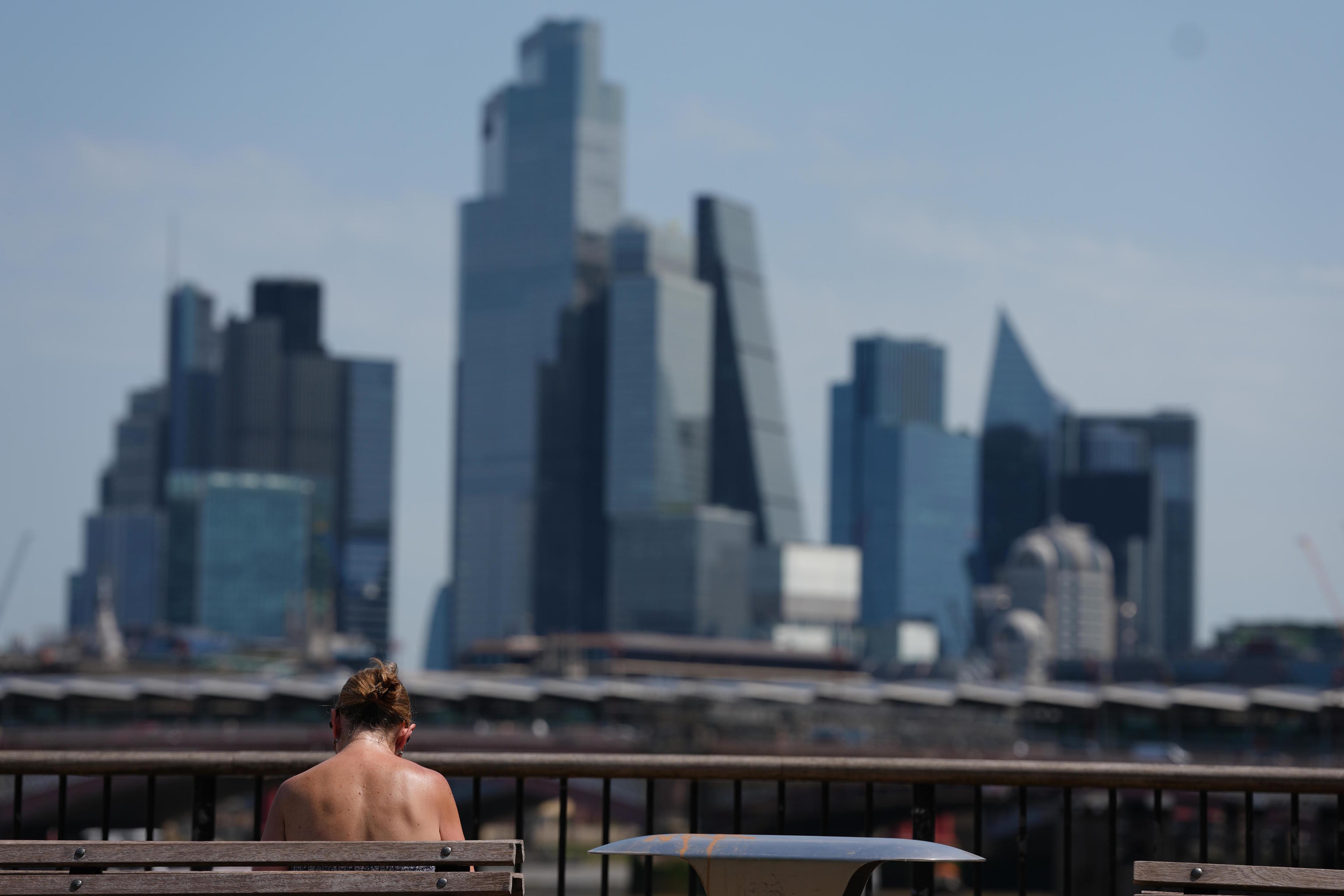
"London is baking," testified UN Secretary-General António Guterres during his visit to the British capital, to intervene precisely at the London Climate Action Week. "The crises affecting us may seem separate, but they have the same origin: fossil fuels. And the response demanded of us is the same: a fair transition to clean energy and a push for adaptation, resilience, and climate justice.
Large parts of England and Wales were on red alert on Wednesday, which could become the hottest day ever recorded in June, with temperatures nearing the 40.3 degrees recorded in July 2022, the first time the 40-degree mark was surpassed in the British Isles.
Croatia declared a red alert along much of the Adriatic coast, while Poland extended the warning of extreme temperatures across much of the western part of the country and Hungary also activated the second-highest level of alert. In Amsterdam, meanwhile, the city council decided to offer free entry to public pools, while Paris once again experienced a massive influx to the banks of the Seine and the canals of Saint-Martin and La Villette.
The heatwave brought the two hottest June days ever recorded in Spain since 1950, according to data from AEMET, with a peninsular average anomaly of 7.1 degrees compared to the usual temperatures for this time of year. Monday nights (20.14 degrees on average throughout the territory) and Tuesday nights (19.81) were also the warmest in the last 75 years. Extreme heat has set historic records in thirteen provinces, with a significant impact in northern Spain, and with Bilbao recording temperatures above 40 degrees for the first time for three consecutive days.
At least 94 million Europeans experienced temperatures above 35 degrees on Wednesday, most in Spain and France, according to estimates from the AFP agency. Over 350 million (two-thirds of the population) have been under temperatures above 30 degrees in this unusual June across much of the continent.