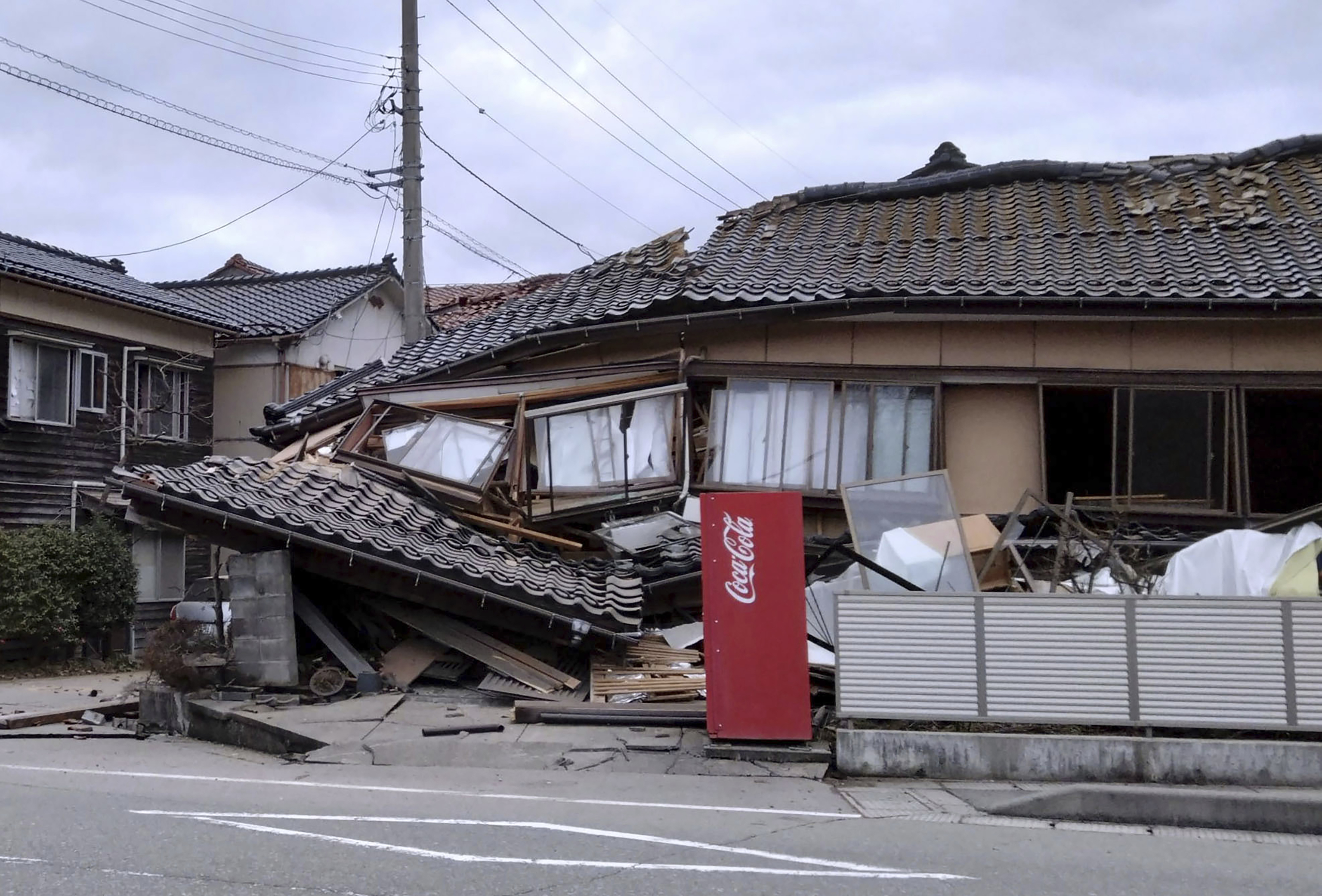
Two countries nearly 14,000 kilometers apart. Three earthquakes. Almost identical magnitudes. Opposite results. While Venezuela faces one of the biggest natural disasters in its recent history, with nearly a thousand dead, Japan once again demonstrated why it is the best-prepared country in the world to coexist with earthquakes. On the same day that two earthquakes of magnitude 7.2 and 7.5 devastated the surroundings of Caracas, another earthquake of magnitude 7.2 shook the Japanese northern coast. In the Asian archipelago, there were barely a dozen injured and some railway interruptions. In Venezuela, entire neighborhoods were reduced to rubble.
Nature struck with a similar force. The difference was in the infrastructure, warning systems, planning, and a culture of prevention built over time.
The earthquake on Thursday once again tested their model. The government immediately set up an emergency task force. The Japan Meteorological Agency (JMA) quickly ruled out the risk of a major tsunami, although it asked the population to remain alert for a week due to the possibility of new tremors. Its seismic monitoring chief, Ayataka Ebita, pointed out that, on the northern coast, next to the Japan Trench and the Kuril Trench, earthquakes above magnitude 7 are part of the region's natural behavior and tend to occur every one or two decades.
Located on the convergence of four tectonic plates and within the Pacific Ring of Fire - the belt where around 90% of the world's seismic activity occurs - the Asian country records about 1,500 earthquakes per year.
In Japan, no one interprets those messages as a reason for extraordinary alarm. They are part of a routine learned over generations. "Japan is very strict in complying with anti-seismic construction regulations and historically has been modifying its systems to improve them, with the aim of reducing future impact and saving lives. For example, for decades there has been an emphasis on reinforcing schools and ensuring they are safe, to reduce vulnerability and protect children, turning these spaces into shelters for the community," explains Carmen Grau, a researcher at Waseda University and a disaster management specialist after almost two decades living in Japan.
"In addition to resilient constructions, monitoring and early warning systems, Japan promotes a culture of prevention and education from a very young age, invests in education, conducts frequent drills, and prepares to coordinate complex responses. They know that the first 72 hours are crucial to finding survivors, so they deploy extensively."
This culture of prevention is supported by one of the most demanding construction regulations on the planet. Large buildings incorporate seismic dampers, isolators in their foundations, and complex vibration absorption systems capable of greatly reducing movement during an earthquake. But engineering alone does not explain the success.
When the JMA detected the first seismic waves of Thursday's earthquake, millions of mobile phones automatically received the emergency alert even before the most destructive waves arrived. There were just a few seconds of margin, enough for many trains to stop, elevators to automatically halt, and thousands of people to seek shelter.
Venezuela lacks a comparable national system. Some citizens received alerts thanks to the seismic alert system developed by Google for Android phones, which uses sensors from millions of devices worldwide to detect vibrations and warn other nearby users. Although this technology can provide a few seconds of advantage, it depends on the density of available phones and never replaces an official monitoring and response network.
"Japan's experience shows that risk can be managed to reduce impact and that investing in prevention is less costly than funding large reconstructions and losing many lives," Grau points out. "Not only Japan, the experience of Chile, a small country that also invests in improving its risk management systems and seismic preparedness, shows that it is possible. Chile has been one of the first countries to send assistance and teams to Venezuela."
After the Fukushima disaster in 2011, when the earthquake and subsequent tsunami caused over 22,000 deaths and triggered the worst nuclear accident since Chernobyl, Japan decided to further strengthen its anticipation capacity. It expanded the S-Net network, a gigantic system of thousands of kilometers of cables and sensors installed on the seabed that directly monitor the areas where tectonic plates collide off the Japanese coast. This infrastructure allows for around 20 seconds of early detection of major earthquakes.
Preparation does not end with technology. Grau mentions that if a power outage occurs during an emergency, all localities have radios installed in schools, sports centers, and community centers to maintain communications.
The national alert network (J-Alert) integrates information from national and international agencies and distributes it via satellite to the entire country within seconds. It is not only used for earthquakes and tsunamis. It also broadcasts warnings for typhoons, heavy rains, extreme heat waves, and even North Korean missile launches. Its messages reach mobile phones, train stations, airports, public buildings, and electronic panels throughout the country simultaneously. There is an application, Safety Tips, that also replicates these alerts in multiple languages for foreign residents and tourists.
While Venezuela continues to count victims, Japan once again demonstrates that the best response to an earthquake begins many years before the earth starts to shake.