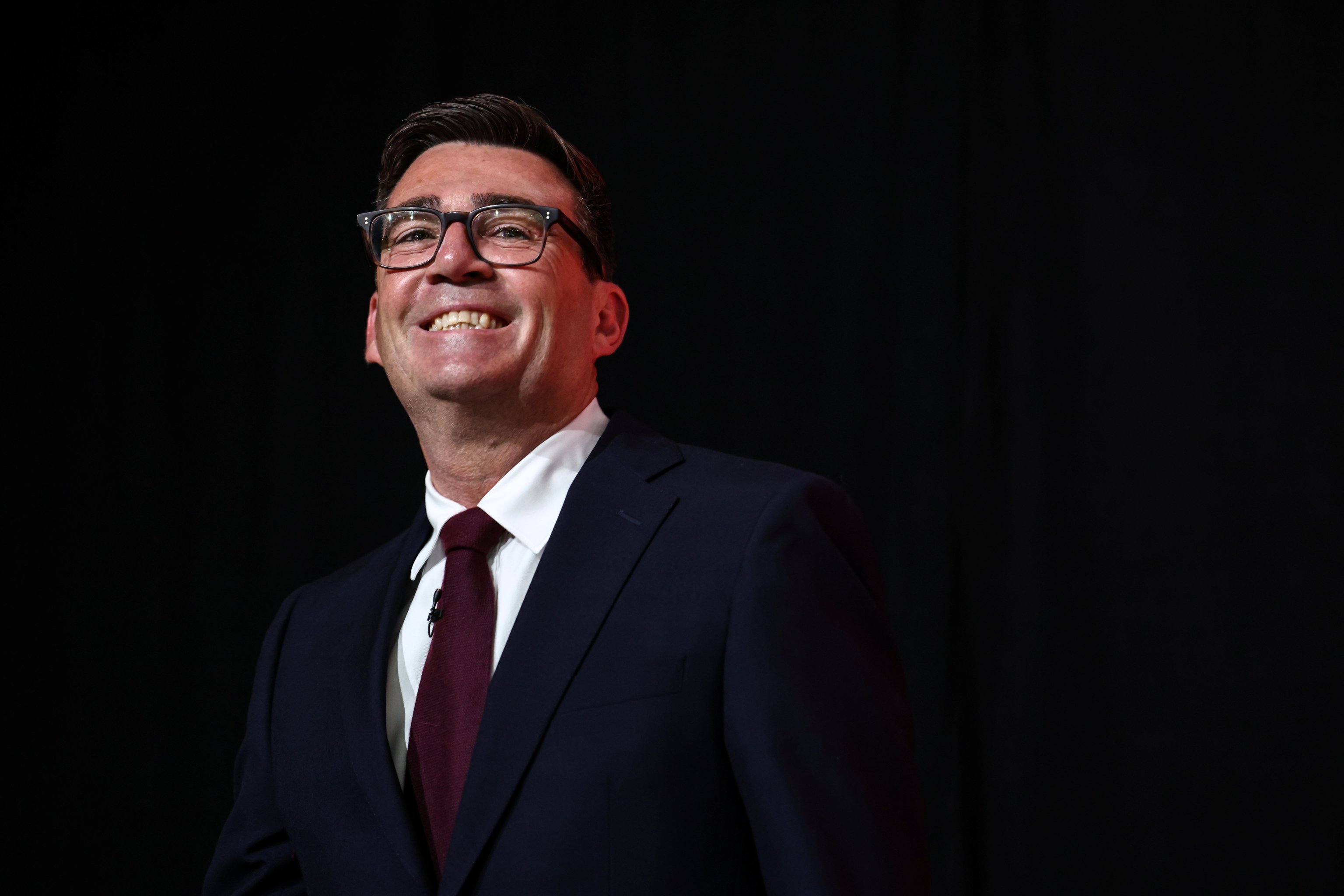
It was the summer of 2016. Jeremy Corbyn was the leader of the opposition and his shadow cabinet was falling apart, bleeding from a wave of resignations after the Brexit referendum. Amidst that chaos, Andy Burnham, who the previous year had lost the Labour leadership race for the second time, announced his candidacy for the newly created Mayorship of Greater Manchester, endowed with broad powers in areas previously reserved for Westminster. He would eventually prevail with 63% of the votes and a majority in the region's 10 districts.
"Today dawns a new era, not only for this city-region, but for the whole country. We are going to change politics to put it at the service of the people," proclaimed Burnham in his victory speech. It was the germ of what would later be known as "Manchesterism", a political model that combines a "business-friendly" socialism with culture as a vehicle for civic identity, which nine years later has propelled him to Downing Street.
It was never a return to classic municipalism. Burnham updated a tradition deeply rooted in Manchester: that of combining the free market with a strong social commitment. In the same city where cotton merchants advocated free trade while unions and the suffragette movement emerged, the former mayor opted to attract investment, demand greater autonomy from the central government, and use that growth to strengthen public services and reduce inequality.
The results are visible. Greater Manchester recorded the highest economic growth of any of the 46 British subregions between 2017 and 2023, at 17.4%, and maintains an annual rate of 3.1%, double the national average, according to a report published by the Metropolitan Administration in January. The region has also seen the largest reduction in urban poverty in the UK, with a 17-percentage-point drop between 2010 and 2025, according to data published in May by the Centre for Cities think tank.
This growth has also transformed the region, especially the city of Manchester. For the first time in decades, the population flow between the two largest British cities has reversed. The latest figures on internal migration show that more people are moving from London to Manchester (13,000) than vice versa (11,800), attracted by a more affordable cost of living and an expanding job market. The region's greater autonomy has also accelerated the construction of affordable and social housing, with 18,433 new homes built between 2017 and 2025. Additionally, urban regeneration projects have revitalised historically industrial municipalities like Stockport through significant investments - in its case, 66.2 million euros - allocated to housing, commerce, and public spaces.
Burnham's most visible legacy, however, is canary yellow and bears a black bee. "We will always remember him for the buses. There is no way not to see them," laughs Maureen, an 88-year-old widow residing in Stockport, in conversation with EL MUNDO. In 2021, the politician announced that he would return buses to public control for the first time in three decades, aiming to create a fully integrated transport system with lower fares and higher frequency. The new network was named "Bee Network," in reference to the bee, a historical symbol of Manchester's industrial tradition that became an emblem of unity and resilience after the 2017 terrorist attack.
"Now we move around much more," Maureen says. "With the daily price cap and the end of peak time restrictions for seniors, going out is much easier. It has been a lifesaver for the mental and physical health of older people, who now go out more often, and also for the local economy, as people go out to shop more."
But the most distinctive feature of Burnham's tenure was turning culture into a tool for civic identity. "Manchester has never lacked confidence in its culture, and its international prestige existed long before Burnham. However, instead of treating it as a mere tourist attraction, he placed it at the heart of economic growth - with the opening of Aviva Studios, home to the Manchester International Festival - education, urban regeneration, and identity construction. Culture ceased to be a complement and became a public policy," explains Kirsty Fairclough, professor of Film Studies at Manchester Metropolitan University. "By understanding culture as a heritage shared by the 10 municipalities, he has helped build a more cohesive identity for Greater Manchester."
It is true that not everything went as promised. When he took office, Burnham pledged to eradicate homelessness by 2020, a goal he never achieved. Although the launch of the A Bed Every Night program - offering a bed and personal support for the most needy - reduced the number of people sleeping rough by around 45%, the figures have increased again in recent years, amidst the housing crisis gripping the country. He also leaves a metropolitan authority much more indebted than the one he inherited, 39% more than when he arrived in 2017, according to a recent analysis by The Telegraph.
With this track record, Burnham now returns to Westminster. For Kirsty Fairclough, the challenge is not to turn the whole country into Manchester, but to "translate that philosophy to the national level so that each region builds its own cultural identity and conceives culture as a driver of economic growth, social well-being, and a sense of belonging." Can Manchesterism be replicated on a national scale and offer the Labour Party a way to stem the rise of Nigel Farage's far-right?