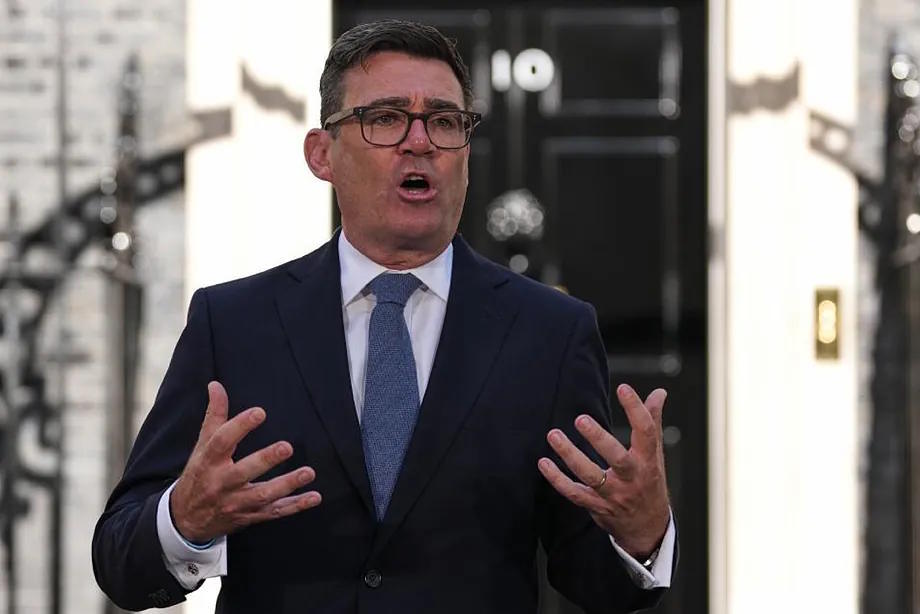
The new British Prime Minister Andy Burnham has arrived at his official residence in Downing Street with an announcement that could be the biggest leftward shift in the country in five decades. However, with enough ambiguity to suggest that this shift will be temporary, localized, and largely symbolic. Burnham has taken a page from Barack Obama's 2008 playbook: there must be a new way of doing politics; voters are right to declare themselves tired; and above all, there must be hope. Hope was Obama's focus: hope seems to be Burnham's.
The new Prime Minister started with an uncomfortable fact: "I am very aware that I am the seventh Prime Minister since 2016." And there he made a plea for stability by stating that "Britain needs to show the world that it is capable of regaining stability once again"
Then, he began the implicit criticism of the Thatcherism of the eighties and also of the Labour Third Way of the nineties and early 2000s in which, paradoxically, he was a prominent figure. According to Burnham, in the eighties, "a new political and economic power" was created in the country, based on three pillars: "Centralized political power; privatized economic power; and large parts of the country deindustrialized that still remain so."
So Burnham, pointing to the complex of government buildings known as Whitehall, where Downing Street is located, said: "We are going to take power from here and bring it to the whole country." It was a reminder of his main promise: the decentralization of decision-making outside London. Although, paradoxically, Burnham wants to concentrate a large part of fiscal policy in the Prime Minister's Office - Downing Street - which will decide the future of the UK as a middle power.
His speech avoided the technocratic language of his predecessor, Keir Starmer, like the plague. Thus, he promised to "make people able to afford their expenses" and declared that "I will put caring for people at the center of everything I do." Tomorrow, Tuesday, he will announce those measures that, however, he said, will not interfere with the tough fiscal adjustment goals or with NATO defense commitments. And all of this, with hope: "Let's bring a new sense of national unity, common purpose, and positivity. Let's make this the moment when the UK starts to believe in itself again."