Q. Thirty years after "Virtual Insanity," how did it feel to shoot the music video again?
A. It was very exciting. The opportunity to relive all that was something I couldn't pass up. It also helped me reconnect with the audience that has been with me for over 30 years.
A. It was more challenging than the original video, while maintaining the same concept. In the first video, we had a moving room. In this case, it's the opposite: the entire floor moves. Taking the idea and recreating it through a variety of rooms and different scenarios was a major production.
Q. What was the most difficult part?
A. The challenge was that at 56, I had to perform the same moves as when I was 26. And I believe I dance better now than in the original video. [Laughs]
Q. The song "Virtual Insanity" was prophetic about many things we are experiencing. What is your opinion on Artificial Intelligence?
A. There is a very fine line between progress and what can set us back. That's what I was trying to convey with that song: instead of sitting at home in front of the computer, we need energy. Sometimes I feel we are in danger of losing human connection.
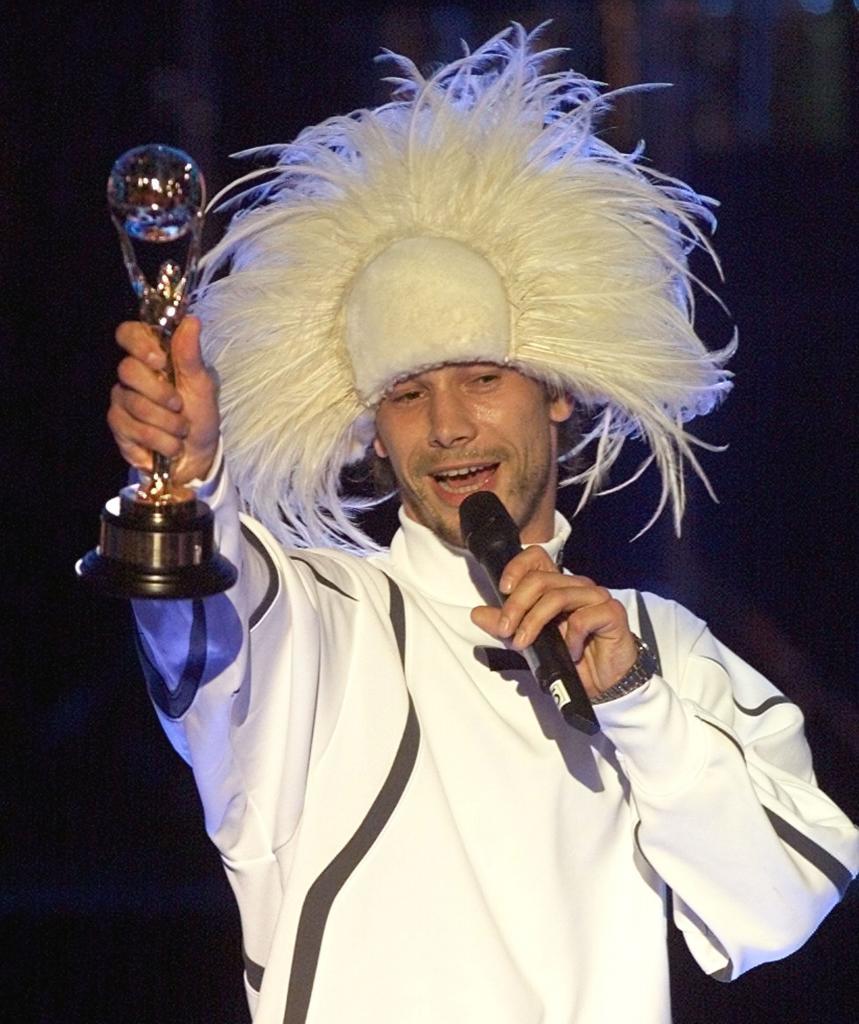
Q. I have to ask you about your hat collection. How many do you have and which one is your favorite?
A. My dear mother used to make them for me, which is very endearing. I have many hats, and some of them wear out during tours because I sweat a lot. But most of them are still there, and I constantly try to give them a new touch.
Q. It's a very British garment.
A. It's something that connects with London's centuries-old tradition. It's very artisanal. Now, I'm working with Philip Treacy creating my own designs. The mold he uses is specifically made for my head. And then I say, "I want this or that...". I turn it around, tilt it... All sorts of things. If you go back to the 50s, 60s, and even earlier, there was a time when everyone wore hats. So, I'm a big fan of hats.
A. I think we should bring back the hat. Women carry a nice bag, and men should wear a hat. And women too, of course, because hats are just another great accessory.
Q. It took you 10 years to release your new album. Why did you wait so long?
A. The usual cycle is to make an album, go on tour for two or three years, but then life gets in the way and children come... Also, I had worked a lot and had been on tour for a long time. I needed to stop.
A. Having young children influenced me. I know many musicians who were in my situation, when touring was really intense: a month in South America, three weeks in Japan... They had children and missed those golden years when they are three years old and growing up. I wanted to experience that and was in a position that allowed me to do so. I also wanted to step away from all that for a while. You risk exposing yourself too much. Then Covid came, which didn't help either.
A. I struggled with it. I was lucky because I had a garden, but after a couple of months, everything started to feel tedious. I felt like I was drifting further away from music. And my partner would say, "You need to make a new album." So, I started accumulating ideas on my phone. But starting a whole album is the hardest part. It's like trying to start a car you left in the garage for three years: "Let's see if it starts." And slowly, it picks up pace. I think that was the hardest part: getting back into it.
Q. What was it like returning to the studio?
A. It's about having a clear direction and central ideas. I also looked back and thought about the mistakes I had made on other albums.
A. In terms of production or the songs themselves... Sometimes there were great tracks, like in Automaton, but they weren't at the core of what I wanted to do, which is dance and boogie. They were moving songs, but not anchored to the rhythm. I learned a lot about that. There was a lot of lyrical content, many lyrics, a lot of thought. With this album, I wanted to have more fun, and it's much more anthemic, disco, and party-oriented.
Q. What is the musician's life like during tours?
A. We just played at several festivals, and I'm on stage for two hours every night. I don't need to tell you how hot it has been in Europe. We would go on stage, and during the day it was 35 degrees, and by nine-thirty, it was still 27 degrees. It's very hot. Very much so. Luckily, I'm not wearing a hat, but almost. Sometimes I still wonder how I do it. I don't think I could be like this at my age without significantly cutting back on some things. And, fortunately, I have managed to stay fit enough to keep doing it. And honestly, I have also retained my energy and still have a pretty young soul, which is great.
Q. You have stated that the music industry no longer revolves around music but around advertising.
A. It's hard for me to judge the industry because, obviously, every time I release an album, I usually sign with a record company. Apart from that, I'm quite on the sidelines. What I have noticed is that many things sound quite similar in terms of production. You turn on the radio, and everything has that autotune sound. There are five people dominating production: "We want the track to be big, so let's hire this producer." And in the end, we are all doing the same thing. Another thing that has changed is that now you don't need a record deal to do something incredible. That has radically changed things.
A. I prefer old-school Latin music. We have a house in Mallorca, and there is a woman there who plays old music from the 60s from Venezuela. I like the Cuban and Mexican sound. That's more my style. All that diaspora of Latin and Brazilian music is more my thing. The more recent music is not quite my style.
Q. You have experienced the wild side of rock. Do younger generations see it differently?
A. The wild times are over. There has been a tangible change in how young people experience the night. I have seen it clearly. They seek moderation and opt for non-alcoholic drinks. People are more sensible and grounded when it comes to facing a night of partying. They want to enjoy and extend the night for longer. That's the reality. There has been a significant change since the 90s, no doubt about it.
Q. Now zebra striping is trending, which involves having a non-alcoholic drink after each alcoholic drink.
A. Yes, that makes a good night last without having to switch gears completely. And without having to completely change gears. When you go out and order a glass of water, it sets you apart from the crowd. If everyone has a gin and tonic, and you have a glass of water, you feel a bit out of place. For example, with Beefeater Zero, they hit the nail on the head because it has the same character as the original gin with the citrus, juniper...
Q. So, the era of excess is over.
A. Yes, things have calmed down since the days of excess with the Rolling Stones and Led Zeppelin. My life changed radically. I have my partner and two wonderful daughters. I am a family man. Which doesn't mean I spend the day at home in slippers. I want to go out and enjoy, but with some moderation.
Q. Do you want to enjoy fatherhood?
A. Yes. My mother was adopted, and so was my father. I saw my father the other day in Portugal. There was a funny moment when I told the audience where I was conceived—it was at a casino.
Q. At a casino?
A. My mother was a singer and my father a guitarist. He represented Portugal at Eurovision in 1973. Anyway, they met at the casino where my mother worked. My father sent me a photo of the casino the other day and told me that's where I was conceived.
Q. What failure have you learned the most from in your life?
A. In the '90s, we were at the height of our fame; I was out and about a lot, and my relationship with the paparazzi wasn't as good as it could have been. That forced me to rethink that relationship. And I think that, as you get older, things change a lot. If you look back at history, everyone makes mistakes when they're young. Things are wilder then. I still have Latin blood, so I can be a pretty temperamental guy. But now I'm much calmer.