"The era of Westminster is coming to an end". That is the key phrase of the memorandum of understanding signed by the First Ministers of Scotland, Wales, and Northern Ireland, and by the leader of the opposition in Ireland. Its meaning is clear: Westminster is the political and institutional center of the United Kingdom. Stating that its end is near is equivalent to saying that they expect the territories they govern to become independent and that this country, which has existed in its current form since 1922, will disappear. The four met this Monday in the capital of Wales, Cardiff, to announce their intention to work together towards achieving that goal.
They did not do so as institutional leaders, but only as the top leaders of their political parties: SNP, Plaid Cymru, and Sinn Féin. The three parties advocate for their territories to leave the United Kingdom: Scotland and Wales to become independent states, and Northern Ireland to join the Republic of Ireland. And all of them are in power. One of them, Sinn Féin, exists as a single entity in both Northern Ireland (which is part of the United Kingdom) and in the Republic of Ireland (which was until 1922). That is why it was represented by both the First Minister of Northern Ireland, Michelle O'Neill, and the leader of the opposition in the Republic of Ireland, Mary Lou McDonald, who was the president of the party and until the late 1990s was the political wing of the Catholic armed organization, the Irish Republican Army (IRA).
The document is, therefore, a political commitment to undo the United Kingdom by these three "nations", as they are colloquially known in the UK, although formally titled as "countries," which in English does not necessarily imply sovereignty.
And it does so in the most challenging way possible, especially when the President of the United States, Donald Trump, spent the weekend declaring his support for Irish reunification, which is precisely what Sinn Féin advocates, one of the three parties signing the agreement. Trump's statements have been received coldly in the UK, where the press speculates that they could be due to the US President's irritation over London's refusal to join the war against Iran. In any case, Washington's declared goal is to weaken Europe, which it considers a true ideological enemy, so any initiative that could potentially harm the second-largest economy and one of the two nuclear powers on the continent is not, in principle, negative for the White House.
Although the memorandum does not explicitly include the word "referendum", it does contain epic phrases, such as when it states that "for the first time in history, there are First Ministers in Scotland, Wales, and Northern Ireland committed to the independence of the United Kingdom." This, in turn, raises the obvious contradiction that those "First Ministers" mentioned in the document are actually the signatories of it. In other words: the independence leaders put on and take off the institutional hat as circumstances dictate.
The initiative also opens up a tremendous political, legal, or institutional can of worms. The most evident case is that of Scotland, whose First Minister, John Swinney, stated, in the press conference following the signing, that he will call for a referendum on independence for 2031, after the next elections to the Parliament of that territory.
The issue is that in 2022, the British Justice established that the calling of a self-determination referendum in Scotland is within the competence of the Westminster Parliament. Furthermore, the chances of secession winning in a plebiscite are far from clear. Initially, Swinney's promise to call for a consultation if he obtained an absolute majority in the Scottish Parliament in the elections this year crashed against reality when the Scottish National Party (SNP), to which he belongs, lost votes and seats. In those elections, the pro-independence parties - the SNP and the Greens - only achieved 41% of the vote. Nevertheless, the Scottish First Minister stated that "people's feelings have changed," perhaps because in recent months several polls have shown a slim majority in favor of secession.
The 2014 referendum on Scotland's independence, in which supporters of remaining in the United Kingdom won with 55% of the vote, was agreed upon by the then First Minister, the nationalist Alex Salmond, and the British Prime Minister, the conservative David Cameron. In Wales, the nationalists do not have a majority in their parliament to call for this type of consultation, which, following the Scottish precedent, should ultimately be approved by Westminster. Northern Ireland has its own procedure, which also requires London's involvement.
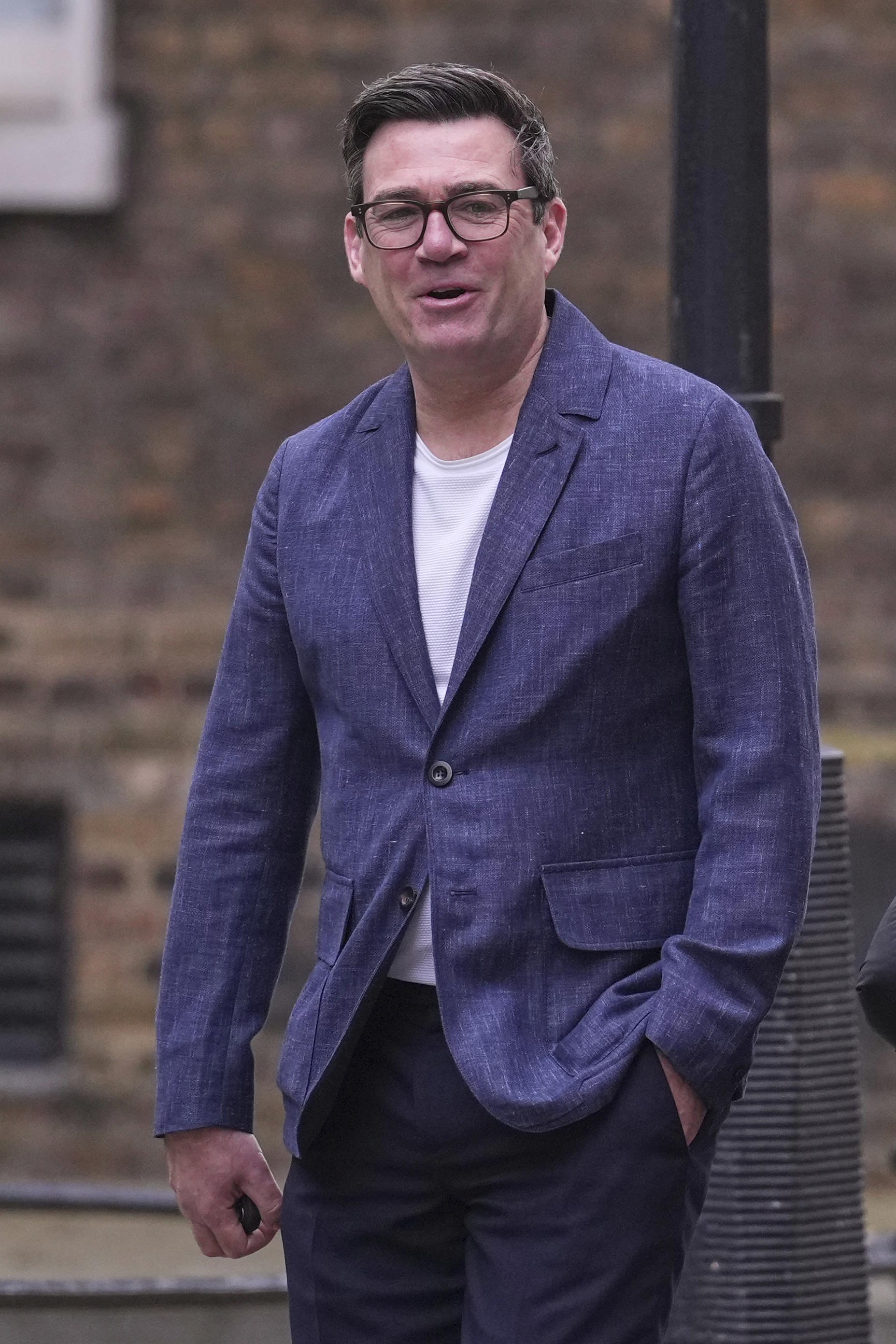
However, these details did not dampen the enthusiasm of the nationalists. Swinney declared that the current British Prime Minister, Labour's Andy Burnham, "will be the last Prime Minister of the United Kingdom". McDonald, on the other hand, went a step further, making her own call for independence despite Sinn Féin governing in Northern Ireland in coalition with the Democratic Unionist Party, which, as its name suggests, favours remaining in the UK. The other co-First Minister of Northern Ireland, Emma Little-Pengelly, accused the leader of the Irish opposition, Michelle O'Neill, of "using her position as if it were a weapon."
The most cautious was the First Minister of Wales, Rhun ap Iorwerth, who did not want to give any date for the alleged referendum. Ap Iorwerth's party, Plaid Cymru, is in power in Wales for the first time since May. But, paradoxically, to govern, it needs the support of the Labour Party, in power in London, which supports the maintenance of the United Kingdom. A spokesperson for Burnham played down the importance of the memorandum yesterday and stated that the Prime Minister "is not focused on constitutional debates but on lowering the cost of living for the British people."
Nevertheless, the document has added a touch more tension to the political life of the United Kingdom. It has been a kind of "everyone against Westminster". And that has a lot of symbolism. Because Westminster is not just a district in London where the Parliament is located. It is also, in everyday language, the symbol of the national political life of the United Kingdom. And, with it, of the progressive absorption of Scotland, Wales, and Ireland into England. The English Parliament at Westminster only became that of the United Kingdom after it was reformed to accommodate representatives from Scotland in 1707 and from Ireland in 1801. Much more distant is the issue of the monarchy. In that district is Westminster Abbey, which has been the setting for the coronations of monarchs - first English, then Anglo-Scottish, and finally British - since 1066. To proclaim its end is to proclaim the end of the United Kingdom.