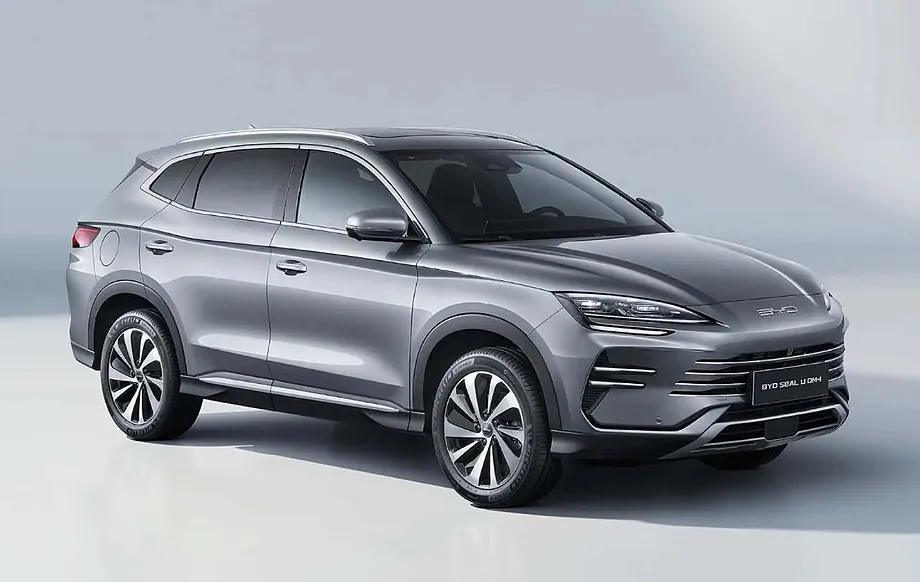
The European Union has asked China to voluntarily limit exports ofplug-in hybrid cars (PHEV and, including REEV, also known as extended-range electric vehicles), in an attempt to reduce tensions between both parties and avoid a new trade war, according to the Financial Times. In fact, next month both parties will meet in Beijing to address their trade divergences.
Although it does not seem that China will accept to implement one of the so-called VER (Voluntary Export Restraints), which are mechanisms by which an exporting country voluntarily limits its sales to a target market. China has always been opposed to them, as they are not compatible with the rules of the WTO (World Trade Organization).
Brussels has been considering for some time now applying extra duties on the import of these vehicles,which were excluded from the tariffs that have been penalizing, since October 2024, electric cars (BEV) made in China. The duties were added to the 10% already paid by all cars imported from that country, raising the tariffs up to 45% in the worst-case scenario. Brussels explained that they were being sold 'artificially' cheaper thanks to state aid and subsidies.
So these models became more expensive, or manufacturers absorbed the extra cost against their margins. Additionally, in parallel, the BEV market was not growing at the expected pace. Chinese brands did not stop offering them but expanded their focus to these other vehicles.
Electric ranges of up to 200 and 300 kms
In PHEVs, the car has a combustion engine (main) and one (or more) secondary electric engine(s), along with a large battery that can be recharged by plugging it into the grid, through the thermal engine, or with braking and deceleration. Meanwhile, in REEVs, the engine that always moves the car is the electric one, of high power, while the combustion engine is activated to generate energy that powers the battery, also rechargeable when connected to the grid, with generous size and high ranges.
Using only electricity and, therefore, with zero emissions, the current standard is about 100 kms although there are already models with 200 and over 300 kms. If the petrol tank is added, then we are talking about over 1,000 and up to nearly 1,500 kms.
And for brands from that country, shifting their range towards these new vehicles barely meant deciding which ones to export and which not, as they have had them in their portfolio for a long time. To mention just one case, BYD - a global leader in plug-in models - has only been manufacturing BEVs and PHEVs since the spring of 2022.
What Brussels aims for is that Chinese brands reduce their penetration in this segment to 15%, from the current 35% they hold. "If they do not limit their exports to our market, we will do it. It's about stopping deindustrialization," a EU official quoted by the Financial Times reportedly said.
Because the truth is, if in October 2024 imports of Chinese plug-in hybrid cars barely reached 3,400 units, last July they almost reached 50,000, also thanks to much more competitive prices than most of their Western rivals. In the same period, their BEV registrations went from around 33,000 vehicles to 70,000.
In total, the PHEV and REEV segment represent 9.8% of all car sales in the EU between January and June 2026, which amounts to almost 578,000 units. In Spain, thanks to the benefits provided by the DGT's ZERO label and purchase incentives, their share of the market is higher, reaching 12.5%, and among the top 10 best-selling models, five are of Chinese origin, including the top two, both from the BYD brand.
Also because these cars represent an excellent intermediate step towards full electrification, as they do not pose an issue with range anxiety, which affects many BEVs. However, they are also vehicles strongly criticized for their actual CO2 emission levels, to the extent that Brussels is considering introducing a new measurement protocol in 2027 that is more realistic.