At this point, no one in Ukraine believes the words of Vladimir Putin or Donald Trump. The fact that both mention the word "peace" again does not mean we are any closer to it. An example of this was seen from Wednesday night to Thursday. Following the usual Putinist protocol, that same afternoon he met with the compliant US envoy, Steve Witkoff, who even referred to the Russian autocrat, wanted by the International Criminal Court for war crimes, as a "humanitarian leader." Hours later, his army launched an attack on the Ukrainian capital with around twenty ballistic missiles. Humanitarianism arrived with a bang and shrapnel.
What has changed now to regain trust in the possibility of peace with the Kremlin? In reality, nothing. Russia's positions remain as maximalist and untenable for Ukraine and Europe as they were the last time they met months ago. Moscow wants the handover of all of Donbass to claim victory (even if it's Pyrrhic), Ukraine's neutrality, a new government to replace Zelenski's, and a future where Kiev remains under Moscow's control. In other words, they want to impose a surrender.
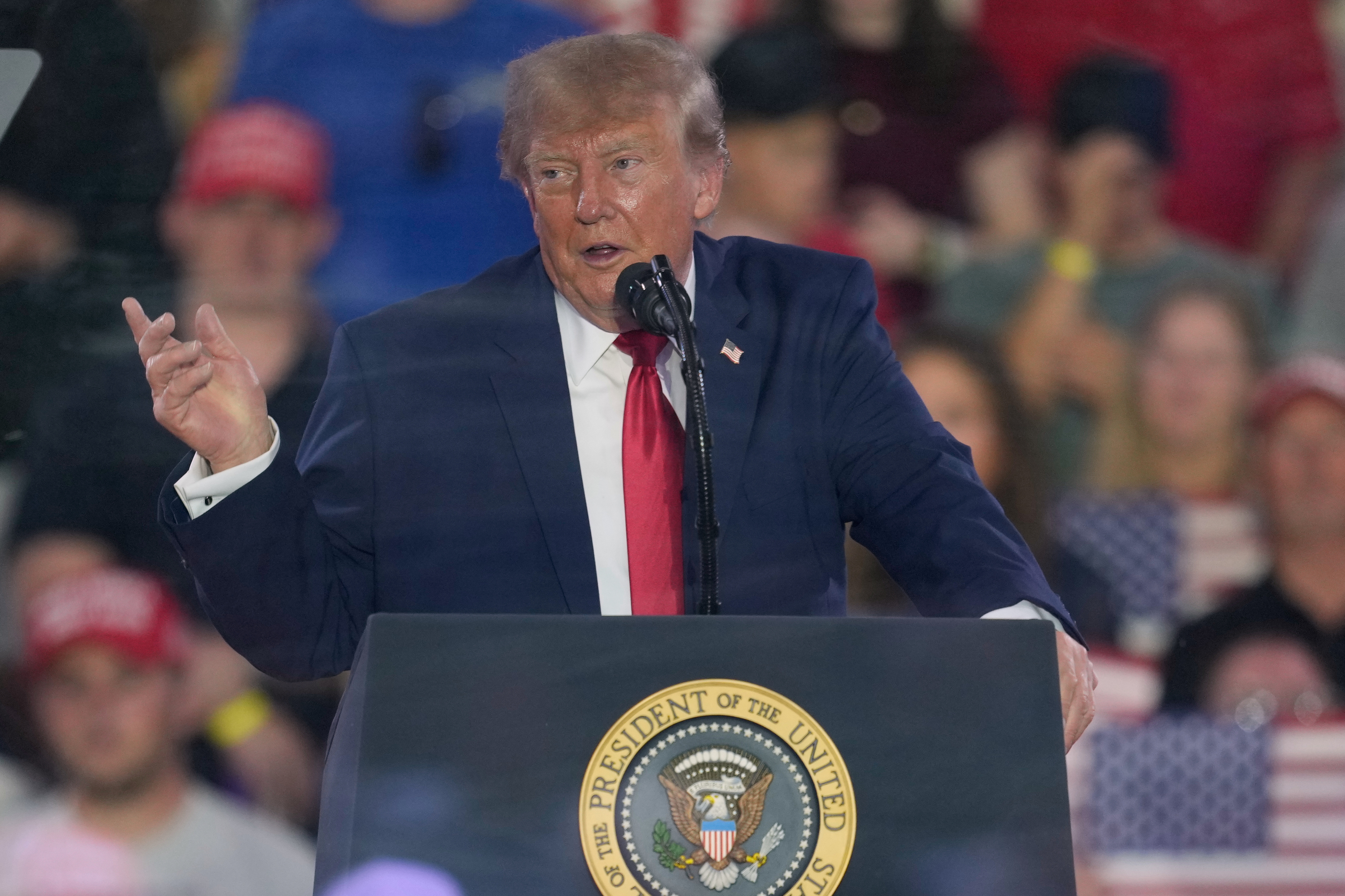
To achieve this, Putin has his best ally in Trump. The blond US president, who has shown a clear preference for the old KGB agent over his allies since his first term, has not stopped coming to the aid of his "friend" whenever Ukraine took the initiative. Now, fully aligned with Moscow's interests, last week he made history: when the US and Russian armies combined their efforts to pressure a third party. One of them, cutting off intelligence information to their former ally, and the other, bombarding with all their fury a country that no longer has interceptors and whose purchases from Washington are also not approved.
After these attacks, Donald Trump has even said that Putin "hasn't done anything wrong" in Ukraine, a war that may have already claimed over a million lives on both sides and will leave infamous and well-documented crimes in history such as those in Bucha, Izium, the Mariupol theater, or now the induced famine in the besieged Oleshki.
Trump promised, as one of his main goals announced during his election campaign, to "end the war in Ukraine in one day". The reality is that almost two years have passed during which he has proposed, imposed, and almost invented all kinds of ceasefires, with Kiev's agreement, but Moscow would violate them within hours without considering the consequences, because the real consequence has always been to go against Zelenski, whom Trump has even called a "dictator without elections" while Vladimir Putin has been sitting in the Kremlin for 27 years with the opposition in exile, in jail, or in the cemetery.
Why has Trump taken this stance, even if it could harm him electorally? According to the latest YouGov polls, 70% of Americans are pro-Ukrainian, so the Congress that emerges from the upcoming midterm elections may be even more favorable to Kiev and Zelenski than the current one.
Several former White House members claim that it is all about lucrative business deals among the negotiators themselves, including real estate businessman Witkoff and Jared Kushner, Trump's son-in-law. Hui Chen, former ethics advisor at the Department of Justice, states that "there is an alarming and very concerning web of connections between US and Russian negotiators. Could personal interests be unduly influencing the outcome?" If the goal is to make money, it doesn't seem to be working.
Why has Trump's model of achieving peace to make money not convinced Putin until now? Basically, both speak different languages: one is a businessman without ideology who subordinates everything to accumulating capital. The other has embarked on a war that, in his logic shaped during the Cold War, has much of an imperial crusade in which he aims to end Ukraine's sovereign state at any cost, even if it means the Russian economy could collapse or a million Russian men could die. For Trump, negotiations are an end: making money. For Putin, they are a means: keeping Trump in the game while the war machine continues to destroy lives.
The level of penetration of Russian propaganda in this US administration will be studied in universities. Stories created by the so-called Operation Doppelgänger from the fake news labs in Moscow or St. Petersburg are then repeated by Trump or JD Vance without the CIA, the world's largest intelligence agency, being able to filter them. And that is a great advantage for Putin because he manages to bring his idea of war to the heart of the White House.
The Institute for the Study of War (ISW) states that "the Kremlin is trying to negotiate under the false assumption that Russia has the strategic initiative on the battlefield in Ukraine, despite abundant evidence to the contrary."
The reality is that Russia and Ukraine are far apart on key issues: Kiev would agree to freeze the war at the current front line but does not want to give up the Donbass still controlled by its troops under any circumstances. The reason is both political and military. It concerns four or five cities known as the "fortress belt", a fortified zone that Russia has been unable to conquer since 2014. If it were to change hands, Ukraine would be left almost defenseless against a hypothetical third invasion on the way to Kiev.
The second major obstacle is security guarantees, something essential for Ukraine, which needs the presence of its allies as a deterrent against Russian aggression. Moscow refuses to accept this. And they have not yet discussed European security architecture or elections in Ukraine: any of Zelenski's rivals (Zaluzhny, Klitschko, or Fedorov) would be even more radical than him in their fight against the Kremlin.