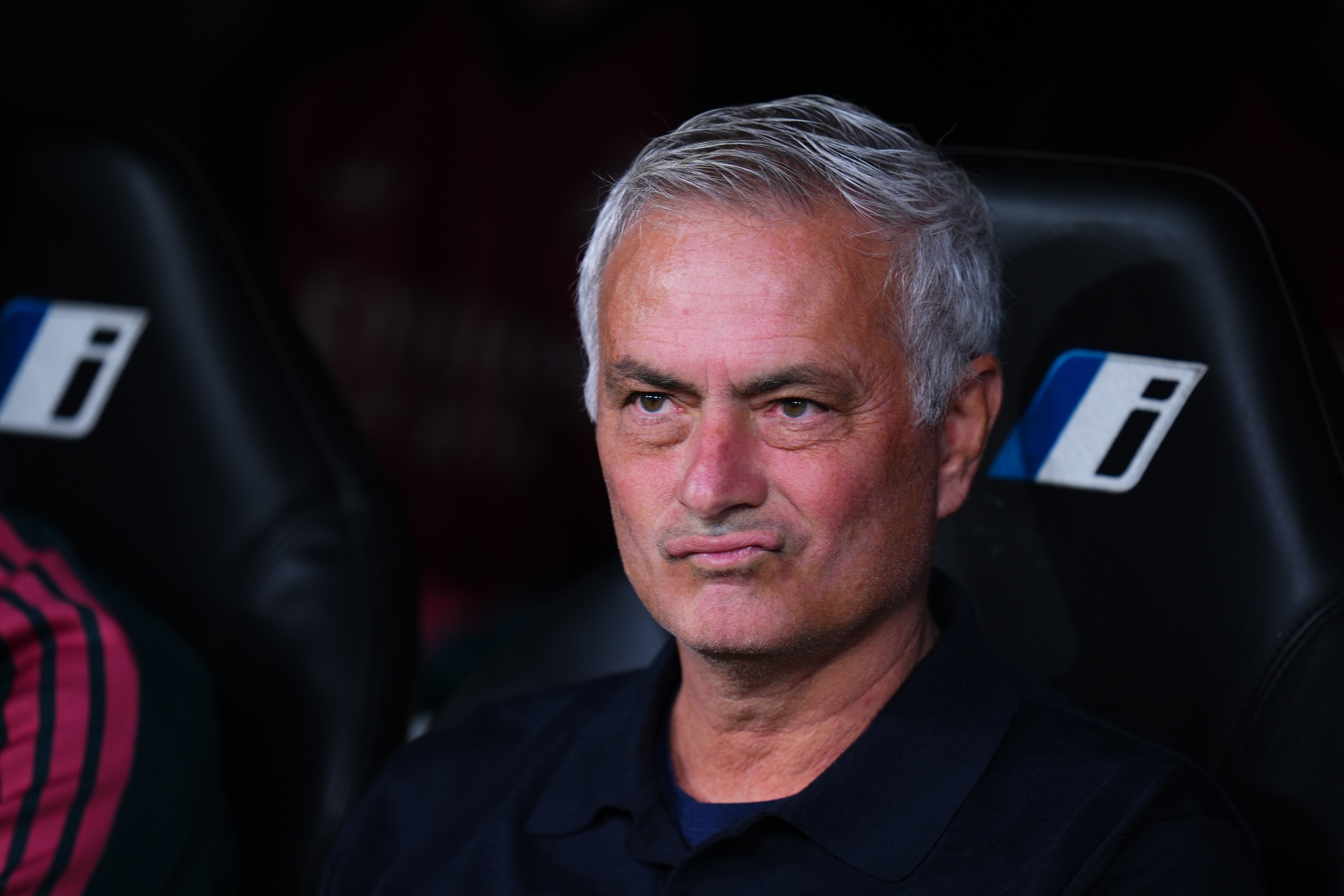
Change in trend in the key meeting. Correction of errors after reviewing the past and discovering own virtues and flaws. Mourinho, who claims he is not "stubborn," rearranges the puzzle pieces, and the mosaic begins to fit together. Hansi Flick observes cracks in his solid structure on the eve of a classic that is becoming less unbalanced.
The last Champions League match alters the perceptions of Barcelona's devastating start in La Liga and Madrid's irregular trajectory. Mourinho has strung together two revitalizing routs. Now, his team seems less predictable. After 100 days since his return to the club, he knows his players' performances better, allowing him to introduce beneficial innovations. He has had the courage to learn from the past and make decisions that others did not dare or could not make. Xabi Alonso benched Vinicius for his defensive lack of solidarity, positioned Valverde on the right side to take advantage of his speed, and entrusted Güler with directing the orchestra. Three decisions that he did not finalize before and that he has now successfully resumed as the classic approaches. It is also true that Vinicius' four-game suspension has cleared the way. Additionally, he has the backing of the higher-ups that his predecessors lacked.
Madrid regains its best form, and Mourinho faces his quality challenge. Will he dare to continue with his new approach to storm Camp Nou? That is the question everyone is now asking. The usual trajectory of the Portuguese coach shows that he is prone to conservative strategies. A week ago, the double pivot Tchouaméni-Valverde seemed immovable, with Güler or Diomande shifted to the right. Now, the recent results have opened up a range of options.
Tchouaméni-Güler seems to be the most balanced pair to respond to the control-creation duo. With this score, Valverde would be a wing-back, supported by Dumfries. If he keeps the Uruguayan on the right side, the alternatives expand: Güler would move to the wing, and Camavinga would enter the midfield. Bernardo Silva would have fewer chances. Starting with Endrick on the right flank seems unlikely. The Brazilian is more effective as a game-changer in the second half, as he proved at the Olimpico in Rome (3-4), as is the case with Brahim. Upfront, Mbappé, Bellingham, and the splendid Diomande are unquestionable. Mourinho has had no problem changing the script.
"I've been here for 105 days, it's not much. I also need to get to know the players, and the best way to get to know them is on the field and in competition... There are things we are doing better," justifies a coach who closed the last two matches, against Sevilla and Leipzig, with identical routs: 4-1.
An upward evolution born after the defeat in the derby against Atlético and now aims to extend it in a hostile environment. After defeating Villarreal (1-0), Roma, Sevilla, and Leipzig, a vibrant host in the league, undefeated and overwhelming in its fertility with 39 goals scored and only nine conceded, awaits at the Nou Camp. Madrid has scored 16 fewer goals. Barcelona has made 76 shots, while the Whites have made 65. First against third. Six points behind that could turn into a heavy burden of nine points in the first quarter of the season.
Numbers that tilt the starting point but have less impact after stumbling in Paris against PSG. That 4-1 shakes confidence. In Madrid, they argue that the weakness shown in the first major challenge fuels optimism.
Also favoring the succession of setbacks for an opponent who has lost key players in defense and midfield this month, forcing Flick to improvise for this Sunday's match. In Paris, Dani Olmo was injured (rupture in the left adductor), before that, Eric García (muscle injury in the right thigh), Koundé (sprained left ankle), and Christensen (muscle injury in the left quadriceps) fell. A list of absences that weakens the leader and favors the trend change of Mou.