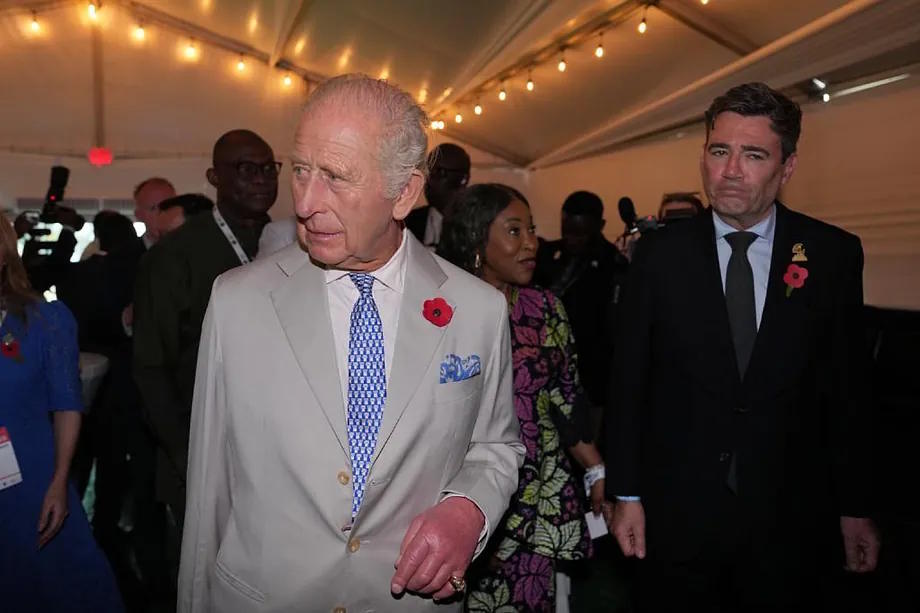
The King Charles III expressed on Tuesday his "deepest personal sorrow" for the transatlantic slave trade, describing it as a "shameful chapter in history" that continues to overshadow Commonwealth countries. He made this statement at the inauguration of the Commonwealth Heads of Government Summit being held in Antigua and Barbuda, which brings together leaders from over fifty countries. The monarch and leader of this organisation, which primarily comprises nations that were once part of the British Empire, stated that history encompasses both the achievements and failures of previous generations, adding that its consequences continue to resonate in the present. "History is not ours to choose or change. It was bequeathed to us by our ancestors. Our heritage includes both their achievements and their failures, the good they did, as well as the mistakes they made," he affirmed. He also expressed a stronger commitment to addressing "the mistakes of the past through actions for the future," although he did not mention the financial reparations long demanded from London. Among these actions, he mentioned access to education and employment, as well as trade within the Commonwealth and resilience against climate change.
Despite Charles III's efforts to address the issue that has been following him in recent days since he began a tour of several Caribbean nations, which has become the most contentious topic discussed at the Commonwealth Summit, the king has sidestepped the request for an apology that both governments and numerous organisations in the region have long been demanding.
The role of the King as head of the Commonwealth is to "inspire and convene, rather than to formulate policies", Buckingham Palace was quick to remind on Sunday, thus distancing itself from the controversy over whether the UK should apologise and make amends for its involvement in the transatlantic slave trade.
"We cannot change the actions of those who preceded us. However, we can learn from the past," the sovereign emphasised. "The transatlantic trade in enslaved people continues to overshadow these islands and other members of our Commonwealth," he added.
In describing his personal reaction to the history of slavery, Charles III said: "As I have said before, that shameful chapter of history fills my heart with horror and my soul with the deepest personal sadness." He also highlighted the role of those who fought to end the international slave trade, stating that history shows that injustice can be overcome through determination and courage. "However, history also teaches us that evil does not have to have the last word, that character and courage can combine to overcome the most monstrous injustice, as they did with the determination to end the international trade in enslaved people, in which the Royal Navy played such a prominent role," he emphasised.
The British Prime Minister, Andy Burnham, had suggested in recent days his willingness for the monarch to issue a formal apology for slavery to the Commonwealth, which would represent a shift in the attitude maintained by successive occupants of Downing Street. However, British leaders such as the Conservative Party leaders firmly oppose this. Burnham did close the door, in any case, to addressing the demand for financial reparations that several countries, led by Jamaica, are calling for.