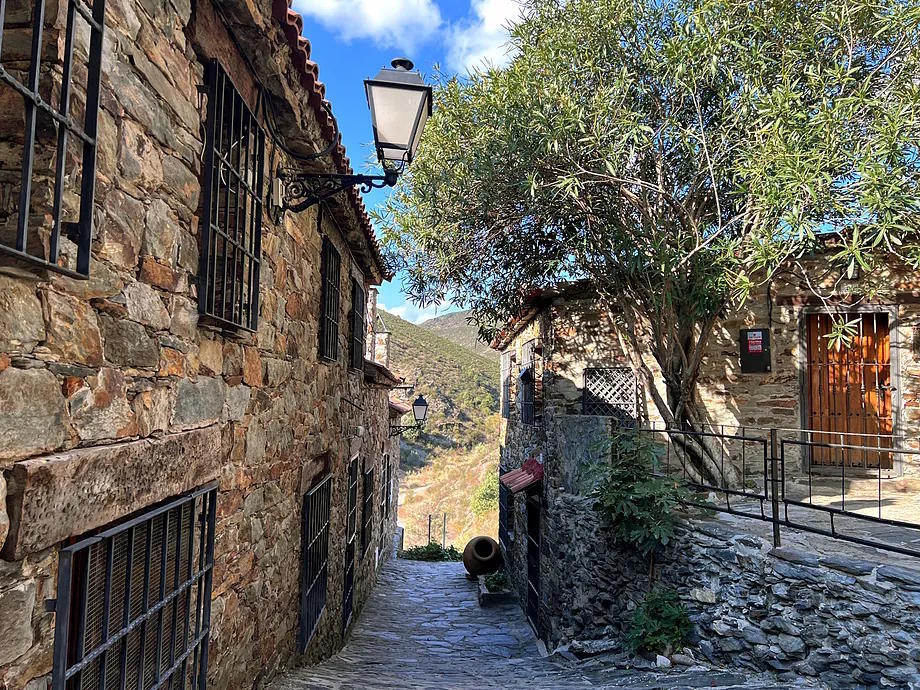
A sense of tranquillity envelops you as soon as you enter the Vega del Jarama, the most serene face of the Sierra Norte, one of the four regions included in MadRural, the project that brings together the greenest and wildest tourism offerings in Madrid. Fields of cereal, almond trees, olive trees and vines paint the landscape in this fertile land where a keen eye might spot the bustard, stone-curlew or Montagu's harrier. The river is not visible, but its presence can be sensed thanks to the gallery forest. Beyond, atop a lookout, we are watched over by the blurred skyline of the village of Uceda, now in Guadalajara.
In this sleepy countryside, there is much to discover. And if we do so on foot or by bicycle, the best ally for the traveller is Carpetania, a network of marked paths that criss-cross the Sierra Norte. "It is not a circular route and has no beginning or end; rather, it functions as a network of local paths where all the villages are connected to each other and to all the resources," explains David Pajares, a tourism technician in the Sierra Norte. "This allows you to choose what you want to visit, the distance you want to cover or where you want to stop for a meal or to sleep. In other words, the design of your own route is in the hands of the user." In this part of the Jarama valley, Carpetania links Patones de Arriba with Torrelaguna, passing through Patones de Abajo and Torremocha. And no, it is not the Camino de Santiago: the route is less than 9 kilometres.
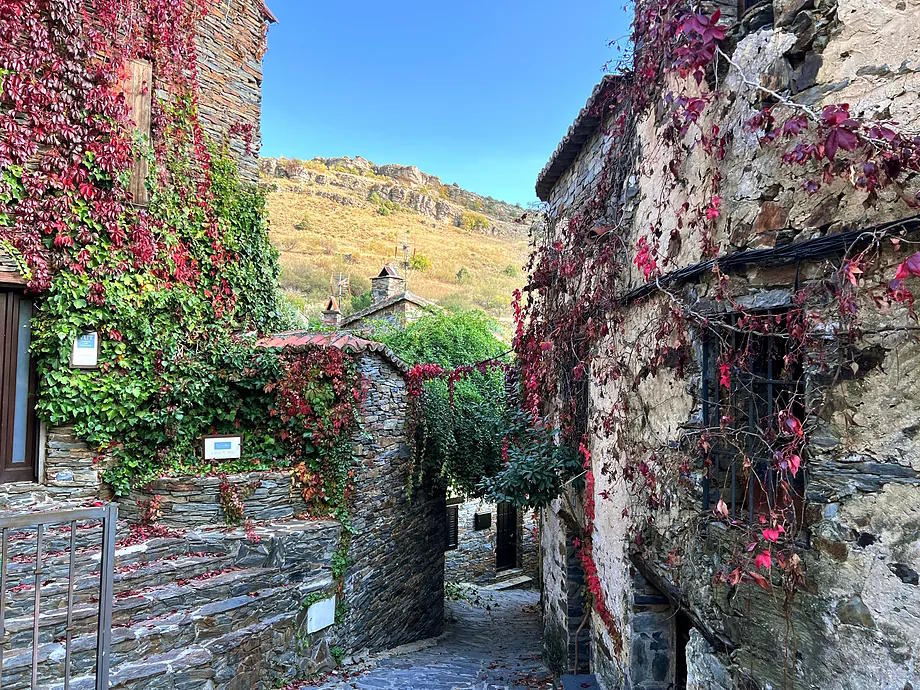
Beautiful, indeed, but also legendary, is the Ecological Path of the Barranco, the trail that connects the two Patones and has just been refurbished. At weekends, there is a bus, but these 850 metres prepare us to see one of the most beautiful villages in Madrid and one of the most unique in Spain.
Heading upwards, it is easy to believe one of the myths surrounding the valley: you may have heard that Patones de Arriba, being so hidden and inaccessible, went unnoticed by Napoleon's troops, escaping invasion. The same isolation led Patones to choose its own king for decades. The legend of the King of Patones, it must be said, has a kernel of truth. "Do not imagine a king with a crown, luxuries or jewels. The king was a shepherd wearing a beret, a local who took the lead in the village like a constable who maintained peace if there was conflict among the neighbours," says Patricia, a proud resident of Patones and head of the Tourism Office. The truth is that the last king of Patones wrote a letter to Carlos III ("from the King of Patones to the King of Spain") requesting administrative independence from the county of Uceda, which was granted on 3 August 1769, on the condition that the residents renounced their unique royalty.
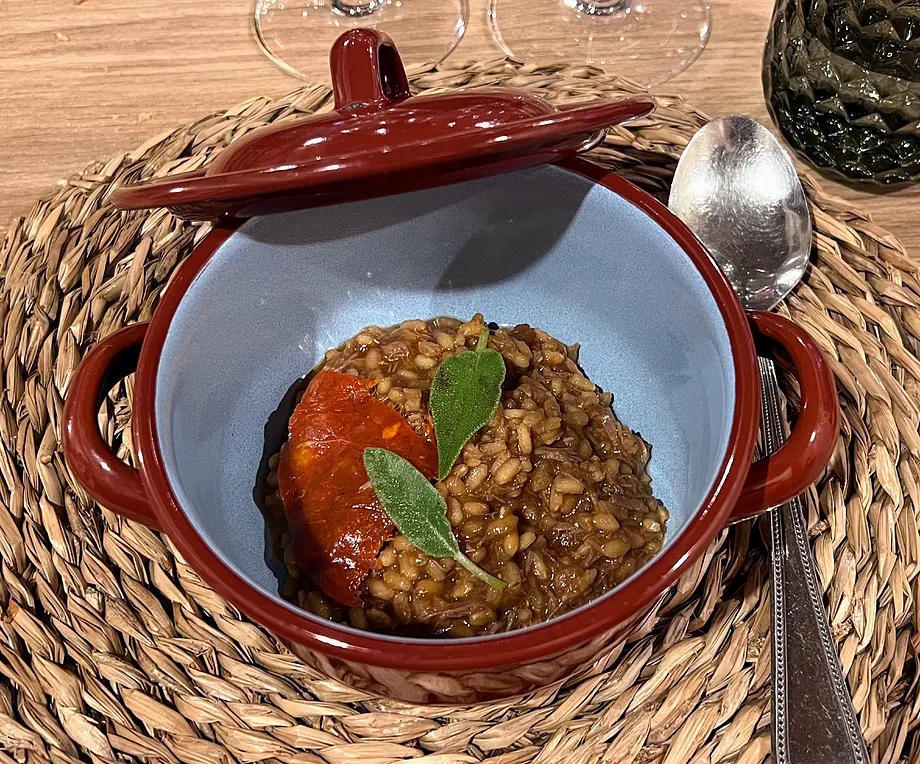
The slate houses, the colourful vines during these autumn days and the tranquillity of this Historical Ensemble quickly captivate the traveller. But Patones is not a "set piece," as Patricia emphasises, but rather a living community. "There are about 50 registered residents, and around 20 actually live here." There is also a very vibrant restaurant scene.
Sitting down to enjoy the landscape and the autumn that surrounds us is possible at El Origen, where Marta in the dining area and Fernando in the kitchen revive forgotten flavours. The confit leek with artisan sheep's cheese, the tender roe deer rice with sobrasada, and the wild boar cannelloni with creamy boletus and fermented cabbage are just a few of the dishes on their menu that reflect their passion for tradition and local produce.
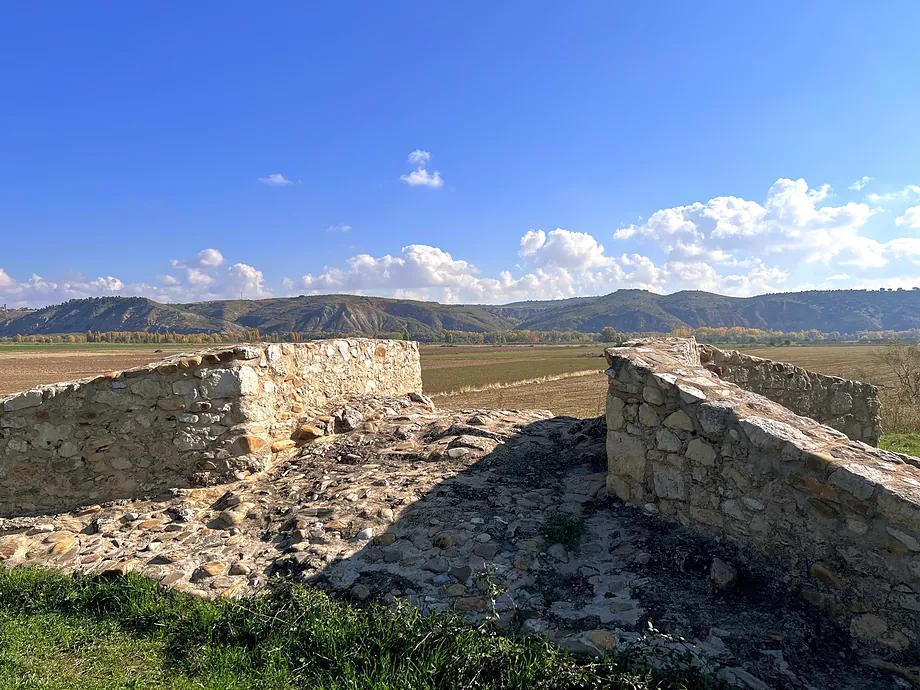
Back in the valley, we continue to discover very special places. Next to the charming village of Torremocha del Jarama lies what remains of the Canal de Cabarrús, another legacy that began to be planned during the reign of Carlos III. This grand hydraulic project was constructed between 1775 and 1799 to irrigate the entire Vega del Jarama. At the Pontón de los Majuelos, we can imagine the complexity of this system, which transported water through bridges, sluices and ditches across this cultivated landscape. Following its trail, we can reach Torrelaguna. Once again, we walk along the Carpetania network, as seen in the signs where QR codes allow the traveller to listen to an interpretation of everything they are seeing. A lovely project called Carpetania Suena.
To one side of the path, there is also a mill run by a family that produces delicious extra virgin olive oil from olives harvested by local farmers on their small plots. This is not a sea of olive trees, clearly, but Joaquín Palacín, at the helm of Fanum, produces around 15,000 litres. These days, they are in the midst of the harvest. The enthusiasm with which they demonstrate the production process at their mill and explain the secrets of the AOVE produced in our country and beyond turns into a fascinating masterclass. The tasting they offer visitors is also very revealing. We'll leave it there to avoid spoilers.
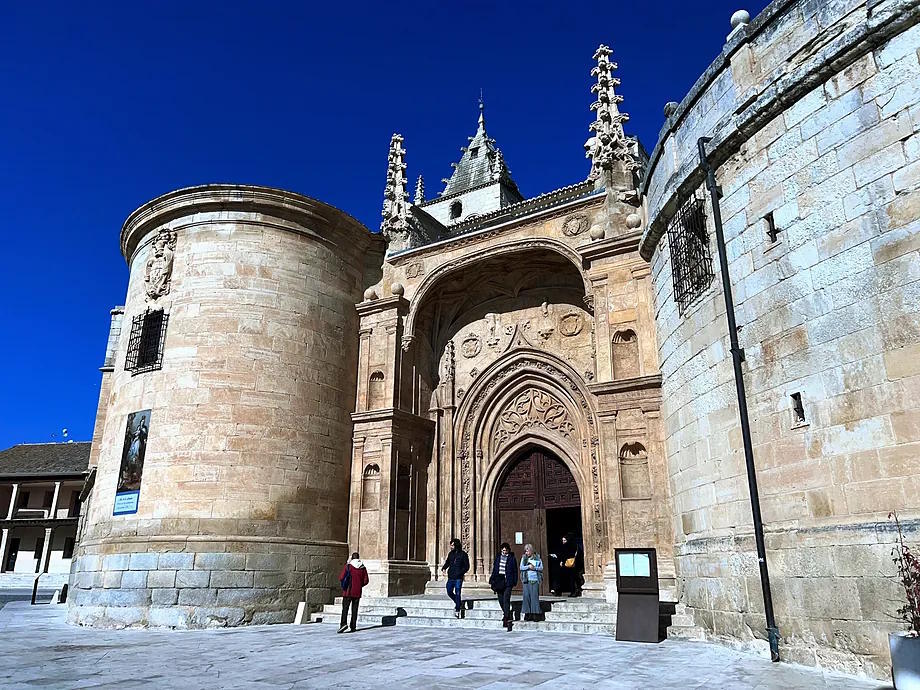
The surprises continue in Torrelaguna, the birthplace of many illustrious Madrileños, from Cardinal Cisneros to Santa María de la Cabeza, the wife of San Isidro who, according to tradition, was born and died in the town. The film Madres paralelas, by Pedro Almodóvar, was shot here. Everybody Knows, featuring Penélope Cruz, Javier Bardem and Ricardo Darín, was also filmed here. Do you remember the popular dishwasher advertisement from Villarriba and Villabajo? Filming location: Torrelaguna, once again. Fiction aside, simply strolling through the main square of this locality hints at a past of splendour. The resounding confirmation comes when seeing the majestic parish church of Santa María Magdalena, a true gem of Madrid's Gothic architecture. Inquire about the guided tours offered by the Tourism Office.