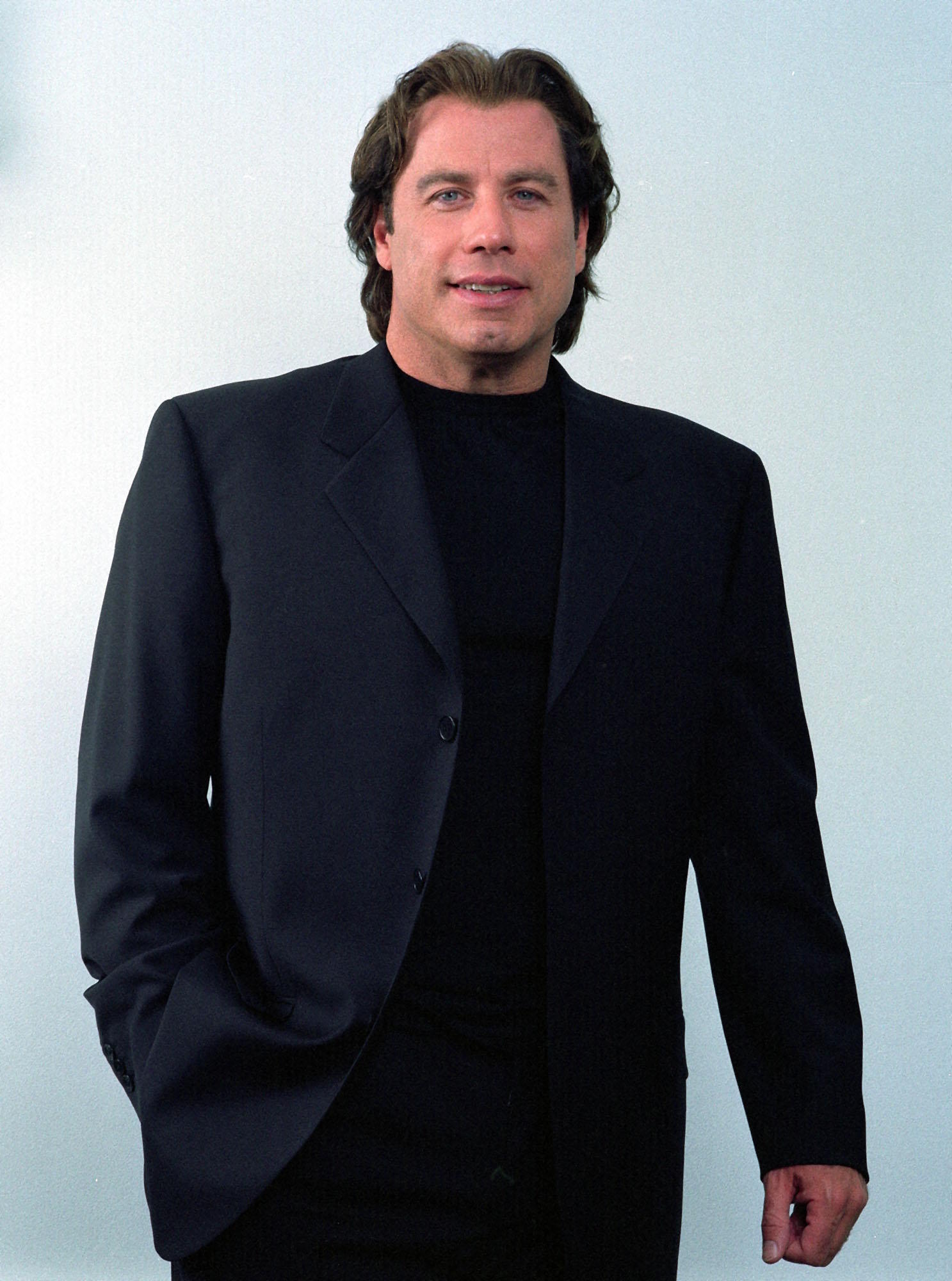
What Kris Jenner (70) and John Travolta (71) have achieved is out of this world. And no, we are not referring to a supposed romance between them (if anything, it would be between Travolta and her ex-husband, now Caitlyn Jenner, a rumor that was never confirmed in 2016). This time we are talking about their appearance: both celebrities, the Kardashian manager and the renowned actor, are worthy of study in medical faculties worldwide because they look better in their senior years than at 25, and it's not due to AI but to good plastic surgery and aesthetic medicine. In other words, Kris and John have surpassed the so-called Benjamin Button effect, the one of superficially reversing time through stretches and fillers. The advancements in anti-aging therapies now aim not to appear younger, but to look even more beautiful and smoother than ever.
Kris Jenner's case has a name and surname. It's Steven Levine, a New York plastic surgeon who attended the big party organized by the mother of Kourtney, Kim, Khloe, Rob, Kendall, and Kylie for moving to the seventh floor. Jenner -six children, 13 grandchildren, born in 1955-, revealed that her new facelift (she had one in the 90s) was the work of this inaccessible specialist due to his high demand. Furthermore, she mentioned that a secret password is required for her family and friends to get an appointment with him.
Jenner is, therefore, his best ambassador, just look at her face. And the truth is that she should charge him a commission, as thanks to her, Levine has increased his fees, as today he charges no less than $45,000 and performs wonders starting at $250,000.
The procedure used on Jenner is called the deep facelift. The Spanish doctor Daniel Arenas, a specialist in plastic surgery at Renare Farma Clinic consulted by LOC, explains it as follows: "A deep plane facelift is an advanced type of facial plastic surgery used to rejuvenate the face from the mid-face, cheeks, nasolabial folds, and jawline. Unlike traditional facelifts that tighten the skin, this one acts on deeper layers, specifically on the superficial musculoaponeurotic system and the tissues below. This releases and repositions muscles and deep structures, lifts skin layers from their base, and the skin adapts without appearing tight. The result is much more natural, longer-lasting, less sagging, in addition to a better quality of the final scar."
As for Travolta, there is not as much information because he has not made it public. Although it doesn't take much to see that the Grease star is a fan of aesthetic treatments, starting with his hair, as he proudly shows his bald head on occasions and on others, he has no qualms about wearing an adhesive hairpiece. According to Dr. Arenas, Travolta shows "a more refined appearance of his nose, possibly having undergone a rhinoplasty," but the reality is that the actor looks so good that, rather than having surgery, he seems to have characterized himself as Danny Zucco again.
In a conversation with Dr. Ana Revuelta, an aesthetic, aeronautical, pharmaceutical, nutritionist, and medical director of the clinics that bear her name in Madrid, León, and San Sebastián, she perceives a "very well-planned, progressive, and combined" approach, where different disciplines converge: plastic surgery, medicine, and constant care for skin quality. "In Kris Jenner's case, the result fits a very refined and technically impeccable facelift, accompanied by well-dosed neuromodulation, very selective volume replacement without excess, and bio-stimulation treatments aimed at improving skin texture and quality. In Travolta's case, what is observed is a rested face without signs of overcorrection. This is usually compatible with a conservative approach, probably combining surgery at some point in his life and maintenance aesthetic medicine, always respecting his physiognomy."
For Revuelta, the synergies between aesthetic doctors and plastic surgeons are fundamental. "We do not compete, we complement each other. There is a before surgery, where we can prepare the skin, improve tissue quality, optimize vascularization, and promote better healing. And an after, where aesthetic medicine helps maintain results, soften subsequent aging, and accompany the patient over time."
Each patient is unique, and each has their treatment. "The mistake lies in thinking of isolated treatments or quick fixes. The success lies in proposing global aging strategies, adapted to each person and reviewed over time."
What Kris Jenner (70) and John Travolta (71) have achieved is out of this world. And no, we are not referring to a supposed romance between them (if anything, it would be between Travolta and her ex-husband, now Caitlyn Jenner, a rumor that was never confirmed in 2016). This time we are talking about their appearance: both celebrities, the Kardashian manager and the renowned actor, are worthy of study in medical faculties worldwide because they look better in their senior years than at 25, and it's not due to AI but to good plastic surgery and aesthetic medicine. In other words, Kris and John have surpassed the so-called Benjamin Button effect, the one of superficially reversing time through stretches and fillers. The advancements in anti-aging therapies now aim not to appear younger, but to look even more beautiful and smoother than ever.
Kris Jenner's case has a name and surname. It's Steven Levine, a New York plastic surgeon who attended the big party organized by the mother of Kourtney, Kim, Khloe, Rob, Kendall, and Kylie for moving to the seventh floor. Jenner -six children, 13 grandchildren, born in 1955-, revealed that her new facelift (she had one in the 90s) was the work of this inaccessible specialist due to his high demand. Furthermore, she mentioned that a secret password is required for her family and friends to get an appointment with him.
Jenner is, therefore, his best ambassador, just look at her face. And the truth is that she should charge him a commission, as thanks to her, Levine has increased his fees, as today he charges no less than $45,000 and performs wonders starting at $250,000.
The procedure used on Jenner is called the deep facelift. The Spanish doctor Daniel Arenas, a specialist in plastic surgery at Renare Farma Clinic consulted by LOC, explains it as follows: "A deep plane facelift is an advanced type of facial plastic surgery used to rejuvenate the face from the mid-face, cheeks, nasolabial folds, and jawline. Unlike traditional facelifts that tighten the skin, this one acts on deeper layers, specifically on the superficial musculoaponeurotic system and the tissues below. This releases and repositions muscles and deep structures, lifts skin layers from their base, and the skin adapts without appearing tight. The result is much more natural, longer-lasting, less sagging, in addition to a better quality of the final scar."
As for Travolta, there is not as much information because he has not made it public. Although it doesn't take much to see that the Grease star is a fan of aesthetic treatments, starting with his hair, as he proudly shows his bald head on occasions and on others, he has no qualms about wearing an adhesive hairpiece. According to Dr. Arenas, Travolta shows "a more refined appearance of his nose, possibly having undergone a rhinoplasty," but the reality is that the actor looks so good that, rather than having surgery, he seems to have characterized himself as Danny Zucco again.
In a conversation with Dr. Ana Revuelta, an aesthetic, aeronautical, pharmaceutical, nutritionist, and medical director of the clinics that bear her name in Madrid, León, and San Sebastián, she perceives a "very well-planned, progressive, and combined" approach, where different disciplines converge: plastic surgery, medicine, and constant care for skin quality. "In Kris Jenner's case, the result fits a very refined and technically impeccable facelift, accompanied by well-dosed neuromodulation, very selective volume replacement without excess, and bio-stimulation treatments aimed at improving skin texture and quality. In Travolta's case, what is observed is a rested face without signs of overcorrection. This is usually compatible with a conservative approach, probably combining surgery at some point in his life and maintenance aesthetic medicine, always respecting his physiognomy."
For Revuelta, the synergies between aesthetic doctors and plastic surgeons are fundamental. "We do not compete, we complement each other. There is a before surgery, where we can prepare the skin, improve tissue quality, optimize vascularization, and promote better healing. And an after, where aesthetic medicine helps maintain results, soften subsequent aging, and accompany the patient over time."
Each patient is unique, and each has their treatment. "The mistake lies in thinking of isolated treatments or quick fixes. The success lies in proposing global aging strategies, adapted to each person and reviewed over time."
Dr. Revuelta talks about the latest trends in injections, although technology is catching up. Here she highlights three main pillars. "On one hand, neuromodulation, used precisely and conservatively, not to freeze expression but to prevent dynamic wrinkles and maintain a rested face. On the other hand, collagen bio-stimulation. Treatments that stimulate the skin's own biological mechanisms are increasingly prioritized over those that only add volume. This includes bio-stimulators that improve firmness, elasticity, and skin quality. In addition, there is the rise of regenerative medicine, with assets such as polynucleotides or exosomes, which work at a cellular level promoting tissue regeneration, hydration, and healthier, more luminous skin. The goal is a harmonious, natural, and long-lasting result, where the intervention is not perceived, but good aging is. People should perceive a better version of themselves, fresher and healthier, without being able to identify exactly what has been done."
Another curious aspect is the inclusion of semaglutide (Ozempic and associated medications) in some anti-aging strategies. "These drugs allow for improving metabolic status, essential when talking about healthy aging. They must always be accompanied by a positive lifestyle: proper nutrition, physical activity, and especially maintaining adequate muscle mass, which is key to longevity and health. However, in those patients undergoing GLP-1 treatments and significant weight loss, it is essential to proactively consider a medical-aesthetic approach that includes skin quality treatments and facial volume repositioning to prevent sagging, maintain firmness, and combat associated sagging."
Dr. Ricardo Ruiz, an expert in Oncological and Aesthetic Dermatology, insists on improving the skin's internal functioning. New techniques aim for the patient to generate their collagen, elastin, and hyaluronic acid. There are lasers that achieve this like the regenerative cold laser Ultraclear, certain collagen inductors like calcium hydroxyapatite, platelet-rich plasma, and now exosomes. It is clear that there is a "filler fatigue," meaning that people no longer want large volumes, although botulinum toxin remains a highly demanded technique to relax the depressor muscles of the face."
Aesthetic doctor Ana María Beltrán shares a similar opinion. "The key to this revolution is the reversal of injections and the focus on regenerative medicine: lasers, polynucleotides, platelet-rich plasma, etc. In other words, advancements that improve skin health and quality without leaving a negative mark. Additionally, the importance of hormonal balance and correct supervised supplementation focusing on Omega 3, vitamin D and K, collagen, and creatine should be added."