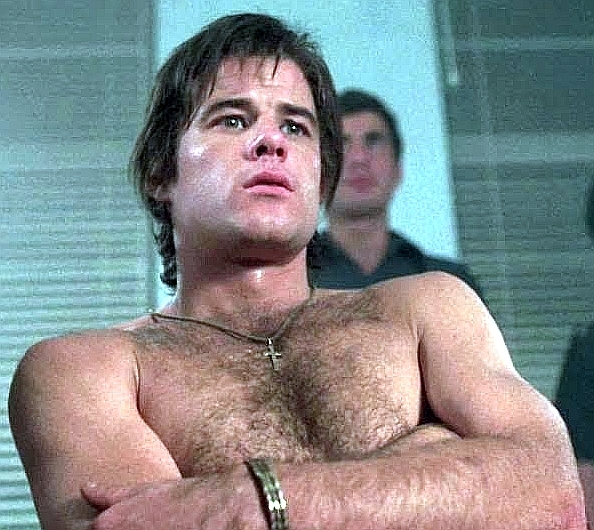
His angular face, intense gaze, the weight of the pain from a childhood marked by abuse, and a magnetic vulnerability that transcended the big screen made Brad Davis one of the best actors of his generation. Last Tuesday, September 8, marked 35 years since his death at the age of 41 due to assisted suicide with drugs after being diagnosed with HIV in 1985.
Behind the spotlight, he always lived with ghosts from the past, suffocating addictions, and a silenced stigma because he was bisexual, although in the industry, there was a belief that he was gay because most of his roles were related to LGBTQ+ themes. Despite rumors, from 1976 to 1991, he was married to casting director Susan Bluestein, with whom he had his only son, musician and actor Alex Blue Davis.
As a child, Robert Creel Davis - his real name - lived a hellish life as he suffered severe physical abuse from his father, an alcoholic dentist who lost a large part of his fortune, and significant sexual assaults inflicted by his mother. That childhood of domestic violence instilled in Davis a permanent sense of emotional detachment and a self-destructive impulse that would continue into his adulthood.
Fortunately, at the age of 16, he won a vocal talent contest that allowed him to discover theater and, thanks to this discipline, he found an outlet to exorcise some of his demons. Over time, he trained in New York at the American Academy of Dramatic Arts and the American Place Theater. In 1973, he adopted the professional name Brad Davis.
His rise to glory was meteoric when he starred in Midnight Express (1978), where he portrayed a young American imprisoned in Turkey for smuggling hashish. The ovation at the Cannes Film Festival was unanimous, he won the Golden Globe for New Star of the Year, and was nominated for the Golden Globes and the BAFTA for Best Actor.
However, being at the peak of fame and being recognized as one of the best performers of the time did not calm his internal fractures. During the filming of A Small Circle of Friends (1980), his alcohol and intravenous drug use reached critical levels. His wife has recounted on numerous occasions an anecdote in which during a party in Hollywood, Brad ripped off his shirt and shouted, "Who has the drugs?". A director whispered prophetically that "there goes his career."
Although he achieved sobriety in 1981, the damage to his body was almost irreversible. Four years later, he tested positive for HIV, so the Davis couple kept the diagnosis secret for years so that the actor could continue working and support his family amidst the strong stigma surrounding this epidemic in Hollywood.
If they had not handled it this way, moral panic, systematic discrimination, and lack of job protection if the disease had been made public would have led to insurance denial of coverage and studios not hiring him.
The case of Rock Hudson shook the foundations of a puritanical industry that, as Brad Davis commented in his biography co-written with his wife, After Midnight: The Life and Death of Brad Davis and continues work as an AIDS activist, Hollywood is an industry that offers countless benefits and charity works, and the profits go towards AIDS research but if there are rumors that an actor has HIV, they receive no individual support. "They don't work."