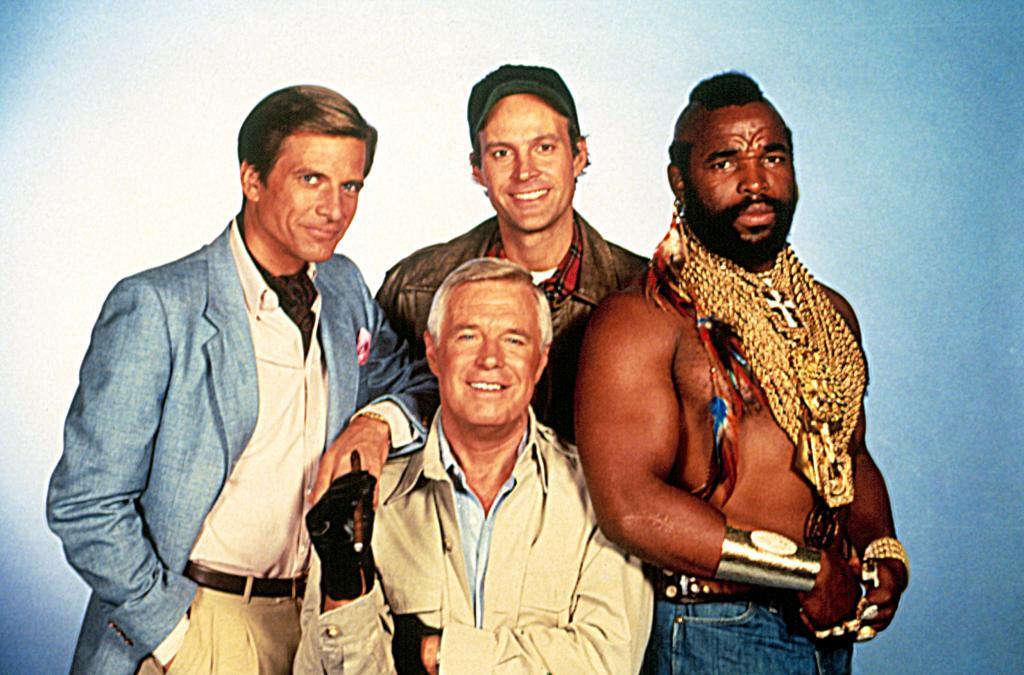
In the 80s, his face was worth millions of dollars and rested over 15 kilos of gold on his chest. Mr. T (74) was the colossus with the mohawk, the villain who crushed Rocky Balboa's ego -Sylvester Stallone- in Rocky III and the mechanic with a fear of flying who solved any crisis with bullets in The A-Team.
He was a perfect product of the Reagan era, a money-making machine that made it impossible to turn on a television, enter a toy store, or have breakfast without coming across his face, becoming one of the most magnetic in pop culture.
Beneath that imposing facade has always hidden a tender, religious man, loyal to his roots, and with a charitable heart. The legendary actor has returned to the spotlight because Netflix premiered the documentary "Exposed: Mr. T" on September 8, which he has criticized as "garbage" in an interview with The Guardian arguing that it has left out a significant part of his life.
When he was born in the South Side of Chicago, one of the most dangerous neighborhoods in the United States, Laurence Tureaud -his real name- had all the cards to become a trafficker, a thief, and an easy target for the police.
He was the youngest of the boys in a marriage that had twelve children -eight boys and four girls- who slept crowded in a rundown apartment where there was no heating in winter or enough food on the table. But drugs and bad company did not enter there. Those who committed crimes did not sleep under a roof.
When the patriarch, Nathaniel, a traveling preacher who abandoned them when Laurence was barely five years old, the mother, Willie, worked hard cleaning the floors of the city's wealthiest. Additionally, they survived thanks to social assistance.
"We used to say that the only three meals we had were 'oatmeal, no food, and skipping a meal.' So we laughed about all that," he commented to People. The atmosphere in the city was one of such extreme poverty and violence that the matriarch instilled in her children a fervor for the Christian faith, a passion for studies, and zero tolerance for gangs like Vice Lords and Black P. Stones and, above all, taught them to be compassionate, despite the daily racism that had a devastating impact on Laurence.
In an interview with The Guardian, the actor said: "I grew up in the ghetto, and even though I played football and fought, the bullies called me names. Do you know why? Because I never stole from anyone. They called me names for listening to my mother, for listening to the teachers, for doing my homework. They didn't go to school. They were dropouts. They were bullies. Now they are in jail or dead. They didn't amount to anything."
One of the things he hated the most was how white people called his loved ones 'boy' -a historically derogatory term to humiliate African Americans- especially his brother decorated in Vietnam. Therefore, at 18, he legally dropped his last name and chose to be called Mr. T so that anyone addressing him would use the word 'Mister.'
Through wrestling and American football championships, he found a way to channel his frustration and earned a scholarship to attend Prairie View A&M University, where he was expelled after his first year. His streak of bad luck continued after injuring a knee that prevented him from playing in the National Football League, he made a living as a cleaner in a hotel, a janitor in a bank, and as a military policeman until he ended up as a bouncer and security guard in nightclubs and discos.
He then changed his image. He began buying gold jewelry and wearing those that customers lost due to drunkenness and flirting, and he sported a mohawk after seeing an image of the Mandingo warriors of West Africa in National Geographic. Mr. T revealed to US Weekly that he wanted to honor his ancestors because "I turned those chains of steel into gold to symbolize that I am still a slave, only my price is higher now."
Tired of the nightlife, he decided to work as a bodyguard for personalities like Michael Jackson, Steve McQueen, and Diana Ross. With his thirties approaching, Sylvester Stallone was impressed by his work on a sports reality show and his tough-guy reputation, so he offered him his acting debut in Rocky III. In 1983, he jumped to television with The A-Team, where for five seasons he made millions of children want to be like him.
He shared all this with his ex-wife, Phyllis Clark, with whom he had three children, Lesa, Erica, and Laurence. From the peak of fame, he moved to a comfortable background by his own choice because "all I wanted was to buy my mother a beautiful house and nice clothes. I did it in the 80s, so the game was over. It was done," he confessed to The Guardian. This way, he refutes rumors that claimed his fall into oblivion was due to misbehavior on set and failed investments.
In the documentary, Mr. T refers to two moments that changed his life. In 1995, he was diagnosed with a cutaneous T-cell lymphoma, a medical irony he recalls with some sadness: "Cancer bore my own name." And in 2005, following the devastation of Hurricane Katrina in New Orleans, he rid himself of all the gold "because it was a disrespect to the families who had lost everything and an offense to God."
The actor has taken advantage of promotional interviews to make it clear that the documentary does not adequately reflect his charitable work with the Make-a-Wish Foundation and the United States Army.