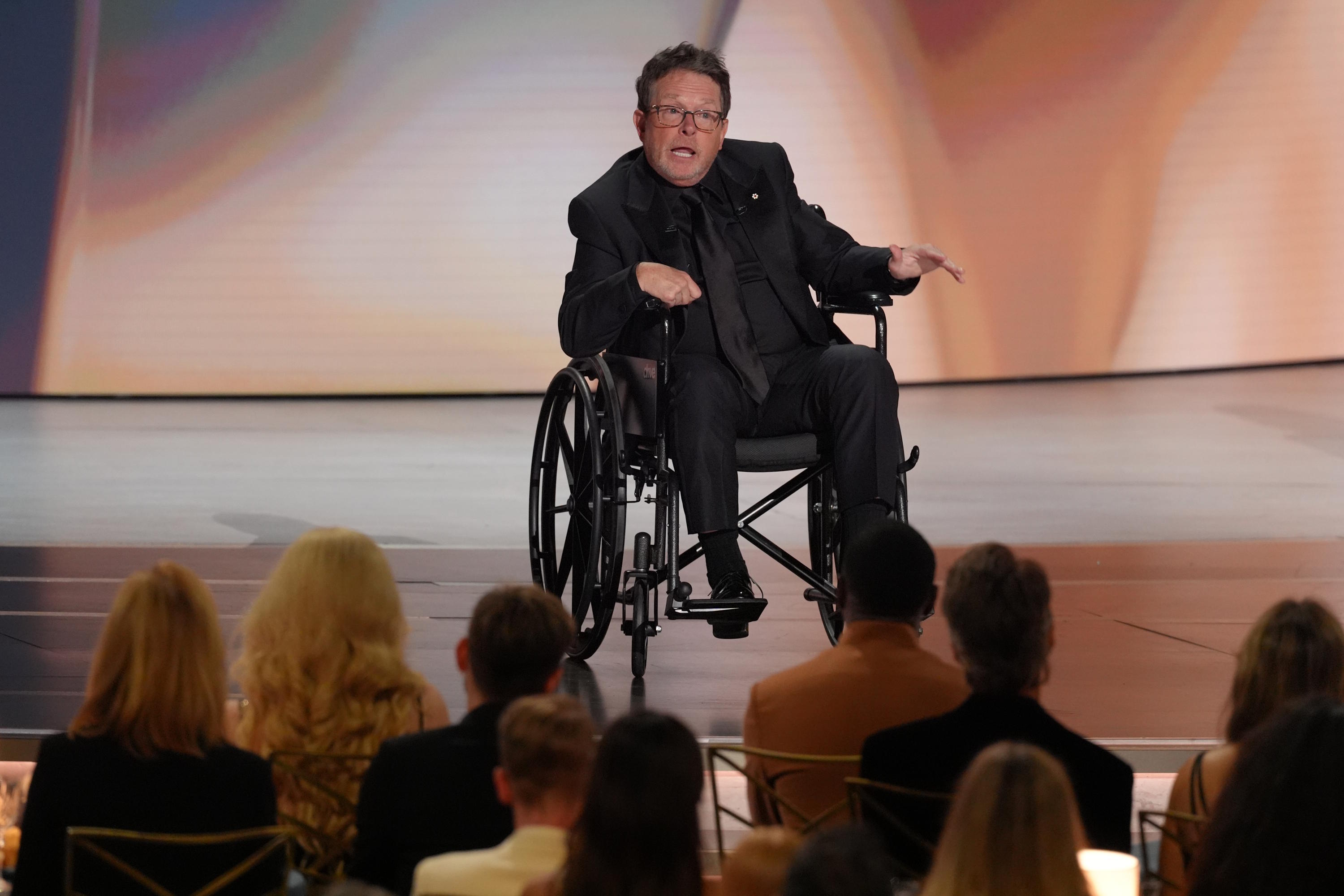
Michael J. Fox, the unforgettable Marty McFly in the 'Back to the Future' saga, starred in one of the most emotional moments of the 2026 Emmy ceremony. The actor received the Bob Hope Humanitarian Award granted by the organizers for "his transformative contributions to Parkinson's disease research and awareness" and got the whole audience on their feet with his speech.
Julianna Margulies, his co-star in The Good Wife (2009), introduced the actor. Fox began by recalling the enormous impact that comedian Bob Hope had on his life, as his parents had grown up during the Great Depression. "Bob Hope was there for the troops," he said, remembering the influence the late comedian had on his life.
"I learned from his example," added the actor, known for his work in the television series Family Ties and the Back to the Future movies.
Fox recalled receiving the Parkinson's diagnosis at 29 years old while working on Doc Hollywood. For years, he chose to keep it a secret because he feared the disease would harm his career and, above all, change the way the public saw him.
"You were by my side, and I thank you," Fox told the audience. "I am proud of the progress we have made."
Fox explained that he eventually understood that acknowledging he had Parkinson's didn't mean letting the disease determine what he could do: "Accepting Parkinson's didn't mean I had to give in to it."
The actor admitted that he feared that knowing about his illness would change his relationship with the audience: "Would they laugh if they knew I was sick?" he wondered. However, the opposite happened. The response from viewers and the industry made him feel that Parkinson's had not taken away his identity as an actor: "I hadn't lost what I know how to do, and the disease couldn't take it away from me."
"I set out to advocate for Parkinson's disease and raise funds. I found people to lead this initiative and committed to funding the best scientific research in the world. I am proud of the progress we have made for the benefit of patients and their families. We are getting closer and closer to the definitive eradication of the disease. I am deeply grateful to our staff, donors, researchers, and the patient community who make our work at the Michael J. Fox Foundation possible," added the Family Ties actor.
Particularly emotional was the moment when Fox addressed his wife, Tracy Pollan, and their four children. He thanked them for the sacrifices, patience, and love they have given him for decades. "I thank Tracy and our children for their sacrifices, for their patience, and for their love. You can't imagine how much."
Fox began experiencing the first symptoms of Parkinson's while working at 29 years old on the 1991 romantic comedy Doc Hollywood. He made his diagnosis public in 1998.
In 2000, he announced he was leaving the ABC series Spin City. That same year, he began dedicating himself to finding a cure for Parkinson's and founded the Michael J. Fox Foundation to help fund research.
He retired from acting in 2020, explaining that the progression of the disease made it increasingly difficult for him to speak and memorize his lines.
Fox, a five-time Emmy winner, came out of retirement in 2025 to portray another Parkinson's patient alongside Harrison Ford in the television series Therapy Unfiltered.
Created in 2002, the Bob Hope Humanitarian Award recognizes "a member of the telecommunications industry whose philanthropic efforts are an example of the altruism of Bob Hope's decades and their positive impact on society."
Previous winners of the Bob Hope Humanitarian Award include Danny Thomas, Oprah Winfrey, George Clooney, Sean Penn, Ted Danson, and Mary Steenburgen.