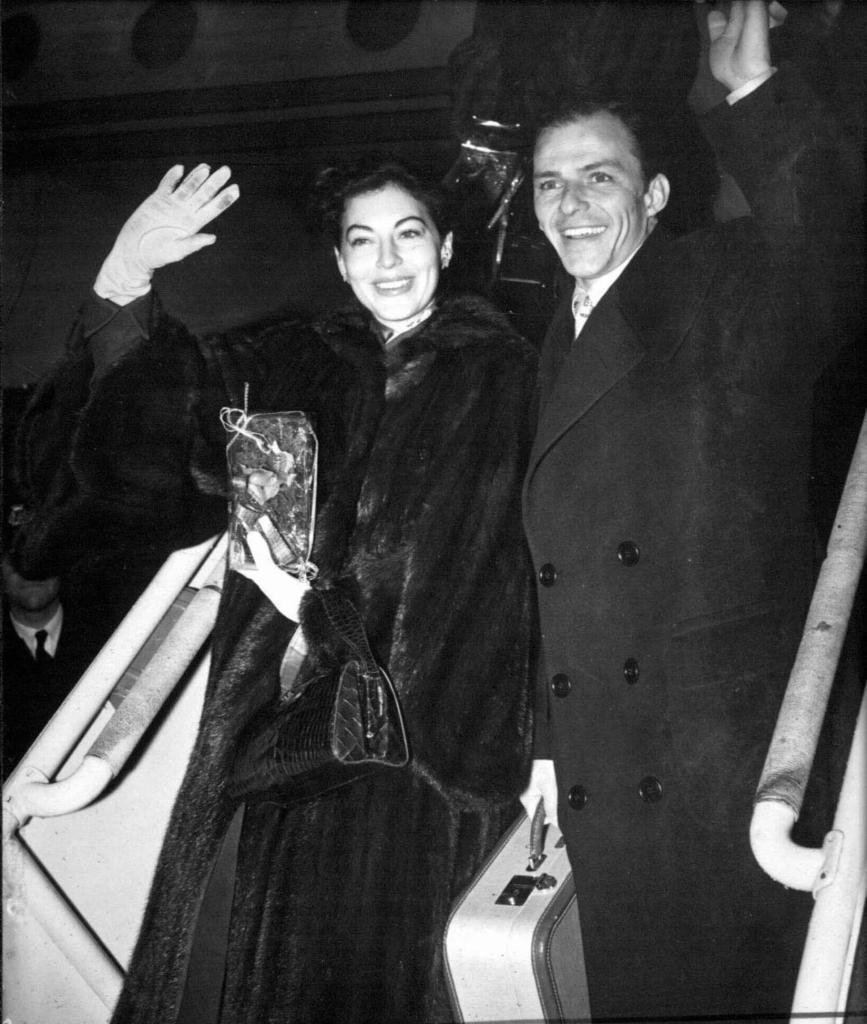
If there was a Madrid phone number that Frank Sinatra knew by heart, it was the one for the Chicote Museum, the legendary cocktail bar on Gran Vía where Hollywood royalty drank everything in the 1950s. The first one was Ava Gardner, whom the singer of My Way (and husband at that time) called in the early hours to find out where his famous wife was. An employee of the Sistine Chapel of martinis, as filmmaker Luis Buñuel referred to the place, was in charge of passing on the message to the actress and, if necessary, hiding a lover.
So, the bar that brought the glamour of the United States to that black and white Spain is one of the 12 spots commemorating the 250th anniversary of its independence through the route The American footprint in Madrid, "an urban journey that connects spaces, institutions, and secrets of the capital that speak of the long historical relationship between the two states," explains the U.S. Ambassador to Spain, Benjamin León Junior, who presented the tour at the Chicote Museum. He did so alongside the delegate for Culture, Tourism, and Sports of the Madrid City Council, Marta Rivera de la Cruz, who highlights the role of this illustrated cultural map as "a summary of the many ties that unite us, even before the U.S. was a political reality."
The route is part of the Freedom 250 program, which celebrates these two and a half centuries with events and celebrations worldwide. In Madrid, the trail of people and places that have left "an indelible mark" on the city has been followed, Rivera de la Cruz points out. Like Ava Gardner's Chicote, which has created a special cocktail, The Two Fifty, "the first one to be added to the menu since the founder, Perico Chicote, passed away in 1977," recall Rubén and Raúl Gómez, partners of the establishment that housed Europe's first American bar.
Another record-breaking restaurant, Botín, the oldest in the world, is also included in the route as it was frequented by figures like Charlton Heston, Jacqueline Kennedy, Woody Allen, or Bruce Springsteen, and inspired Ernest Hemingway, who mentioned it in his novel The Sun Also Rises and always sat at the same table on the second floor.
George Washington is another highlight of the 60,000 maps with illustrations by artist Ana Rojo that will be distributed in hotels and tourist spots in the city, as well as being available online. The San Fernando Fine Arts Academy houses one of the few portraits of the first U.S. president outside his country. It was painted by Italian artist Josef Perovani in 1796 on commission from the Spanish ambassador in Philadelphia as a gift for the Secretary of State of Charles IV, Mariano Godoy. Washington also appears in a miniature enamel piece by Londoner William Russell Birch, one of the geniuses of this technique, exhibited at the Lázaro Galdiano Museum.
From the Liria Palace to the Beti Jai fronton
We head to the Liria Palace, built parallel to the revolution in the U.S. and housing an important collection of Christopher Columbus' letters, as well as several coats of arms granted to explorers and newly founded cities in the New World, "fundamental documents to understand the history of America and the cultural impact between continents," says Álvaro Romero, cultural director of the House of Alba Foundation, "which is pleased to collaborate on this route."
Also included is an unpublished portrait of Philip III attributed to Diego Velázquez and lost for centuries. Until it was discovered by historian and philanthropist from Nashville, William B. Jordan, and donated to the Prado Museum in 2016. The Naval Museum, on the other hand, houses Juan de la Cosa's Universal Chart from 1500, the first world map with a representation of America.
And the Geominero (IGME-CSIC) displays incredible fossils and minerals found on U.S. soil. Such as the replica of the Tyrannosaurus rex Stan's skull, from South Dakota, and specimens of beetles preserved in tar from the Rancho La Brea archaeological site in California.
Next is the Real Jardín Botánico, filled with Carolina peppers, Virginia persimmons, and oranges from the native Osage village in Oklahoma, among other trees and plants native to the United States. We now visit one of the most curious buildings on the route, the 19th-century Beti Jai fronton, one of the oldest in Europe, which served as a Studebaker vehicle factory and Harley-Davidson motorcycle dealership after abandoning Basque pelota competitions in 1919.
The last stops are at the Casa de la Moneda, which has issued a commemorative series highlighting the Spanish contribution to independence, and the International Institute created in 1892 by Boston-born educator Alice Gordon Gulick in the image of women's universities on the East Coast. Between 1944 and 1950, it also served as the U.S. Embassy headquarters.
The 19th-century Beti Jai fronton.