In Shakespeare's tragedies, the dead from the past return to haunt the living of the present. Hamlet, to demand revenge. Julius Caesar, to announce to his killer that he will commit suicide. Less heroic, less British, and certainly much less phlegmatic, Gabriel García Márquez places in One Hundred Years of Solitude Prudencio Aguilar haunting Aureliano Buendía, a man of few Shakespearean instincts, who responds with an epic: "Go to hell. However many times you return, I will kill you again."
In 2026, the ghost has returned to the world's most famous royal family: the Windsors. In reality, it had never left. The ghost is that of Princess Diana, the first wife of the current King Charles III, who has been haunting the British monarchy for exactly three decades, especially her ex-husband, who has been battling a much more real and deadly enemy for over two and a half years: a cancer about which the public knows practically nothing, but which does not seem to have an easy solution.
Diana has not returned in dreams, as in Hamlet and Julius Caesar, or in a half-awake state, as in One Hundred Years of Solitude. She has returned with a procession worthy of the princess of the people, as she was known in life. On one hand, in the form of reading material and videos, in the form of a memoir book and an Instagram video with Tina Turner's music. On the other hand, with a bizarre alliance of people drawn from a court of miracles.
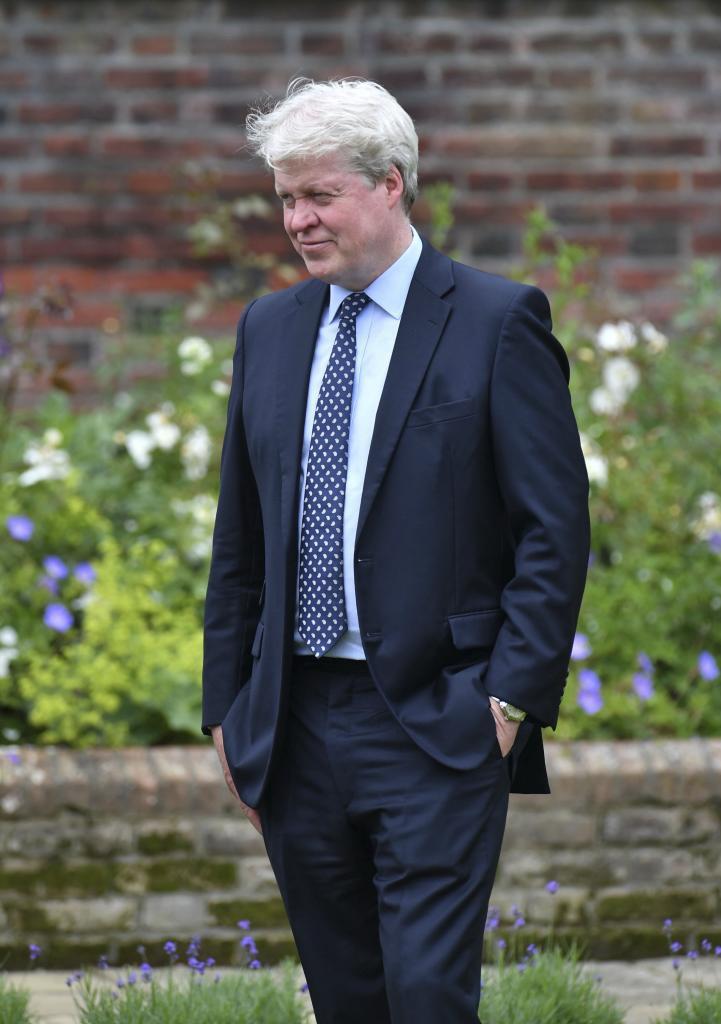
Among them stand out three characters who have formed a strange informal alliance in the eyes of the public. One is Charles Spencer, brother of the princess, the ninth Earl Spencer, owner of Althorp where Diana is buried, a man whose love life has enough divorces, romances, emotional corpses, and financial scandals to fill a complete work without any help from any royal family. Spencer signs the recently published bestseller Swan Song. Diana, My Sister in which Diana's ghost appears on every page to the reader while his brother repeatedly criticizes the royal family and especially his sister's ex-husband, King Charles III.
They say the swan sings before it dies. But the book is not an elegy, but a call to arms to launch another family civil war in which the count has two unexpected allies who in theory are pure Windsors, but in practice have tried - and failed - to be the branch of the monarchy in exile. In Hollywood exile, that is.
There is Meghan Markle, a second-tier American actress who has finally found the role of her life as the eternal Cinderella, foreign and racial. Bringing up the rear is her husband, Harry, who broke with the royal family, tried with his wife to become a star in Hollywood, failed, and has returned to the UK just four months after the deadline by which he would have had to pay the UK tax authorities income tax for, among other earnings, his $100 million (87 million euros) contract with the streaming giant Netflix to produce several films, including a reality show about his own life with Meghan. You know: noblesse oblige, but not fiscally.
Spencer claims that then-Prince Charles told him after Diana's death that soon everyone would forget her. He also states that the future king seemed euphoric, "as if he had won the lottery", and suggests that perhaps he understood that the accident in Paris cleared the way for his then lover and current wife and queen, Camilla. Spencer admits he cannot know what Charles was thinking. That does not stop him from telling it because, both among nobles and commoners, the inability to read others' minds has never stopped a good vendetta. The original conflict dates back to the 1997 funeral. Spencer opposed William, 15, and Harry, 12, walking behind their mother's coffin. He considered it, he says, barbaric. He lost the battle, but during his famous speech at Westminster, he promised that Diana's blood family would protect the two children and preserve their free spirits. That phrase was interpreted as a declaration of war against the Windsors. Unlike his brother William, who will be king upon Charles III's death, Harry seems to have embraced that phrase since 2021 when he and Meghan publicly criticized the British royal family alongside American TV star Oprah Winfrey.
Geography aids the book and the memory. Diana's grave, on an island in a lake at Althorp, the Spencer family mansion, is the perfect home for a ghost: a romantic, gothic, and tragic space of water, trees, fog, a 500-year-old house, and a beautiful deceased princess loved by her subjects. By coincidence, Harry and Meghan, accompanied by their two children, Archie and Lilibet, were there in July. Meghan posted images of the visit. For Harry's 42nd birthday last Tuesday, she shared with her 12.5 million Instagram followers a family montage accompanied by the song The Best, by Tina Turner, one of Diana's favorite songs. Buckingham Palace probably didn't need semiotics specialists to get the message.
The potential Spencer-Sussex axis stems from there. Charles Spencer brings the surname, the brother status, and the grave. Harry brings the wounded son status, as well as international popularity that survives his memoirs, interviews, lawsuits, and occasional efforts to burn all bridges before crossing them. Meghan brings the Hollywood technique: soft lighting, children photographed from behind, carefully spontaneous confessions, and the certainty that any trauma improves if turned into content.
Opposite them stand the Windsors. Charles III retains the crown and all that it entails, including the ability to remind the authorities that, as he himself has decreed, Harry and Meghan are officially only private citizens "with commercial and charitable interests," but not members of the royal family for official purposes. Translated into everyday language, it means: you can produce movies and documentaries (coincidentally, the next one will be about Diana) or combat misinformation, but you are not one of us. It's an exquisite way of telling Diana's ghost what Aureliano Buendía said to Prudencio Aguilar's ghost. Enough with the drama. And certainly not over an issue that was settled three decades ago. The Sussexes said they were surprised by the decision. In this story, everyone is constantly surprised that their relatives are behaving exactly as they've been accused of behaving on television for years.
Institutionally, the Spencer-Harry-Meghan trio are nothing. But in today's media landscape, it is they—not the Windsors inside the Palace—who generate headlines and clicks on social media. That is what may be troubling Buckingham Palace. There is no organized conspiracy, no secret council meeting in the gothic night at Althorp to place Harry on the throne at William's expense. It's not even certain that the key players are capable of organizing a dinner party without leaking conflicting accounts. The risk is simpler: that an alternative, itinerant court will take shape, with the memory of Diana as Philip the Handsome and the Spencers and the Sussexes in the role of a "Mad" Joan who charges for interviews.
From her island on Lake Anthrop, Diana's ghost continues to rule the lives of those she knew. And you can't reign over a ghost—you simply live with it.
No. 1 on Amazon
"The Swan Song" is already the top-selling book on Amazon in the United Kingdom, while London's largest bookstore, Waterstones, has declared it the most in-demand biography of the year. This is a result of the strategy employed by major publishers and Amazon with political bestsellers (because, let's be clear, this is a tale of political and family intrigue): launching them to the top of the bestseller lists only to let them drop and reduce their price to a fraction of the original. The best example: Prince Harry's *Spare*. It was also "number one" on Amazon when it was released in 2023, but now it's ranked 689th.