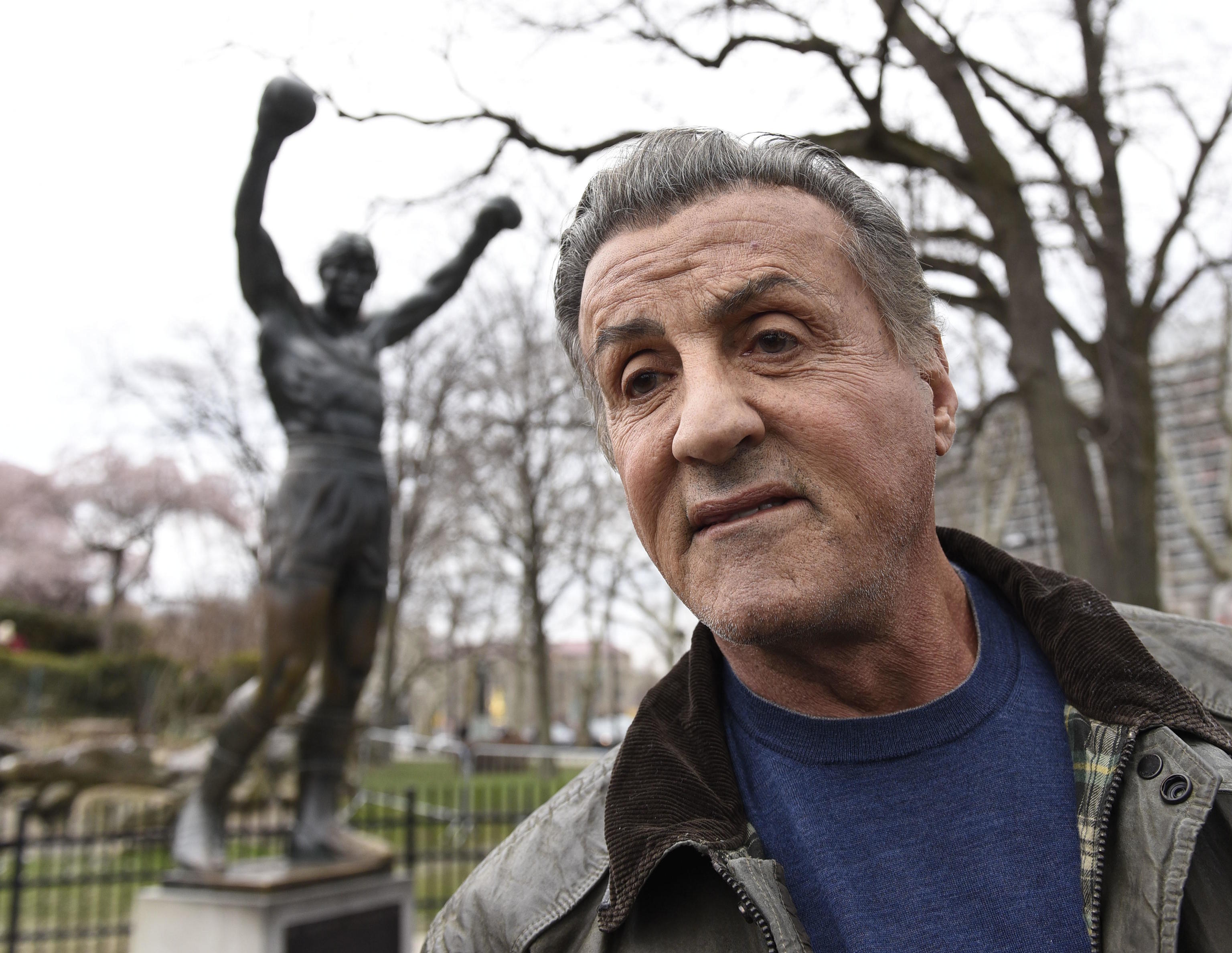
Sylvester Stallone has opened up about his personal and professional life in the videopodcast Tg1 Talks, published on YouTube, on the occasion of the upcoming premiere of the fourth season of the series Tulsa King, on Paramount+. The Hollywood star, globally known for his roles in the Rocky and Rambo sagas, has reviewed both the success and the difficulties and the price to pay for fame.
"Life, until about the age of 45, is about adding; after that, it's about subtracting," reflects the actor. Stallone believes that men, more than women, tend to hold back their emotions and think they can face the world thanks to their bodies and muscles. "But all that crumbles, and health deteriorates if you don't face reality," he warns.
Regarding the Rambo sequels, Stallone acknowledges that, if he could go back, he would make some changes. "I would add more emotional intensity and more heart, and reduce the unrealistic action," he explains.
One of the most personal moments of the interview comes when he recalls his difficult childhood and his relationship with his parents, originally from Gioia del Colle, in the Italian region of Apulia. The actor admits that fatherhood has helped him reconcile with his past and better understand his parents.
"Becoming a father, I learned to forgive them. You have to do it if you don't want a weight on your heart," he points out. However, there is one absence that he still particularly remembers: his parents were not by his side when he won the Oscar. "They didn't come when I won the Oscar, and I remember it every year," he confesses.
Stallone recalls in his memoirs his time in prison
Additionally, the actor received a wake-up call that, as he now recalls, changed his approach to life. As he has recounted in his new memoir, The Steps, Stallone was arrested in the early 70s, while working at a grocery store in New York, and ended up imprisoned for a week and a half.
The incident began when he had to inform an employee of a waste collection company that the establishment was going to hire another provider. As he recounts in the book, the man "approached and pushed me hard against the counter," before threatening to beat him up.
The Rocky actor reacted by grabbing a meat tenderizer and a fish knife. The Police intervened before the situation escalated, but ended up arresting the future actor for threatening an "unarmed" man with two potentially deadly weapons.
While the other party was released, Stallone was transferred to the Manhattan House of Detention, popularly known as "The Tombs". "It was a filthy, violent, and overcrowded place. A real house of horrors. It also felt very familiar to me," he wrote in his memoirs.
The actor explained that that situation reminded him of an experience he had during his adolescence. "I had spent a week in a very similar place, although worse, because there were no police, laws, or judges there," he recalled.
In the Manhattan jail, he shared a cell with at least 15 men, even though the space was probably designed for six people. After staying there for a week and a half, he regained his freedom and immediately quit his job at the store.
"It was a wake-up call. The idea of losing my freedom again was an incentive to stay away from trouble forever," reflected Stallone.
Four years later, in 1976, his life took a radical turn. At 30, he became a global star thanks to the release of Rocky, the movie that launched his career and established him as one of the big names in action cinema.
The abuses he denounces during his adolescence
The prison experience is not the only traumatic episode that Stallone has recently recalled. In an interview with The New York Times, the actor also spoke about his time in a psychiatric center during adolescence, where he claims to have suffered an assault that made him believe no one could break his will.
He explained that teenagers at the Devereux Manor High School center in Pennsylvania could be sent as punishment to a place known as Park Lodge or "Snake Pit" when they broke the rules. Stallone stated that he stayed there for a couple of weeks.
"In my age group, if you escaped to see a girl or do anything else, they punished you by taking you to a place called Park Lodge or the snake pit," he recounted.
From the outside, the building looked like "a large old Tudor-style house from the 1920s," but the interior was very different. "You entered and found yourself in the heart of madness," he described.
The actor recalled scenes that, according to his testimony, still haunt him: "The smell, the dirt, people running naked, scratching, hands tied, and drooling. That was what they believed would convince you not to break the rules again."
Stallone also claimed that he was attacked by another inmate during his stay. The young man, whom he identified as Jay Bird, was burly, always naked, and had bad teeth, according to his description. The nickname, he explained, referred to him being constantly naked.
The actor said he was in the bathroom, on his way to the dining room, when the young man lunged at him, grabbed him by the neck, and put his hands in his pants to grab his crotch.
Two guards then intervened and, according to Stallone, brutally beat the aggressor. "I asked him what the hell was wrong with him. They replied: 'You're in a madhouse, kid. There's nothing wrong with him. He's crazy'," he recalled.
Despite the harshness of what he experienced, Stallone stated that that experience also strengthened his determination. "It was crazy, but for me, it was also one of the best things that ever happened to me. I thought: 'I know they're going to try to break me,'" he explained.
A spokesperson for Devereux Advanced Behavioral Health told The New York Times that the institution respected the "right to tell his story in his own way" and regretted any trauma he recalled having suffered. The organization did not directly respond to the actor's accusations.