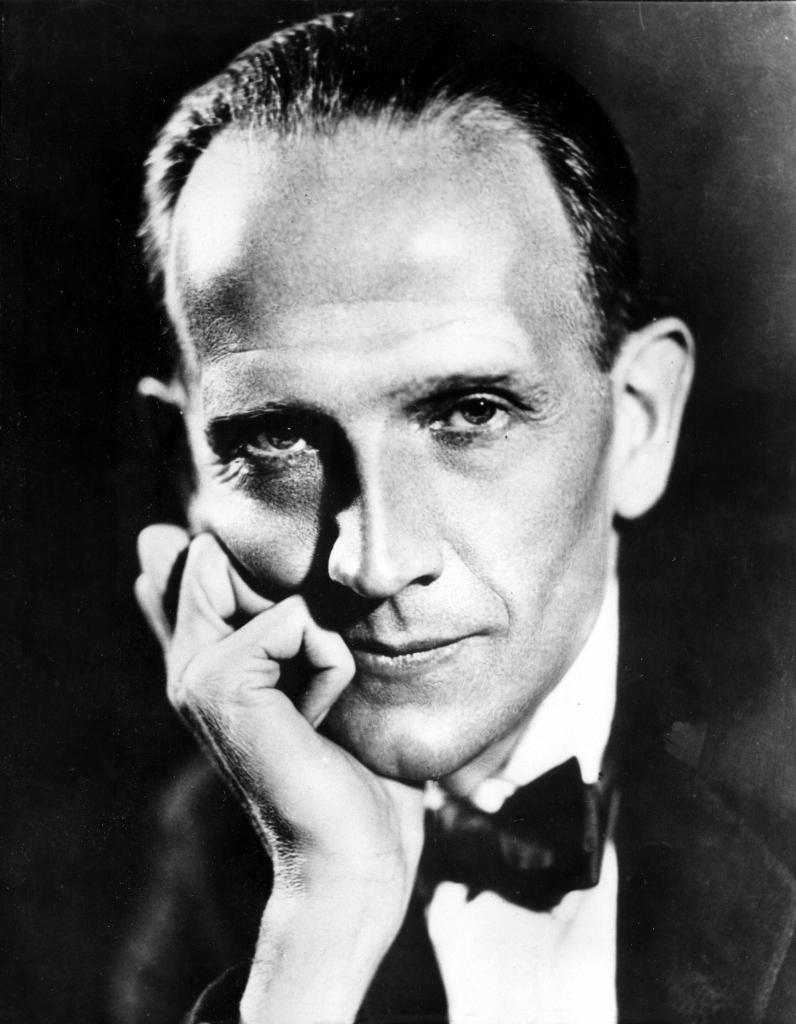
The creation of Winnie-the-Pooh, which will celebrate its 100th anniversary in 2026, did not begin in the office of Alan Alexander Milne, but on the floor of the playroom of his family home in the London neighborhood of Chelsea. Married since 1913 to Daphne de Séliconcourt, they had their only son, Christopher, seven years later, who was the inspiration for the creation of drawings that initially rivaled in popularity and profitability with Disney, especially Mickey Mouse.
When little Christopher turned one, his father gifted him a teddy bear purchased at Harrods whom he named Winnie in honor of the Canadian black bear that Christopher used to visit at the London Zoo. Shortly after, he completed the name with Pooh, a nickname he had given to a local swan.
As was customary in upper-middle-class families, Christopher found in his nanny, Olive Brockwell, a kind of second mother, since according to the norms of the time, parents maintained some emotional distance regarding the daily care of their children.
The two played on the top floor of the house, where the playroom was set up, and where Olive and Christopher voiced the different stuffed animals, including the donkey Eeyore,the piglet Piglet,Tigger the tiger, Kanga the kangaroo, and Roo, her baby.
After establishing a name as a playwright, humorist, and writer for the magazine Punch, A.A. Milne decided to change his prose inspired by those childlike voices. The peak for the creation of the stories came when the Milnes bought a country house next to Ashdown Forest in Sussex, whose landscape served to describe the Hundred Acre Wood, where Winnie the Pooh and his friends lived countless adventures.
The illustrator E. H. Shepard, who visited the farm to sketch both the surroundings and Christopher's toys, gave visual form to the plots resulting in the first storybook titled Winnie-the-Pooh, in 1926. Two years later, they published the second, The House at Pooh Corner. Undoubtedly, this endearing character warmed the hearts of children in a country still traumatized by the aftermath of World War I.
But behind that idyllic family facade, there was a very different reality. Alan was so introverted and reserved that it was almost impossible for him to connect emotionally with his son, so he compensated for that lack with writing. With the mother, Christopher's distance was even greater, as being a high-society lady, she spent long periods away from home, which led the boy to forge his deepest bond with his nanny.
After eight years of service to the household, Olive left, breaking the sense of stability and exposing the emotional chasm that separated Christopher from his parents, who only used him for promotional purposes for photo sessions and book signings.
While readers saw him as an angelic child living in a fairy tale, the truth was that Christopher lived his own inner trauma. That public overexposure caused him a deep resentment because he felt that his most intimate vulnerabilities and childhood innocence were being packaged and sold to strangers around the world.
However, the child's great ordeal would come when at nine years old he was sent to a boarding school, where his classmates bullied and mocked him by chanting some of his father's texts. He suffered so much that he even took boxing lessons to defend himself from his aggressors during recess. In his biography The Enchanted Places (1974), he reflected on that period of his life: "It was then that that love-hate relationship with my fictional namesake began that has continued to this day."
Christopher dropped out of school to join the army during World War II and, after returning to civilian life, had serious difficulties in forging a career, as he thought that people of his social status could live practically on air. When in 1948 he decided to marry his cousin Lesley de Sélincourt, his mother vehemently opposed the union. As a result, Christopher cut ties with his family, refused to accept any royalties from the Pooh empire, and opened a modest bookstore in Dartmouth called The Harbour Bookshop.
From that moment on, Christopher occasionally visited his ailing father, who passed away in 1956. Widowed and estranged from her son, Daphne sold the farm and most of the belongings and sold the rights to the merchandising and film adaptation of Winnie the Pooh to Walt Disney in 1961. The disagreement between mother and son was so severe that she refused to speak to him, even rejecting him on her deathbed. Daphne passed away in 1971.
Pooh's legacy was also marred by commercial scandals and intense legal battles between Walt Disney Productions and the Slesinger family, who had acquired the merchandising rights in the United States in the 1930s. There were accusations of corporate espionage, destruction of documentation, and hidden profits. This legal battle is said to be the longest in the history of the entertainment world.
Christopher maintained a low social profile with his modest salary, which barely allowed him to support his only daughter, Clare, who was born with cerebral palsy in 1956.
The end of this story came with the deaths of Christopher in 1996, his daughter Clare in 2012, and his wife Lesley in 2014. As a side note, the original stuffed animals are housed in the New York Public Library.
According to Forbes, Winnie-the-Pooh generates between $5 billion and $6 billion annually in retail sales and media revenue worldwide, making it one of the most profitable media franchises in history. And according to The Times, the Winnie empire has an estimated value of $80 billion, placing it, alongside Mickey Mouse, as one of the most valuable properties of Disney.