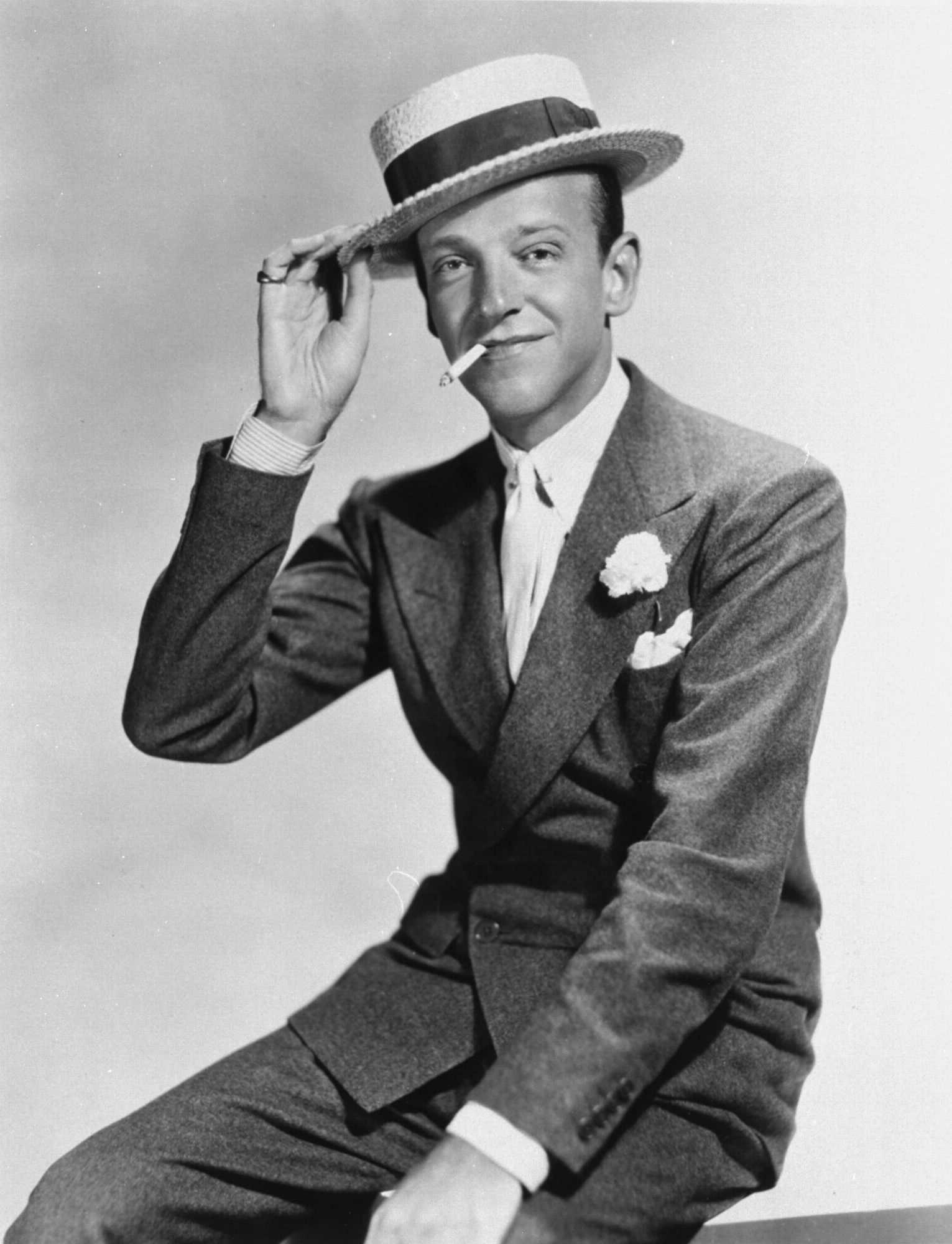
In the golden age of Hollywood, excesses were everywhere. When Fred Astaire became a star, the studios insured his legs for a million dollars in the thirties. Undoubtedly, he was one of the most famous performers in history for his musical numbers with Ginger Rogers, with whom he starred in ten films, including Flying Down to Rio (1933), Top Hat (1935), and Shall We Dance (1937), among others.
Previously, the duo he formed with his sister Adele was one of the most sought after on Broadway and the West End. To the extent that Edward, Prince of Wales, admitted to having seen the play Stop Flirting (1923) a dozen times. Likewise, before abdicating the throne for his love for Wallis Simpson, he asked Adele to teach him some ballroom dance steps.
Due to his strong ties with the Windsors, Adele met Lord Charles Cavendish, the second son of the 9th Duke of Devonshire, whom she married in 1932. In this way, Adele professionally broke ties with her brother, who did not hesitate to travel to California to continue dancing.
After four decades on the big screen, he retired from musical films with Finian's Rainbow (1968), co-starring with Petula Clark (93). A widower since 1954, nothing hinted that the star would remarry almost three decades later. The lucky woman was Robyn Smith, considered the best jockey in the world. Only his son Fred attended the ceremony held in Astaire's mansion garden, as his daughter Ava and his sister Adele declined the invitations.
Fred and Robyn formed an unusual couple in the film industry. Both were reclusive, avoided most social events, barely interacted with other celebrities, and usually went to the movies in the mornings to avoid crowds. In the last years of his life, Fred Astaire showed that his ego had faded as he hated talking about his past, had turned down millions to publish his biography, rarely granted interviews, and was against the American Film Institute (AFI) tributes.
When he passed away on June 24, 1987, at the age of 88, he made it clear in his will that he did not want his name to be commercialized. Furthermore, he disinherited his descendants, and Robyn became the heir to the image rights. For this reason, everything related to the actor's name had to be controlled by his widow.
She took her role so seriously that the Hollywood community turned against her. In 1992, she refused to provide several film clips for the tribute that the Kennedy Center was paying to Ginger Rogers because the center could not afford it; she was accused of delaying the production of That's Entertainment III due to her exorbitant financial demands, and even in 2010, she sued her stepdaughter Ava for using her husband's name to promote the Fred and Adele Astaire Awards. However, she was criticized and booed when she allowed Fred's image to be used in digitally altered Dirt Devil vacuum ads.
Recently, Robyn Smith has spoken out again. She has opposed Tom Holland (29) portraying her husband in a biopic. The issue has escalated to the point where the widow of the star sent a warning to Amy Pascal, a Sony producer, to make it clear that she does not approve of the project moving forward.
Robyn argues that "he made it very clear in his will that he did not want his life to be portrayed on screen" and therefore, "fully respects and defends those wishes." Otherwise, she threatens to take legal action. Previously, another project starring Jamie Bell (39), who rose to fame with Billy Elliot (2000), fell through.